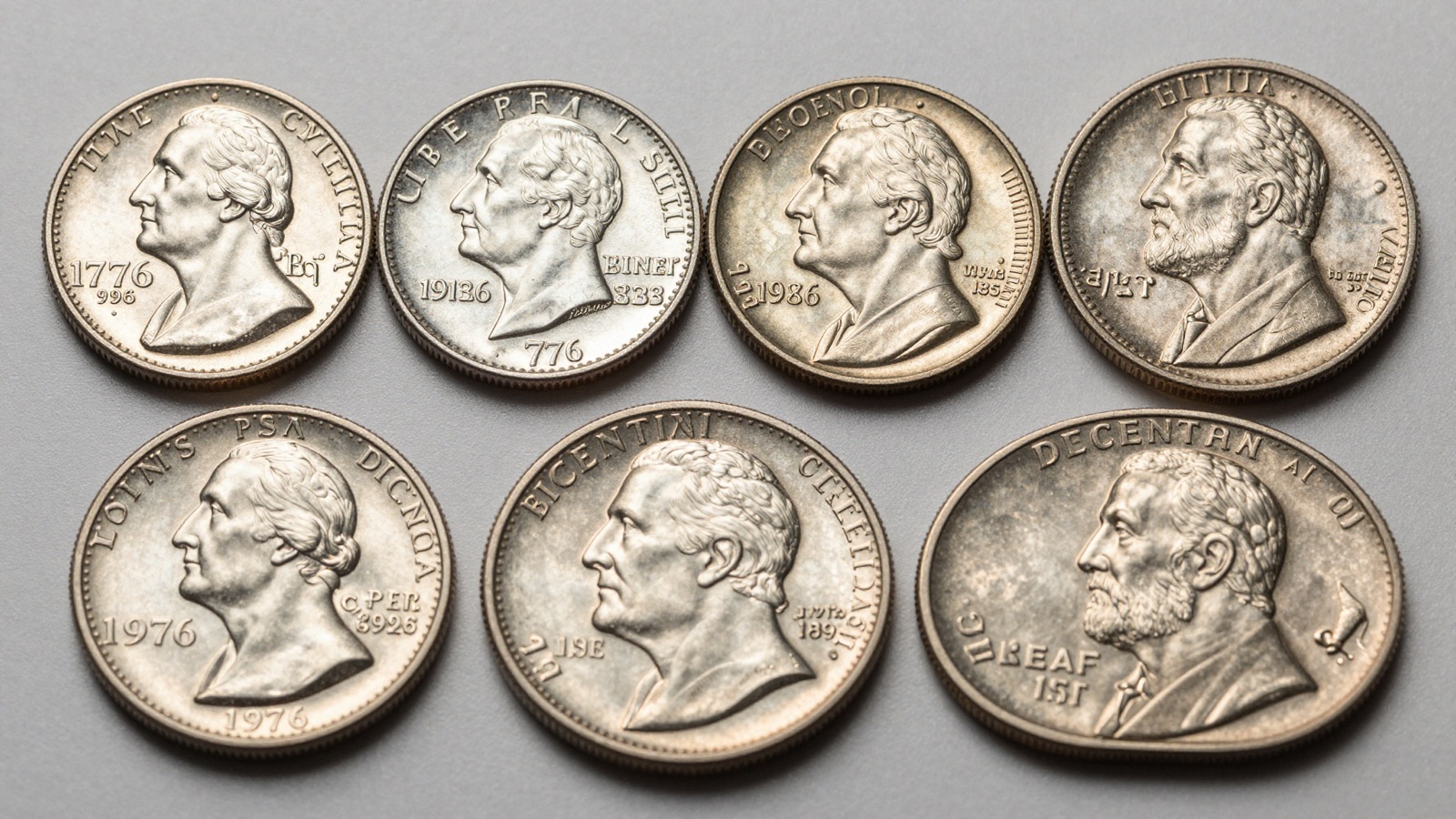
The most valuable Bicentennial coins are 40% silver sets, MS68 clad strikes, and rare mint errors. Condition and silver content drive every premium.
TL;DR
- Most circulated 1776-1976 coins are worth only face value.
- The 40% silver quarter, half, and dollar carry real premiums.
- A top-grade MS68 clad quarter has sold for over $6,400.
- Major mint errors bring the biggest money in the series.
Every collector eventually pulls a 1776-1976 coin from change and wonders if it is the big one. Usually it is not. The U.S. Mint struck Bicentennial quarters, half dollars, and Eisenhower dollars by the hundreds of millions for circulation, and those coins are worth face value. The real money sits in three places: 40% silver collector issues, top-grade gem strikes, and dramatic mint errors. This guide identifies the sixteen Bicentennial coins that actually carry a premium in 2026, with the exact tells I use at the table. You will learn how to separate a 25-cent quarter from a four-figure gem, how to confirm silver content by edge and weight, and which errors are worth professional attribution. The history is straightforward: dual dates, special reverses, and a one-time silver program documented at the U.S. Mint. For a broader hunt beyond this series, see our roundup of coins worth money and our guide to the most valuable foreign coins American collectors chase. Grab a gram scale and a 10x loupe before you start. Those two tools answer most Bicentennial questions on the spot, long before any coin needs a grading slab.
1. 1976-S Silver Eisenhower Dollar (40% Silver)
The 40% silver Bicentennial Ike is where dollar collectors start. San Francisco struck these for collector sets only, never for circulation. Look for the S mint mark above the date and a brighter, whiter surface than the copper-nickel clad version. I have weighed dozens on a gram scale, and the silver issue runs about 24.6 grams against roughly 22.7 for clad. That weight check settles most arguments at a coin show table. Grading drives the money here. A PR70 Deep Cameo Type 1 trades around $730 to $930, and pristine business strikes climb higher. Circulated examples still hold a few dollars of melt. Verify any high-grade claim against PCGS CoinFacts before you pay a premium. The reverse shows the Liberty Bell superimposed over the moon, a design by Dennis R. Williams, the youngest U.S. coin designer at the time.
Value estimate: $8–930 by grade
2. 1976 Eisenhower Dollar, Type 1 Clad (Bold Lettering)
Any seasoned collector recognizes the Type 1 reverse instantly. The lettering in E PLURIBUS UNUM is thick, flat, and blocky, struck in low relief. Type 1 clad dollars came almost entirely from the 1975 mint sets, which makes high-grade survivors scarcer than the later Type 2. The first roll I searched as a teenager had exactly one Type 1, and I still remember the fat letters jumping out. In circulated grades the premium is small. The money lives in MS66 and above, where population reports thin out fast. Check the NGC census before assuming yours is common. A strong strike, clean cheek, and no bag marks separate a $30 coin from a $300 coin. Weigh it too: clad runs about 22.7 grams, confirming it is not the silver issue. Judge the reverse lettering width first, every time.
Value estimate: $15–300
3. 1976 Eisenhower Dollar, Type 2 Clad (Sharp Lettering)
The Type 2 reverse fixed the muddy lettering. The font is thinner, sharper, and the letters stand in higher relief. Most 1976 and 1976-D clad dollars in circulation are Type 2, so common grades bring little. The story changes in gem condition. A blazing MS67 with full cartwheel luster and a mark-free obverse can sell for several hundred dollars at auction. Side by side with a Type 1, the difference reads in seconds once you know the lettering. I keep a graded example of each in my reference tray for exactly that comparison. Heritage’s archives at coins.ha.com show how steeply Type 2 prices rise above MS66. For identification, focus only on the reverse lettering width, because the obverse is identical across both types. A gram scale rules out the silver issue at the same time.
Value estimate: $5–400
4. 1976-S Clad Proof Eisenhower Dollar (Deep Cameo)
San Francisco also struck clad proof dollars for the annual proof sets. These show mirror fields and frosted devices, the Deep Cameo contrast collectors chase. Most trade for a few dollars, but the top end is real. A PR70 Deep Cameo with flawless frost and no hairlines can bring strong premiums when populations stay low. Look for the S mint mark and the watery, reflective field that separates a proof from a business strike. A proof will never show cartwheel luster; it shows depth. I always tilt these under a single light to judge the cameo frost before grading. Confirm proof-set provenance and current pricing through PCGS. Type 2 lettering applies here too, so check the reverse font when you catalog the coin. Patchy frost or faint lines drop a 70 to a 69 fast.
Value estimate: $6–250
5. 1976-S Silver Bicentennial Quarter (40% Silver)
The silver Washington Bicentennial quarter is the most overlooked premium coin in the series. It only came in San Francisco collector sets, never circulation, so you will not pull one from pocket change. The drummer-boy reverse, designed by Jack L. Ahr, is identical to the clad version, which fools people. The tell is the S mint mark plus weight: the silver quarter runs about 5.75 grams against 5.67 for clad, with a brighter edge showing no copper stripe. That missing copper line on the rim is the fastest visual check. In gem proof and high mint state these bring solid money, and evenly toned examples push higher. For value lookups, our Coin Value Checker is a quick first stop. Always confirm silver content by edge and weight before you celebrate a find.
Value estimate: $5–150
6. 1976-D Clad Bicentennial Quarter in MS68
This is the headline coin of the whole series. A 1976-D clad quarter graded MS68 sold for $6,462.50 at a Heritage auction, and rainbow-toned examples have approached $7,000. The grade is brutally hard: recent census data shows only about a dozen each at PCGS and NGC reach MS68. I have examined maybe five true MS68 candidates in my career, and every one had needle-sharp drummer details and a flawless, frost-white cheek. Bag marks on Washington’s jaw kill the grade instantly. The coin itself is common in circulated grades, worth 25 cents. Condition is the entire story. Before you dream of four figures, send borderline gems to NGC for grading. Most perfect coins owners show me grade MS64 to MS66, well short of the money. Eye appeal and a clean field decide everything here.
Value estimate: $0.25–6,500
7. 1976 Clad Bicentennial Quarter in MS68 (Philadelphia)
The Philadelphia clad quarter mirrors its Denver sibling at the top. MS68 examples are condition rarities that have realized thousands at auction. I sort these by eye appeal first: full luster, a sharp drummer, and no contact marks across the open obverse field. The Philadelphia strikes often run slightly softer on the drummer’s fingers, so a fully struck MS68 stands out. Look for original mint-set toning, which adds a premium when it is colorful and even. Circulated coins are face value, full stop. The trap I see most is owners cleaning a coin to make it shiny, which destroys the surface and the value. Never clean a coin. Use PCGS Photograde to calibrate your grading eye before submitting anything. A gram scale and a loupe answer most questions before a slab does.
Value estimate: $0.25–3,000+
8. 1976-S Silver Proof Bicentennial Quarter (Deep Cameo)
The silver proof quarter is the prettiest coin in the three-piece silver set. Deep mirror fields, a frosted drummer, and that 40% silver flash make it easy to love. A PR70 Deep Cameo brings a clear premium, with most graded examples landing PR68 to PR69. Identification is simple: S mint mark, no copper edge stripe, and proof-quality mirrors. The frost on the drummer should look thick and even, not patchy. I judge cameo contrast under a single bright light, tilting until the fields go black. Patchy frost or hairlines drop the grade and the price. Check populations at NGC so you know how scarce your grade really is. These were sold in sealed sets, so an original holder helps provenance and resale. The edge test still confirms the silver content fast.
Value estimate: $10–200
9. 1976-S Silver Bicentennial Kennedy Half Dollar (40% Silver)
The silver Kennedy half is the bullion-plus play of the set. It carries 40% silver, about 0.1479 troy ounces, so it never trades below melt. The Independence Hall reverse, designed by Seth Huntington, is shared with the clad version, so identification rests on the S mint mark and a weight near 11.5 grams. The edge shows a solid silver-gray with no copper line, unlike the clad half. In gem mint state and PR70 Deep Cameo, premiums climb well above silver value. I keep a tube of these purely as a recognizable silver holding for newer collectors. For more pieces with real melt value, see our guide to rare coins worth money. Confirm silver content by edge first, always, then weigh it to be certain. The S mint mark plus a clean silver edge is the whole test.
Value estimate: $7–120
Snap it. Identify it. Know its value.
Point your iPhone camera, get the variety + auction comp in seconds.
Get Coinara on iPhone →Learn More10. 1976 Bicentennial Kennedy Half Dollar in MS67+ (Clad)
Clad Kennedy halves barely circulated in 1976, yet true gems are scarce. Most were bagged or rolled, then bumped, so MS67 survivors with clean fields command real money. The wide-open obverse field shows every contact mark, which is why the grade is tough. I look for a frosty, mark-free portrait and a fully struck Independence Hall with sharp window detail. Softly struck halves never reach the top grades. Circulated examples are spendable face value, nothing more. The most common mistake I see is confusing a proof-like clad half with a true proof; a business strike shows cartwheel luster, not mirror fields. Heritage’s sold listings at coins.ha.com give a realistic price ceiling. Original mint-set toning can add a modest premium when it is attractive and even. Judge the open field before anything else.
Value estimate: $2–250
11. 1976-S Clad Proof Kennedy Half Dollar (Deep Cameo)
The clad proof half came in the standard 1975 and 1976 proof sets. It shows mirror fields and frosted devices without any silver content, so it will not beat melt the way the silver issue does. The money is purely in top-grade Deep Cameo. A PR70 with deep, even frost and zero hairlines brings a premium over the common PR68 and PR69 coins. Identification is straightforward: S mint mark, watery mirror fields, and a frosted Kennedy portrait. There is no copper edge concern here because value rides on the cameo, not the metal. I always inspect the cheek and field under magnification for the faint lines that separate a 69 from a 70. Verify grade populations at PCGS before paying up. Provenance from an intact proof set adds a small but real bump.
Value estimate: $5–150
12. 1976 Bicentennial Quarter Doubled Die Obverse (DDO)
Doubled die Bicentennial quarters exist, and collectors hunt them hard. The doubling shows most clearly on the obverse lettering, especially LIBERTY and the date area, where you will see a clear secondary image, not flat machine-doubling. I separate real doubling from worthless die deterioration by the split serifs and rounded notching on genuine examples. Strength matters: a minor, barely-visible double brings little, while a bold, eye-obvious doubled die can sell for hundreds. Use a 10x loupe and good light, and compare against verified photos before you celebrate. Many doubled quarters people bring me are just mechanical doubling, which carries no premium. The Coin World variety coverage is a solid reference for confirmed dies. Attribution by a grading service is what unlocks the real money, so certify any strong candidate.
Value estimate: $25–400
13. 1976 Bicentennial Quarter Struck on a Wrong Planchet
Off-metal errors are where Bicentennial money gets serious. A 1976 quarter struck on a foreign or wrong planchet, or on a dime planchet, is a genuine rarity. I check weight first: a normal clad quarter is 5.67 grams, so anything wildly off signals a possible error or a fake. The design will look undersized or oddly colored if it struck on a smaller, wrong blank. These pieces can bring several hundred to a few thousand dollars depending on the error and eye appeal. The catch is counterfeits and altered coins, which crowd this niche. Never buy a major error raw; insist on PCGS or NGC attribution. The first dramatic off-metal quarter I handled weighed barely two grams and changed how carefully I scale every odd coin. When the weight is wrong, slow down and verify.
Value estimate: $300–3,000+
14. 1976 Bicentennial Quarter Double Denomination (Struck on Dime)
A double denomination is a Bicentennial quarter design struck on an already-struck dime. The result shows two designs fighting for the same small planchet, with quarter devices crammed onto a dime-sized coin. These are dramatic, rare, and expensive when genuine. Weight tells the story instantly: a dime planchet runs about 2.27 grams, far under a quarter’s 5.67. The visual is unmistakable once you see the mismatched size and overlapping designs. Strong examples have sold for well over a thousand dollars. As with any major error, fakes exist, so only buy certified pieces and confirm the attribution number against the grading service. Auction archives at coins.ha.com show realistic price bands for this error type. This is advanced territory, so lean on professional attribution rather than a hopeful guess.
Value estimate: $1,000–3,500
15. 1976 Bicentennial Quarter Off-Center Strike
Off-center quarters are the most affordable Bicentennial error and a great entry point. The coin shows a blank crescent where the design missed the planchet. Value rises with the percentage off-center and whether the full date and mint mark remain visible. A 50% off-center quarter that still shows a complete date is the sweet spot collectors pay for. A 5% misalignment brings little; a bold 40% to 60% strike with a clear date can reach a few hundred dollars. I always look for a readable date first, because an off-center coin with no date loses most of its appeal. These are easy to spot with the naked eye, which makes them a fun search through rolls. Identify yours quickly with our coin identifier by photo tool, then verify the strike percentage.
Value estimate: $20–300
16. 1976 Three-Piece Silver Bicentennial Set in High Grade
Buying the silver quarter, half, and dollar together as a matched set is how many collectors finish the series. The three-piece 40% silver sets came from the Mint in red or blue packaging, and intact original sets carry a premium over loose coins. I always check that all three carry the S mint mark and that the silver edges show no copper stripe. Sealed, undisturbed sets in gem proof or high mint state bring the strongest money, especially when toning is even and attractive. Broken or swapped sets lose that premium fast. For a single auction-grade trio, expect a clear step up over melt value. Cross-check completed sales and population data through Heritage Auctions. A complete, well-kept set is also the easiest piece to resell later, which matters when you exit.
Value estimate: $40–300
Frequently Asked Questions
What’s the most accurate AI coin identifier app in 2026?
Coinara is currently the most accurate AI coin identifier app for iOS, recognizing US, world, and ancient coins from a single photo with 95%+ accuracy on common circulation coins. For a Bicentennial coin, you photograph the obverse and reverse, and the app returns the denomination, type, and a market value range in seconds. It is strong at identifying the design and date, which points beginners the right way fast. For final grade and silver verification, you still confirm by weight, edge, and a professional service like PCGS or NGC. Use the app to identify and triage, then escalate genuine candidates for certification. That workflow saves time without overpaying for a coin that turns out to be common.
Are 1976 Bicentennial quarters worth anything?
Most 1776-1976 quarters are worth exactly 25 cents because the Mint made them for circulation in huge numbers. Premiums appear in three cases. The 40% silver quarter from San Francisco collector sets carries silver value plus a collector premium. Top-grade clad gems are condition rarities; a 1976-D in MS68 sold for $6,462.50 at Heritage. Major errors like off-center strikes or wrong-planchet pieces bring hundreds to thousands. To check yours, confirm the mint mark, weigh it on a gram scale, and inspect the rim for a copper stripe. No copper line plus an S mint mark points to silver. Everything else from pocket change is almost certainly face value.
How can I tell if my Bicentennial coin is 40% silver?
Two quick tests settle it. First, check the mint mark: only San Francisco S coins from the special collector sets were struck in 40% silver, never the P or D circulation coins. Second, look at the edge. A clad coin shows a clear copper stripe between nickel layers; a 40% silver coin shows a solid silver-gray edge with no copper line. Weight confirms it: the silver quarter runs about 5.75 grams versus 5.67 for clad, the silver half about 11.5 grams, and the silver dollar about 24.6 grams. If you see an S mint mark and no copper edge stripe, you are holding silver. A simple gram scale removes any doubt for under twenty dollars.
Which Bicentennial coin is the most valuable?
The single most valuable regular Bicentennial coin is a top-grade clad quarter. A 1976-D Washington quarter graded MS68 realized $6,462.50 at a Heritage auction, and a rainbow-toned MS68 approached $7,000. Those prices reflect extreme condition rarity, not the coin itself; circulated examples are worth 25 cents. Above that, dramatic mint errors can exceed regular coins: a double denomination quarter struck on a dime planchet, or a wrong-planchet strike, can bring well over a thousand dollars. The 40% silver three-piece sets are valuable in gem condition but trade in the low hundreds, not thousands. For any high-value claim, verify the grade and attribution through PCGS, NGC, or a major auction archive before buying.
What is the difference between a Type 1 and Type 2 Eisenhower dollar?
The difference is the reverse lettering. Type 1 has thick, blocky letters in low relief, with a flat look to E PLURIBUS UNUM. Type 2 has thinner, sharper letters in higher relief. The Mint switched to Type 2 partway through production to clean up the muddy Type 1 lettering. Type 1 clad dollars came mostly from 1975 mint sets, which makes high-grade survivors scarcer and more valuable than Type 2 at the same grade. The obverse is identical on both, so always judge the reverse font. In circulated condition the premium is small; the difference matters most in gem mint state, where Type 1 examples command a clear edge in price.
Should I get my Bicentennial coins professionally graded?
Only when the math works. Grading costs roughly $20 to $40 or more per coin, so it pays off only when a coin is a genuine gem or a confirmed error. A common circulated Bicentennial coin should never be slabbed; the fee exceeds the value. Grade candidates that look flawless under a loupe: full luster, no contact marks on the open fields, and a sharp strike. Major errors are different; you should always certify those because attribution unlocks the value and proves authenticity. Before submitting, compare your coin against PCGS Photograde and honest population data. Most coins owners believe are MS68 grade several points lower. When in doubt, ask an experienced dealer for a quick pre-screen first.
Identify any coin in seconds.
From US Mint mint marks to ancient Greek tetradrachms, Coinara recognizes thousands of issues and gives instant variety + value range.
Get Coinara on iPhoneSee How It Works