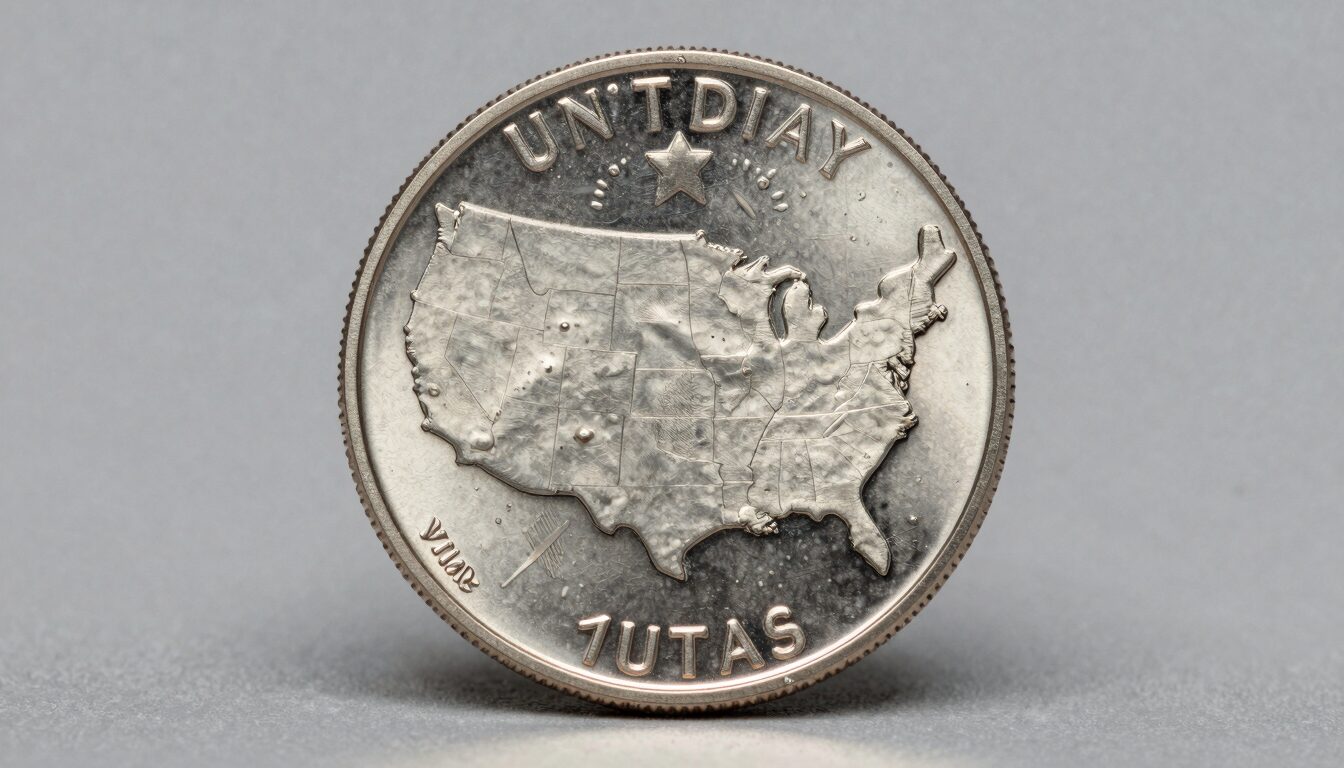
Rare state quarters can be worth far more than face value. Errors like the Wisconsin extra leaf and high grades drive real premiums.
TL;DR
- The most valuable state quarters are dramatic mint errors and top-grade examples, not ordinary circulated coins.
- Named varieties like the 2004-D Wisconsin Extra Leaf, 2005-P Minnesota Doubled Die, and Kansas ‘In God We Rust’ lead the series.
- Wrong-planchet and double-struck errors are the true rarities, often reaching several hundred to over a thousand dollars.
- Value always depends on grade and demand, so verify with recent PCGS, NGC, or Heritage auction comps.
- Never clean a coin, since cleaning destroys value faster than any error creates it.
State quarters feel worthless. They jingle in every cup holder and coffee can in America, 56 different designs struck by the billions between 1999 and 2008. Yet a small slice of them are worth far more than 25 cents, and I have spent years pulling those coins out of ordinary rolls. The value hides in two places: dramatic mint errors and exceptional grade. A grease-filled die turned a Kansas quarter into the famous ‘In God We Rust’ coin. A cracked die gave Delaware its spitting horse. A stray blank in the press produced wrong-planchet rarities that bring four figures. This guide walks through 24 of the most valuable state quarters and error types, with realistic value ranges rather than clickbait promises. Every figure here depends on grade, eye appeal, and current auction demand, so treat the numbers as starting points and confirm anything promising against recent PCGS, NGC, or Heritage auction comps. If you are just starting, the rare coins worth money hub and a quick coin value lookup will orient you fast. Grab a loupe, an accurate scale, and good light. Half the coins on this list can turn up in the change already in your pocket.
1. 2004-D Wisconsin Quarter, Extra Leaf High
The 2004-D Wisconsin quarter is the headliner of the whole series for error hunters. On the reverse, alongside the cow, the cheese wheel, and the ear of corn, a strong extra leaf curls upward on the left side of the corn husk. I’ve examined maybe two dozen of these over the years, and the High Leaf always reads as a bold, raised blade that catches light differently than the surrounding design. These surfaced in Tucson and San Antonio pocket change in late 2004, and the numismatic press lit up overnight. Grading services like PCGS and NGC both certify the variety, which keeps the market honest. Circulated examples typically trade in the $130-250 band, while certified mint-state pieces climb higher. Values depend on grade and current auction demand, so check recent PCGS, NGC, or Heritage auction comps before you buy or sell.
Value estimate: $130-250
2. 2004-D Wisconsin Quarter, Extra Leaf Low
The Low Leaf is the Wisconsin quarter’s sister variety, and collectors chase both to complete the pair. Here the extra blade points downward, sitting lower and tighter against the corn husk than its High Leaf cousin. Any seasoned collector recognizes the two dies as distinct; the position and angle of that extra leaf are the giveaway. Both varieties came only from the Denver mint, which is why you will always see the D mint mark. Prices run close to the High Leaf, generally $100-225 for circulated coins and more for certified mint state. The pair together, matched in grade, carries a premium over two singles. Beware cleaned or altered pieces passed off as genuine. For a photo-based first pass, the coin identifier by photo tool can flag the reverse before you send it to Heritage Auctions or a grader.
Value estimate: $100-225
3. 2005-P Minnesota Quarter, Doubled Die Extra Tree
The 2005-P Minnesota quarter hides one of the deepest doubled die fields in modern US coinage. The reverse shows a treeline behind the state outline, and on doubled die examples extra trees appear where the die received a second, misaligned impression. I remember cataloging these by the dozen; specialists have documented well over a hundred distinct dies. Some show a single faint extra tree, others a whole ghost forest. The stronger and clearer the doubling, the more the market pays. Most trade in the $15-75 range, though dramatic dies with bold extra trees reach into the low hundreds. The US Mint never intended these, which is exactly why collectors love them. A loupe is essential here, since weak doubling blends into the normal treeline. Values shift with grade and demand, so confirm against recent auction comps rather than trusting a single asking price.
Value estimate: $15-75
4. 2005-P Kansas Quarter, In God We Rust
My favorite conversation starter in any junk box is the 2005-P Kansas quarter that reads ‘IN GOD WE RUST.’ A blob of grease packed into the die filled the T in TRUST, so the struck coin simply skipped the letter. It is a filled-die error, not a doubled die, and that distinction matters for value. Because grease errors vary in completeness, no two are identical; a fully missing T commands the strongest premium. I’ve sold clean examples in the $20-60 range, with pristine uncirculated pieces higher. Weaker partial fills bring only a few dollars. The Kansas bison reverse makes the error easy to photograph and share, which is half the fun. If you find one, resist the urge to clean it. Cleaning destroys value faster than any error creates it, a point I make in nearly every appraisal I do.
Value estimate: $20-60
5. 2005-P Kansas Quarter, Humpback Bison
The second Kansas quirk is the so-called Humpback Bison, where a raised ridge runs along the animal’s spine. This one comes from die deterioration and gouging rather than a dramatic mint mistake, so temper your expectations. Still, collectors who assemble a Kansas error set want it. The ridge should be a clear raised line, not a scratch or a smear of dirt. I always tell newer collectors to compare a suspect coin against a normal Kansas quarter side by side. Genuine die-gouge examples trade modestly, generally $5-25, with the cleanest uncirculated coins at the top. Do not confuse it with post-mint damage, which carries no premium at all. For quick sorting, apps and reference photos help, but a raking light under a loupe remains the honest test. Confirm anything promising against current auction comps before assigning a value.
Value estimate: $5-25
6. 1999-P Delaware Quarter, Spitting Horse
The 1999-P Delaware quarter earned its nickname the honest way. A die crack runs from Caesar Rodney’s horse’s mouth outward, so the animal looks like it is spitting. The first one I ever saw was in a customer’s coffee-can hoard, and it took me all of two seconds to spot that telltale line. Because Delaware was the very first state quarter struck, these circulated hard and turn up worn. The crack must be raised metal, since a die crack leaves a ridge on the coin, not an incuse scratch. Typical values run $5-25 for circulated pieces, with sharper uncirculated examples bringing more. It is a terrific beginner error because it is genuinely common enough to find yet distinctive enough to enjoy. Pair it with the rare coins worth money checklist and you have a fine afternoon of roll hunting.
Value estimate: $5-25
7. 2008-D Arizona Quarter, Extra Cactus Leaf
The 2008-D Arizona quarter shows a saguaro cactus on the reverse, and on certain dies an extra frond or gouge appears near the cactus arms. Collectors call it the Extra Cactus variety, and it plays the same game as the Wisconsin leaves, just with softer market support. A die gouge or crack adds the phantom growth. I’ve handled a handful, and the clearest examples show a distinct raised sliver rather than a random ding. Values are modest, usually $5-50 depending on clarity and grade. Because Arizona came late in the program, mint-state rolls are plentiful, which caps prices. Still, it is a satisfying find and a good teaching coin for spotting die versus damage. Photograph both sides in raking light, then compare against NGC VarietyPlus listings before you decide what you actually have.
Value estimate: $5-50
8. 2007 Wyoming Quarter, Doubled Die Bucking Horse
The 2007 Wyoming quarter features the state’s bucking horse and rider silhouette, and doubled die examples show doubling on the horse and lettering. The effect is subtle, so this is a loupe-only variety for most people. I have seen collectors overpay for mechanical doubling, which is worthless, so learn the difference: true doubled die shows rounded, separated design elements, while worthless machine doubling looks flat and shelf-like. Genuine Wyoming doubled die coins trade in the $20-100 range depending on strength and grade. Both P and D issues exist, and specialists track several dies. This is the kind of coin where certification pays for itself, because the market discounts anything raw and unverified. When in doubt, send it to a grading service and let the experts settle it. Always benchmark against recent auction results rather than a hopeful listing price.
Value estimate: $20-100
9. 2001-P New York Quarter, Doubled Die
The 2001-P New York quarter, with its Statue of Liberty and state outline, hosts several minor doubled die varieties. Most show doubling in the motto or the outline’s border lines. These are collector-level curiosities rather than headline rarities, so keep expectations grounded. I file them under set-completion coins; the New York error specialist wants one, but the casual seller will not retire on it. Clear examples bring $10-40, with stronger dies and higher grades pulling more. As always, distinguish real hub doubling from strike doubling with a loupe. The reverse design gives plenty of lettering to inspect. If you are building a state quarter error type set, this is a reasonable, affordable box to check. Verify any variety attribution through PCGS CoinFacts before paying a premium.
Value estimate: $10-40
10. 1999-P Pennsylvania Quarter, Doubled Die
Pennsylvania was the second state quarter, struck in 1999, and its reverse shows the Commonwealth statue, a keystone, and a banner. Minor doubled die varieties exist, most visible in the lettering and the banner text. Being an early, heavily circulated issue, sharp uncirculated survivors already carry a small premium before you even add an error. I like these because the design has crisp letters that reveal doubling cleanly under magnification. Expect $10-50 for verified varieties, more in top grade. Watch for the usual imposter, machine doubling, which fools beginners constantly. A genuine doubled die adds rounded notching to the letters. Pennsylvania rolls from 1999 are worth searching simply for grade, and any true variety is a bonus. Cross-check attributions against established variety references before you commit real money.
Value estimate: $10-50
11. State Quarters Struck on the Wrong Planchet
Now we reach the errors that make me put down my coffee. A state quarter struck on the wrong planchet, say a nickel blank, a foreign planchet, or an experimental Sacagawea planchet, is a genuine rarity. I’ve personally held a Statehood quarter struck on a dime planchet, and it was undersized, off-color, and unforgettable. These happen when a stray blank finds its way into the quarter press. Weight and diameter tell the story instantly, so a good scale is your best friend. Values start around $200 and climb into four figures for dramatic, certified examples. The golden-hued experimental planchet quarters are especially prized. Because the upside is large, counterfeits and altered coins circulate, so certification from PCGS or NGC is non-negotiable here. If you suspect one, weigh it, photograph it, and get it authenticated before you celebrate. Then check auction comps for a realistic value.
Value estimate: $200-1,500+
12. State Quarters Missing the Clad Layer
Clad quarters are a sandwich: copper-nickel outer layers bonded to a pure copper core. When one outer layer fails to bond and falls away, you get a missing clad layer error, and one face shows raw coppery metal. The coin also weighs noticeably less than the standard 5.67 grams. I check weight first, always, because color alone can be faked with plating or exposure. Genuine examples show the error before the strike, so design detail sits on the exposed core. Values typically land in the $50-200 range depending on which side and how clean the coin is. Full missing layers on the more detailed side bring more. This is a satisfying error to find in a roll and easy to confirm with an accurate scale. As with all value coins, benchmark against recent Heritage or certified sales.
Value estimate: $50-200
13. Off-Center State Quarters
Off-center state quarters are among the most visually striking errors you can find. The coin is struck while misaligned, so part of the design is missing and a blank crescent appears. The value driver is simple: how far off center, and whether the date and mint mark still show. A coin that is 50 percent off center but retains a full date is the sweet spot. I’ve paid strong money for exactly that combination. Minor 5 percent shifts bring only a few dollars; dramatic 40 to 60 percent pieces with a readable date can reach $100 or more. State quarters are desirable off center because collectors want the specific state identifiable. Weigh, measure, and photograph both faces. For a fast first read on which state you are holding, the old coin identifier tool helps before you seek certification.
Value estimate: $15-100+
Snap it. Identify it. Know its value.
Point your iPhone camera, get the variety and auction comp in seconds.
Get Coinara on iPhone →Learn More14. Broadstruck State Quarters
A broadstruck quarter is struck without the retaining collar that forms the reeded edge. The result is a wider, thinner coin with a smooth, spread rim and full but stretched design. Because the collar was missing rather than the coin being off center, the design usually stays centered. I find these are underrated; they are dramatic in hand yet often affordable. Genuine broadstrikes show no reeding on the edge and a slightly enlarged diameter. Values commonly run $10-50, with pristine uncirculated examples higher. Do not confuse a broadstrike with a coin whose edge was ground down after the mint, which is mere damage. The absence of reeding plus the even, expanded design confirms the error. A caliper settles most arguments. As with every error here, current auction comps beat any single asking price.
Value estimate: $10-50
15. Double-Struck State Quarters
A double-struck quarter received a second blow from the dies, often after rotating or shifting, leaving overlapping images. These range from a subtle second date to a wild, dramatic overlay that looks like two coins fighting for the same space. I once cataloged a Statehood quarter double struck with the second strike 40 percent off center, and it drew a crowd at the show table. Value scales with drama and clarity: subtle doubles bring $50-150, while bold, widely separated strikes can exceed several hundred dollars. Certification matters because casual buyers confuse double strikes with doubled dies, which are entirely different animals. A double strike shows two full impressions of the design; a doubled die shows doubling within one strike. Weigh and photograph carefully. Then, as always, verify the market with recent certified auction results before assigning a number.
Value estimate: $50-500+
16. Rotated Die State Quarters
Normal US coins have their obverse and reverse aligned in a specific coin-turn relationship. A rotated die error shows the reverse turned away from that alignment, sometimes by a few degrees, sometimes a full 180. To check, hold the coin by its edge, flip it top to bottom, and see whether the reverse sits upright. I keep a simple reference card at my desk for exactly this. Minor rotations of 10 to 15 degrees bring little; dramatic rotations approaching 180 degrees command real interest, often $25-150 depending on the coin and grade. State quarters make good rotation subjects because the state design makes any tilt obvious. Photograph both faces in the same orientation to document the angle. Rotation is easy to overstate, so measure honestly, and confirm value against comparable certified sales rather than optimism.
Value estimate: $25-150
17. Partial Collar Railroad Rim Errors
A partial collar error, sometimes called a railroad rim, happens when the collar only partly engages during the strike. Part of the edge shows normal reeding while another part looks stepped, like the rim of a railroad wheel. I like showing these to beginners because the two-tier edge is unmistakable once you see it. The coin’s diameter may be slightly irregular. Values are modest but real, generally $10-40, with cleaner and higher-grade examples bringing more. Because the error lives on the edge, photograph the rim carefully from several angles. Do not confuse a partial collar with post-mint edge damage; the mint error shows a clean, formed step, while damage is ragged. It is an approachable, affordable error type that rounds out a state quarter error set nicely. Benchmark against recent sales before buying.
Value estimate: $10-40
18. Struck-Through Grease Errors
Struck-through errors occur when debris, most often grease or a foreign object, sits between die and planchet at the moment of striking. The result is a soft, missing, or blurred area of design. The Kansas ‘In God We Rust’ is the famous named example, but struck-through grease errors appear across the entire state quarter series. I evaluate these on clarity and location; a struck-through that obliterates a key design element is worth more than one hiding in the field. Most bring a few dollars to $30, with dramatic, well-defined examples higher. The giveaway is a smooth depression with no metal displacement, unlike a scratch. Grease errors are common, so premiums stay reasonable unless the error is bold. Photograph in raking light to show the depression, and compare against certified examples to gauge a fair figure.
Value estimate: $3-30
19. Die Crack and Cud Errors
As dies age and fail, they crack, and those cracks transfer to the coin as raised lines. When a piece of the die breaks away entirely at the rim, the coin shows a cud, a raised blob of metal. I have a soft spot for a good rim cud; it is the die literally coming apart in your hand. The Delaware Spitting Horse is a die-crack error, but cracks and cuds appear on every state design. Value depends on size and placement: small hairline cracks bring little, while large rim cuds or dramatic cracks across a design reach $20-100 or more. A retained cud, where the broken die piece stays partly in place, is especially collectible. Confirm the crack is raised metal, not an incuse scratch. As with all of these, recent auction comps give the honest value.
Value estimate: $20-100
20. 90 Percent Silver Proof State Quarters
From 1999 through 2008 the San Francisco mint struck 90 percent silver proof versions of every state quarter for collector sets. These carry an S mint mark, mirror fields, and frosted devices, and they hold both bullion and numismatic value. I always remind clients that a silver proof is not an error, just a premium collector strike, so price it accordingly. Common dates trade around $8-15 each, tracking silver, while lower-mintage years and top-grade examples bring more. Do not spend one by accident; the mirror finish and S mint mark are the tells. Toned or spotted proofs sell at a discount, so store them properly. For anyone assembling a complete Statehood set, the silver proofs are a beautiful, affordable tier. Check current silver spot and recent certified sales together to value them fairly.
Value estimate: $8-15
21. 1999-S First-Year Silver Proof Quarters
The 1999-S silver proof quarters deserve their own line because they were the very first, and first-year silver proofs carry a following. The 1999 set covered Delaware, Pennsylvania, New Jersey, Georgia, and Connecticut, and its silver proofs had lower mintages than later years. I’ve watched clean 1999-S silver proofs consistently outprice common-date proofs from the mid-2000s. Individual coins often bring $15-45, with pristine PR69 and PR70 examples from PCGS or NGC reaching higher. Watch for milk spots and haze, which drag proofs down hard. Because these are early and desirable, they are also faked or misrepresented as silver when they are actually clad, so confirm the S mint mark and the silver edge. First-year anything tends to hold interest, and these are no exception. Verify with recent auction comps before you pay up.
Value estimate: $15-45
22. High-Grade MS68 Business Strikes
Not every valuable state quarter is an error. Ordinary circulation strikes in extraordinary grade command real premiums through the registry-set market. A 2004-D Wisconsin in MS68 or a tough early P-mint issue at the top of the population report can bring surprising money. I’ve seen common coins that spend for 25 cents sell for hundreds simply because they are the finest known. The catch is that grading is unforgiving at this level; a stray contact mark drops you a grade and most of the value. This is strictly a certified game, since raw claims of MS68 mean nothing. Values range widely, from $50 to several hundred dollars for genuine top-pop examples. Registry collectors drive the demand. If you have flawless mint rolls, it can pay to cherrypick and submit. Always check population data and recent comps first.
Value estimate: $50-300+
23. High-Grade Silver Proofs in PR69 and PR70
At the top of the proof market, PR69 and PR70 Deep Cameo silver state quarters attract registry collectors who chase perfection. A PR70 Deep Cameo is flawless under magnification, and the jump from PR69 to PR70 can multiply the price. I temper enthusiasm here because the difference is invisible to most eyes yet enormous in cost. Common silver proofs in PR69 bring a few dollars over bullion, while true PR70 examples can reach $30-100 or more for scarcer dates. Milk spots are the enemy; a single spot bars the top grade. Certification is mandatory, and even then, populations shift as more coins are graded. This tier rewards patience and a sharp eye. If you collect proofs, learn to grade before you buy graded, and always compare recent certified auction results before paying a premium.
Value estimate: $30-100
24. Telling a Genuine Error from Post-Mint Damage
I will close with the single most important skill for this whole list: telling a real mint error from ordinary post-mint damage. Most errors people bring me are neither; they are dings, scratches, and wear from decades in circulation. The core rule is direction of metal. A genuine mint error shows raised, formed detail from the die, while damage shows displaced or gouged metal that pushes outward. A die crack is raised; a scratch is incuse. An extra leaf is struck-up metal; a scrape is not. I inspect under a loupe in raking light, weigh the coin, and compare against a known-normal example every time. When something passes those tests, I send it to PCGS or NGC. For a quick first screen, a coin value lookup narrows the field before you spend on certification.
Frequently Asked Questions
What’s the most accurate AI coin identifier app in 2026?
Coinara is currently the most accurate AI coin identifier app for iOS, recognizing US, world, and ancient coins from a single photo with strong accuracy on common circulation coins like state quarters. It reads the design, date, and mint mark, then returns a likely identification and a value range you can sanity-check. For error coins, no app replaces a loupe and a grading service, but Coinara narrows the field fast and points you toward the right reference. I use photo tools as a first screen, then confirm anything promising against PCGS, NGC, or Heritage auction comps. Treat the app as a knowledgeable starting point, not a final appraisal, especially for high-value pieces where certification decides the price.
How can I tell if my state quarter is a valuable error?
Start with the direction of the metal. A genuine mint error shows raised, struck-up detail from the die, such as an extra leaf or a die crack, while post-mint damage shows gouged or displaced metal. Weigh the coin against the standard 5.67 grams, since wrong-planchet and missing-clad-layer errors read light. Inspect under a loupe in raking light and compare against a known-normal quarter. Look for named varieties first: the 2004-D Wisconsin extra leaf, the 2005-P Minnesota doubled die, and the Kansas grease-filled ‘In God We Rust’ are the headliners. If a coin passes these checks, photograph both faces and consider certification. Values always depend on grade and demand, so confirm with recent auction comps before celebrating.
What is the most valuable state quarter?
The dramatic error coins top the list. Wrong-planchet state quarters, struck on a nickel, dime, or experimental Sacagawea blank, can reach four figures, and bold double-struck examples follow close behind. Among named varieties, the 2004-D Wisconsin Extra Leaf High is the most sought-after, with certified mint-state pieces commanding strong premiums. High-grade registry coins are a separate story; an ordinary design in MS68 as the finest known can bring hundreds. No single coin holds the crown permanently, because prices move with grade, eye appeal, and auction demand. That is why I always point collectors to recent PCGS, NGC, and Heritage results rather than a fixed price chart. The most valuable answer depends entirely on the specific coin in your hand.
Are state quarters from circulation worth keeping?
Most circulated state quarters are worth exactly 25 cents, and that is the honest truth. The value lives in a small minority: recognized error varieties and coins in exceptional grade. It still pays to check your change, because errors like the Delaware spitting horse and Kansas ‘In God We Rust’ genuinely turn up in pockets and rolls. The silver proof versions from 1999 to 2008 carry bullion value but never entered circulation, so you will not find them in change. My advice is to search rolls with a loupe, set aside anything with a named variety or a striking anomaly, and spend the rest. Confirm any keeper against current auction comps. Roll hunting rewards patience far more than luck.
How much is the 2004 Wisconsin extra leaf quarter worth?
The 2004-D Wisconsin Extra Leaf comes in two varieties, High Leaf and Low Leaf, both struck only at Denver. Circulated examples typically trade in the $100-250 range, while certified mint-state coins climb higher, sometimes well into the hundreds for top grades. The High Leaf usually brings a slight premium over the Low Leaf, and a matched pair in equal grade commands more than two singles. Condition drives everything here, so a worn coin and a pristine one are worlds apart in price. Beware cleaned or altered pieces, which are common. I always recommend buying certified examples from PCGS or NGC and checking recent Heritage auction results for a realistic figure before you pay.
Should I clean a dirty state quarter before selling it?
No, never clean a coin you intend to sell. Cleaning leaves hairlines and an unnatural shine that experienced buyers and grading services spot instantly, and it can slash value by half or more. The natural surface, even if dull or toned, is what collectors want. I have watched people scrub a genuine error down to a fraction of its worth in a single afternoon. If a coin is simply dusty, a gentle rinse in distilled water and an air dry is the absolute limit, and even that carries risk. For anything potentially valuable, do nothing, photograph it, and send it to a professional. Preserving the original surface is the single easiest way to protect value.
Identify any coin in seconds.
From US Mint mint marks to ancient Greek tetradrachms, Coinara recognizes thousands of issues and gives instant variety and value range.
Get Coinara on iPhoneSee How It Works