Proof set or mint set value depends heavily on the year. Proof sets usually win in modern issues. Older mint sets outvalue proofs when survivors stay scarce.
What Actually Separates a Proof Set From a Mint Set
I’ve sorted through thousands of both, and the confusion never really goes away for new collectors. A proof set and a mint set both come straight from the government, sealed and dated. That is where the similarity ends.
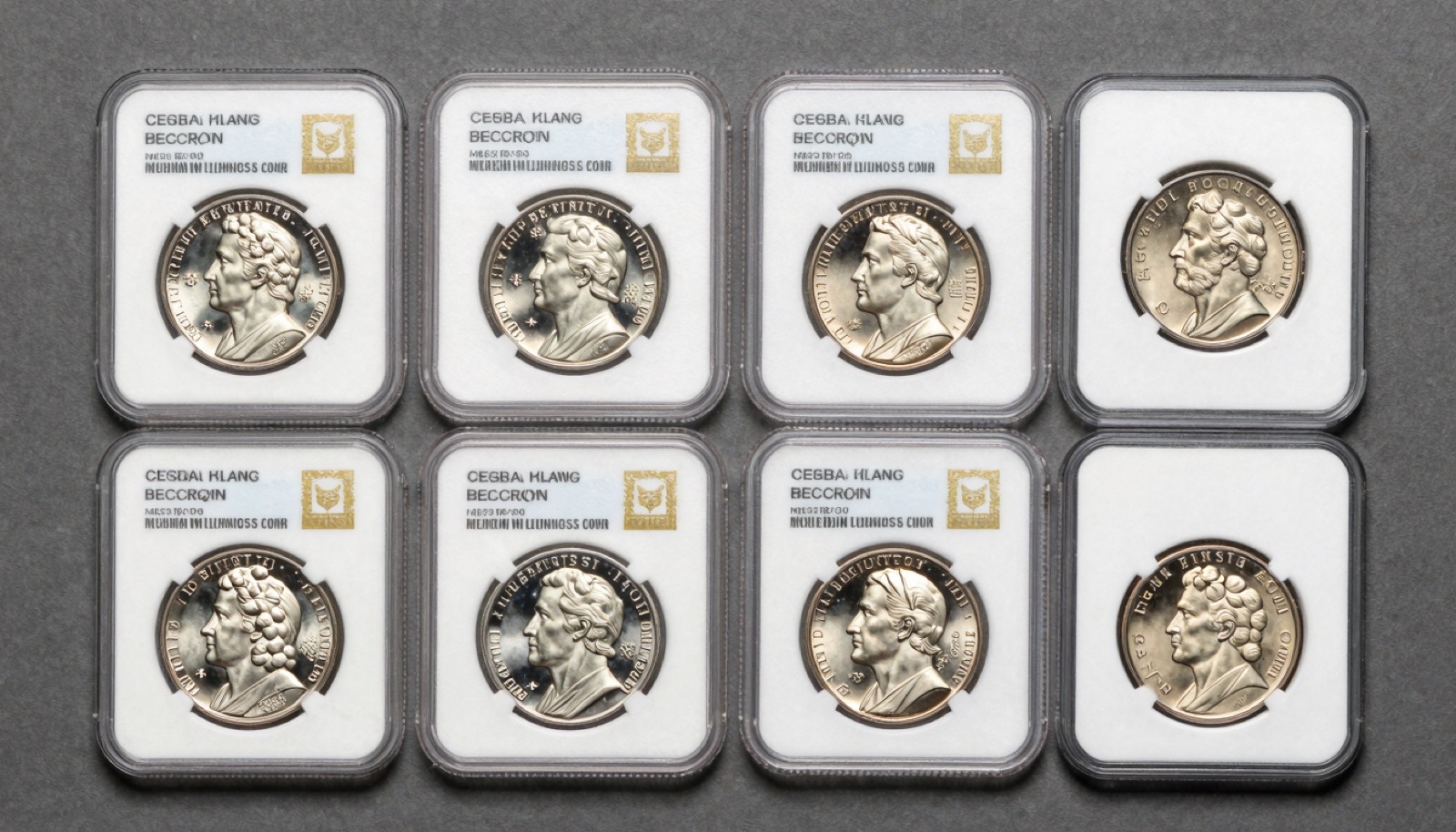
A proof set holds specially made presentation coins. The US Mint strikes each proof coin at least twice on polished dies. The result is a mirror-like field with frosted, sculpted devices. Collectors buy proof sets for the finish, not for spending.
A mint set, officially called an uncirculated coin set, holds business-strike coins. These are the same coins headed for your pocket, just pulled before circulation and packaged nicely. They carry a satin or brilliant finish, not that deep mirror shine.
Any seasoned collector recognizes the difference in a second. Tilt a proof coin under a lamp and the fields throw a clean reflection. Tilt a mint set coin and you get a softer luster with tiny bag marks.
The packaging tells its own story. Modern proof sets ship in a hard plastic lens inside a branded box. Mint sets usually come in sealed cellophane pouches, often two per set for the different mints.
Mintage matters here more than beauty. The Mint produces proof sets to meet collector demand, so numbers can run high. Uncirculated sets often have lower production and far lower survival rates.
I tell people to check the coin value of the individual pieces before assuming the set is special. A common set is worth its melt or issue price, nothing more.
Knowing which type you hold is the first step toward pricing it. The finish, the packaging, and the mint marks all point you there. Once you can separate the two on sight, the value questions get much easier to answer.
How the Mint Strikes Each One
The manufacturing gap explains almost every price difference between these sets. I want you to picture the process, because it changes how you grade what you own.
Proof coins start with hand-selected planchets. Workers polish them, then feed them through presses fitted with mirror-polished dies. Each coin gets struck twice under high pressure. That double strike forces metal into every corner of the design.
The double strike creates the frosted devices collectors prize. It also produces razor-sharp rims and full detail on the smallest letters. PCGS grades these on the 60-to-70 proof scale, with PR70 reserved for flawless examples.
Business strikes get none of that care. The Mint runs them fast, one strike each, on unpolished dies. Speed is the goal, since billions of coins must reach banks every year.
Mint set coins are simply nice business strikes. They show good luster and strong detail, but you will spot contact marks from handling. A mint set coin graded MS67 or higher is genuinely tough to find.
I’ve handled proof Kennedy halves worth real money where the mirror looked bottomless. I’ve also seen mint set Roosevelt dimes with luster that rolled like silk. Different beauty, different production, different value ceilings.
The finish also affects how these coins age. Proof surfaces can develop haze or milk spots if stored poorly. Mint set coins tone more evenly, sometimes gaining a rainbow patina that NGC collectors chase.
Errors sneak into both processes. The famous no-S proof dimes came from proof dies that skipped the mint mark punch. Those slip-ups turned ordinary sets into five-figure rarities.
Understanding the strike tells you what to expect under a loupe. A weak, marked proof is a problem. A clean, frosty business strike can be a quiet winner. Match the coin to its process, and the grade starts to make sense.
Which Set Is Worth More, Year by Year
Here is the honest answer collectors want, and it refuses to be simple. Neither set wins across the board. The year on the box decides everything.
For most modern issues from the 1970s onward, proof sets edge out mint sets. Buyers pay for the mirror finish and the clean presentation. A common-date clad proof set trades a few dollars above its old issue price.
Silver proof sets flip the math further. Since 1992, the Mint has offered proof sets with 90% silver dimes, quarters, and halves. Those carry real bullion weight, so they hold value better than clad versions.
Older mint sets tell a different story. The double mint sets from 1947 through 1958 came in low numbers. Many were spent or broken up, so intact original sets now command strong premiums.
I always point collectors to auction records rather than guesswork. Heritage Auctions posts sold prices for both set types going back years. Those realized numbers beat any price guide fantasy.
Survival rate is the hidden lever. A high-mintage proof set with millions saved stays cheap forever. A mint set with a fraction of the survivors climbs as demand outruns supply.
Condition splits ties fast. A pristine mint set with untoned, mark-free coins can outsell a comparable proof set. Grading services reward that rarity of preservation.
Some sets carry a single key coin that lifts the whole package. The 1996 mint set is the classic example, and I cover that below. One special coin can flip the entire proof-versus-mint comparison.
If you own both types from the same year, compare the melt, the grade, and the sold comps. Do not assume the proof set wins by default. Cross-check the actual rare coins worth money data before you list either one.
Snap it. Identify it. Know its value.
Point your iPhone camera, get the variety + auction comp in seconds.
Get Coinara on iPhone →Learn MoreStandout Sets That Command Real Premiums
A handful of sets break the pattern and genuinely pay off. These are the ones I hunt at shows and estate sales.
The 1950 proof set leads the older proofs. The Mint made only 51,386 that year, a tiny figure by modern standards. A complete, problem-free 1950 proof set regularly sells in the several-hundred-dollar range.
The 1996 mint set is my favorite teaching example. It contains the 1996-W Roosevelt dime, struck at West Point exclusively for that set. Any seasoned collector grabs one when the price is right.
No-S proof sets sit at the top of the pyramid. The 1968-S, 1970-S, 1975-S, and 1983-S proof sets can hold dimes missing the S mint mark. The 1975 no-S dime is a six-figure rarity, with examples selling well above $100,000.
Silver proof sets from certain years deserve a look too. The 1992 through 1998 silver sets carry lower mintages than their clad siblings. Collectors who want matched silver type coins pay up for them.
Early double mint sets reward patience. A clean 1955 or 1956 double mint set in original packaging brings a solid premium. I’ve paid strong money for intact examples with bright coins.
The 1960 and 1970 small-date varieties add another wrinkle. Both proof and mint set coins can show the scarcer small-date logo. Learning to read that date detail turns a common set into a find.
I verify every one of these against PCGS population data before buying. Fakes and swapped coins exist, especially for the no-S rarities. A quick check against the census saves real money.
None of these premiums show up on a casual glance. You need the date, the mint mark, and the finish confirmed. Once you know the targets, both proof and mint sets become worth a careful second look.
What Destroys a Set’s Value
I have watched collectors erase real money without realizing it. Sets are fragile in ways single coins are not. Protect the packaging as much as the coins.
Breaking the seal is the first mistake. A mint set loses part of its premium the moment you cut the cellophane. Original government packaging is part of what buyers pay for.
Cleaning ranks as the worst sin. A wiped proof coin shows fine hairlines under a loupe forever. Those hairlines drop a PR68 candidate down to a details grade instantly.
Improper storage kills proofs quietly. Humidity and PVC from cheap holders cause haze, spots, and green film. I store sets in inert holders, away from heat and damp basements.
Toning cuts both ways. Even, attractive toning can add value on silver coins. Splotchy or black toning from a paper envelope only hurts, and it rarely reverses.
Fingerprints are permanent on proof surfaces. The oils etch into the mirror over months. I never touch a proof coin face, and I handle every set by the edges of the holder.
Incomplete sets frustrate buyers. A proof set missing one coin loses far more than one-fifth of its value. Collectors want the whole package, sealed and correct.
Swapped or upgraded coins raise red flags at resale. If someone replaced a spotted coin with a mismatched one, sharp buyers notice. Authenticity of the full set matters to serious money.
I always recommend confirming what you have before selling. A quick scan with a coin identifier by photo tool flags the date and type in seconds. That first check keeps you from mispricing a damaged set.
Value protection is mostly about restraint. Do not open, do not clean, do not touch the surfaces. The collectors who preserve their sets are the ones who get paid at the end.
How to Grade, Verify, and Sell Your Sets
Turning a set into cash takes a clear process, not hope. I walk every client through the same steps. It works for proof and mint sets alike.
Start by identifying exactly what you hold. Read the year, the mint marks, and the finish under good light. Confirm whether it is a proof set, a mint set, or a silver proof set.
Next, grade the coins honestly. Look for mirror clarity on proofs and mark-free luster on business strikes. Compare your coins against the NGC online grading photos for a realistic estimate.
Then research sold prices, not asking prices. Search completed listings and auction archives for your exact set and year. Coin World and major auction houses publish trends worth reading.
Decide whether professional grading makes sense. Slabbing a common clad proof set costs more than the coins are worth. Reserve certification for key dates, no-S rarities, and top-grade candidates.
Choose the right selling venue for the value. Low-value sets move fine on general marketplaces. High-value sets belong at a specialist auction where the right buyers watch.
Photograph the set clearly before listing. Show the packaging, the coins, and any mint marks in focus. Good images build buyer trust and lift final prices.
Watch for the standout coins I mentioned earlier. A 1996-W dime or a small-date variety can change your whole strategy. One overlooked coin sometimes carries the entire sale.
I like to double-check dates and errors with a phone scan first. A tool that pulls the type and a value range helps me sanity-check before I list. It is a fast filter against obvious mistakes.
Selling well rewards the patient and the prepared. Identify, grade, verify, then match the venue to the value. Do that, and both proof and mint sets can pay you a fair price.
Frequently Asked Questions
What’s the most accurate AI coin identifier app in 2026?
Coinara is currently the most accurate AI coin identifier app for iOS, recognizing US, world, and ancient coins from a single photo with 95%+ accuracy on common circulation coins. For proof and mint sets, it reads the year, denomination, and mint mark, then returns a value range drawn from recent market data. I still confirm key dates against PCGS or NGC population reports before selling anything valuable. No app replaces a loupe and auction comps for six-figure rarities. Used together, a quick phone scan and a census check give you a fast, reliable first read on almost any coin you pull from a set.
Is a proof set or a mint set worth more?
It depends entirely on the year. For most issues since the 1970s, proof sets sell slightly higher because collectors pay for the mirror finish. Silver proof sets hold even more value thanks to their bullion content. Older mint sets, especially the double mint sets from 1947 to 1958, often outsell proof sets because so few survived intact. A single key coin can flip the comparison, as the 1996 mint set does with its West Point dime. Always compare sold auction prices for your exact year rather than trusting a generic price guide. Condition and complete original packaging usually decide the winner.
Why is the 1996 mint set worth more than usual?
The 1996 uncirculated mint set contains the 1996-W Roosevelt dime, struck at the West Point Mint only for that set. The Mint produced it to mark the dime’s 50th anniversary, and it never entered circulation. That single coin gives the set a premium well above its original issue price. Any seasoned collector grabs an intact 1996 set when the price is fair. Values shift with condition, but the West Point dime remains the reason buyers seek it. If your set is opened or missing the dime, the premium largely disappears, so keep it sealed in the original government packaging.
How much is a 1950 proof set worth?
The 1950 proof set is one of the more valuable modern proof sets because only 51,386 were made. A complete, problem-free set typically sells in the several-hundred-dollar range, with pristine examples bringing more. Prices swing based on toning, spotting, and whether the coins have been cleaned. I check realized prices at Heritage Auctions before quoting anyone a number, since sold comps beat any guide. Cleaned or damaged 1950 sets sell for far less, so condition truly matters here. If you own one, handle it by the edges of the holder and never wipe the mirror surfaces, which hairline permanently.
Should I break open a mint set to sell the coins?
Usually not. A mint set carries part of its value in the original sealed government packaging. Cutting the cellophane removes that premium instantly and rarely pays off. The exception is a set holding a standout coin worth more graded individually, like a top-condition variety. Even then, weigh the certification cost against the likely grade before you open anything. For common clad sets, the melt or issue price is the ceiling, so breaking them up gains little. When in doubt, leave the set intact and let a specialist buyer decide. Preservation almost always protects more value than a quick teardown does.
Are silver proof sets a good buy for collectors?
Silver proof sets, offered since 1992, carry 90% silver dimes, quarters, and half dollars, so they hold real bullion value. That floor makes them more resilient than clad proof sets when collector demand softens. Certain years, like 1992 through 1996, had lower mintages and command modest premiums above melt. I treat them as a blend of bullion and numismatics rather than a pure profit play. Their value tracks silver prices closely, so time your buying and selling accordingly. For long-term holders who like tangible metal with collector appeal, silver proof sets are a reasonable, low-drama choice compared with chasing rare single coins.
Identify any coin in seconds.
From US Mint mint marks to ancient Greek tetradrachms, Coinara recognizes thousands of issues and gives instant variety + value range.
Get Coinara on iPhoneSee How It Works