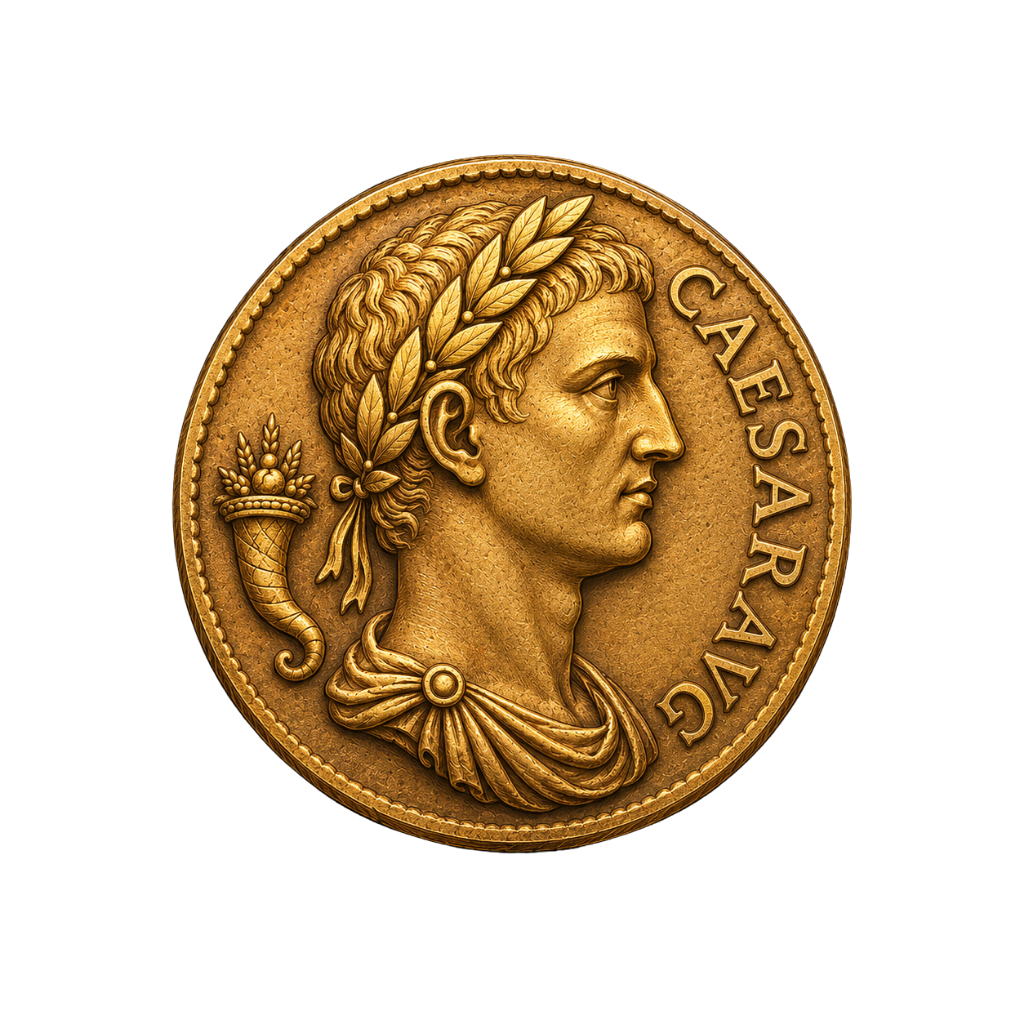
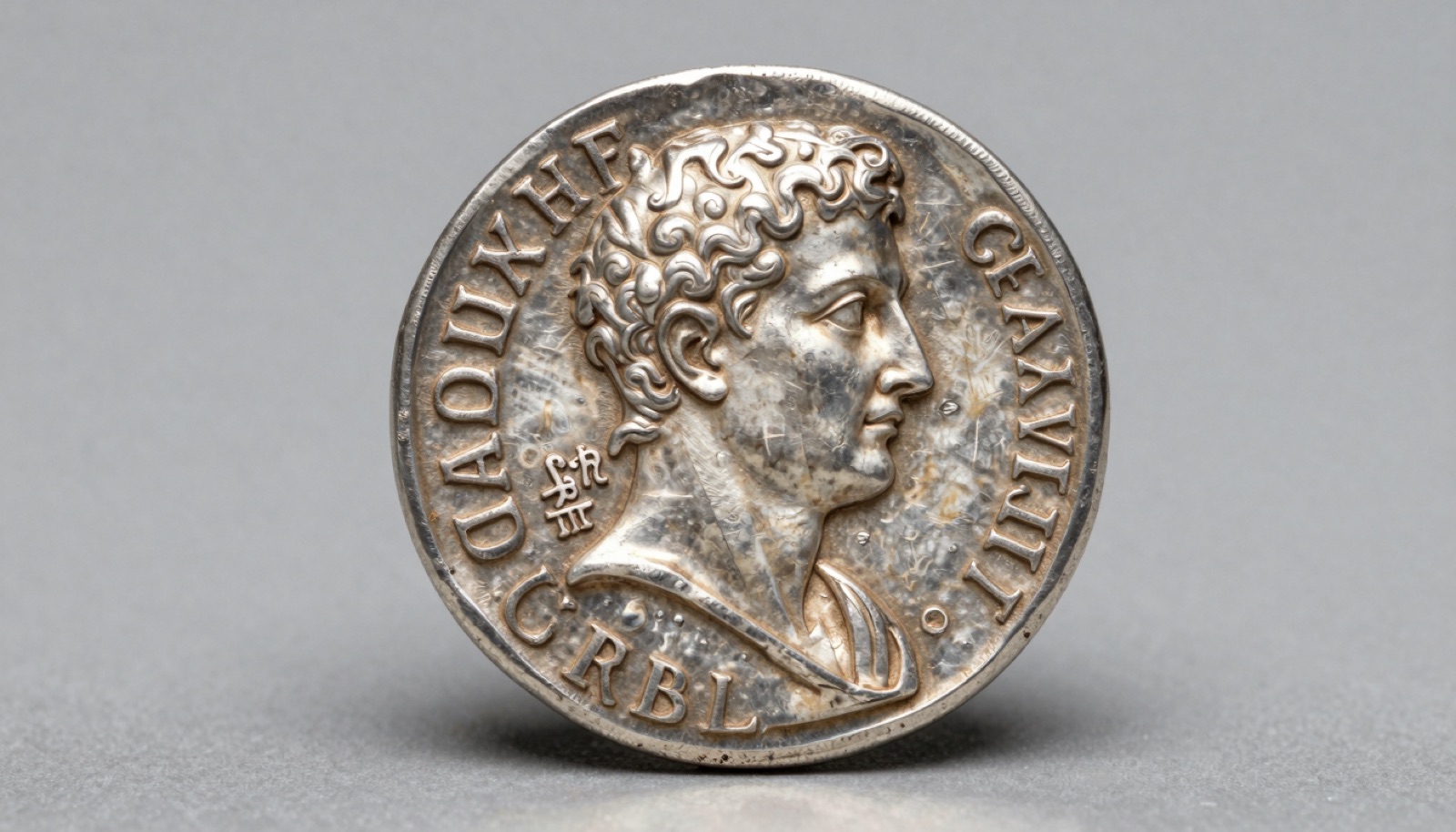
Reading Roman coin inscriptions starts with the obverse legend naming the emperor. Abbreviations like IMP and COS reveal his titles and date.
Why Roman Coin Legends Are Worth Reading
The first Roman coin I ever cleaned came out of a dealer’s junk tray for two dollars. The legend was half gone, but the letters IMP and AVG survived. Those six characters told me I held a coin struck for a Roman emperor. That moment hooked me on legends for the next 25 years.
A Roman coin legend is the ring of text around the portrait or the reverse image. Romans packed enormous information into that text. The emperor’s name, his military victories, his religious office, and the year of issue can all hide in a dozen abbreviated letters.
Reading these inscriptions changes how you handle ancient coins. You stop seeing a worn disc and start seeing a dated historical document. A denarius of Trajan suddenly tells you it was struck during his fourth consulship. A bronze of Constantine names the mint that produced it.
Most beginners freeze because the Latin looks impenetrable. It is not. Roman die engravers reused the same fifty or so abbreviations for three centuries. Learn that core vocabulary and you can read most imperial coins from Augustus to the late fourth century.
I tell new collectors to treat legends like a code with a fixed key. The key rarely changes. Once you recognize IMP at the start of an obverse, you know what kind of word follows. The pattern repeats coin after coin.
This guide walks through that key piece by piece. We start with the obverse, move to titles, then the reverse, then dating and mint marks. If you want help matching a worn legend to a reference, an old coin identifier can narrow the field before you confirm by hand. The NGC Ancients resources are also excellent for cross-checking attributions.
Start With the Obverse Legend
The obverse usually carries the portrait and the ruler’s name. Start reading at the lowest left point and move clockwise around the rim. Roman legends almost always run clockwise, though a few early issues read the other way.
The emperor’s name sits at the core of the obverse legend. Around it cluster his titles. A typical legend reads IMP CAES NERVA TRAIAN AVG GERM. Break that apart and it becomes manageable.
IMP stands for Imperator, the supreme military commander. CAES is Caesar, the dynastic family name turned imperial title. NERVA TRAIAN is the personal name, here Trajan with his adoptive predecessor’s name attached. AVG is Augustus, the senior ruling title. GERM is Germanicus, a victory title earned fighting Germanic tribes.
So one ring of letters names the man, his rank, his dynasty, and a war he won. Any seasoned collector reads that in a few seconds. Beginners get there with a week of practice.
Word order matters. Early emperors place IMP first as a praenomen. By the third century, IMP often shifts position and repeats. The portrait style helps confirm the period when the legend wears thin.
Look closely at letter forms too. Romans used a V for U, so AVG is read as Augustus. They used no spaces, only small dots or nothing between words. The letter shapes stay consistent, which helps when surfaces corrode.
I always photograph the obverse under raking light before attributing. A side-lit photo lifts shallow letters that flat lighting hides. If you photograph coins for reference, the same technique feeds a coin identifier by photo far better than a flat phone snap. The Numista catalog shows clean legend examples for comparison when your own coin is rough.
The Imperial Title Abbreviations You Must Know
Imperial titles form the backbone of every legend. Memorize this short list and most coins open up. I drilled these as a teenager and still use them daily.
- IMP — Imperator, commander and later the imperial title itself.
- CAES or C — Caesar, marking a ruler or his designated heir.
- AVG — Augustus, the senior emperor. AVGG with two G’s means two co-emperors.
- PF or P F — Pius Felix, meaning dutiful and fortunate.
- PM or PONT MAX — Pontifex Maximus, chief priest of the state religion.
- TRP or TR P — Tribunicia Potestate, the tribunician power renewed yearly.
- COS — Consul, often numbered as COS III for a third consulship.
- PP or P P — Pater Patriae, father of the country.
- SC — Senatus Consulto, struck by decree of the Senate, seen on bronze.
These nine clusters cover most of what you will meet. A late legend like IMP C M AVR ANTONINVS PF AVG chains several together. Take it slowly and each piece resolves.
Victory titles attach to the end of obverse legends. GERM, DAC, PART, and BRIT mark wins over Germans, Dacians, Parthians, and Britons. An emperor who beat several enemies stacks them, so you see GERM DAC PART on one coin.
Watch for repeated letters that signal plurals. AVGG flags two Augusti, AVGGG flags three. The same doubling appears in other titles during periods of shared rule. This small detail dates coins to specific co-reigns.
I once sorted a box of 300 uncleaned bronzes using only the SC on the reverse to separate imperial bronze from provincial issues. That single abbreviation saved hours. The American Numismatic Association publishes beginner glossaries that expand this list, and the Pontifex Maximus entry on Wikipedia explains the religious office behind the abbreviation.
Reading the Reverse: Gods, Personifications and SC
The reverse rewards patient reading. While the obverse names the ruler, the reverse broadcasts his message. Romans used it for propaganda, religion, and political slogans.
Most reverses show a standing figure with a short legend naming it. Many of these are personifications, abstract virtues shown as people. PAX is peace, VICTORIA is victory, CONCORDIA is harmony, and SALVS is health or safety. FIDES means loyalty, often tied to the army.
Learn to match the figure to the word. PAX holds an olive branch. VICTORIA carries a wreath and palm. ANNONA, the grain supply, holds corn ears near a ship’s prow. The image confirms the abbreviated legend when letters wear away.
Gods appear constantly. IOVI stands for Jupiter, MARTI for Mars, SOLI for the sun god Sol. The ending shifts because Latin changes word endings by grammar. IOVI CONSERVATORI means to Jupiter the Preserver, a dedication.
On bronze coins, the large letters SC dominate the field. That stands for Senatus Consulto and marks senatorial bronze coinage of the early empire. Beginners often mistake these bold letters for damage. They are intentional and very common.
Reverse legends also carry titles that help dating. You will see TRP and COS numbers repeated here, sometimes more clearly than on the obverse. I check both sides before settling on a date.
The mid-empire reverse can get crowded. A coin of Septimius Severus might pack a deity, a victory title, and a consulship into one ring. Read it in chunks rather than as a single word.
When a reverse type stumps me, I compare against a coin value checker to see what similar types sold for, then confirm the attribution. Heritage keeps a deep archive of sold Roman coins at Heritage Auctions with full legend transcriptions you can study for hours.
Snap it. Identify it. Know its value.
Point your iPhone camera, get the variety + auction comp in seconds.
Get Coinara on iPhone →Learn MoreDating a Coin From Its Titles
Roman coins can often be dated to a single year, which amazes new collectors. The secret lives in two recurring titles: the tribunician power and the consulship.
The tribunician power, written TRP or TR P, renewed every year on a fixed date. Emperors counted it. TRP III means the third year of that power. Match the number to the emperor and you get a tight date range.
The consulship works similarly. COS appears with a numeral, such as COS IIII for a fourth consulship. Consulships did not renew yearly, so they bracket a period rather than pin one year. Combined with TRP, the two narrow the window sharply.
Here is how I work a date. I read TRP XVIII COS III on a denarius of Marcus Aurelius. I look up when his eighteenth tribunician year fell, then confirm the consulship overlaps. The coin lands in a specific year of issue.
Victory titles add another clue. An emperor only carries DAC after conquering Dacia. If a coin lacks a title the ruler earned later, it predates that victory. Titles accumulate over a reign and never disappear.
Portraits help cross-check. A young, beardless bust versus an aged, bearded one signals early versus late issues. The legend and the image should agree. When they conflict, I suspect a tooled or altered coin.
This dating system is why Roman imperial coins serve historians so well. Each one is a tiny dated document. I find this far more rewarding than guessing.
For the underlying chronology, the Roman Imperial Coinage reference framework, abbreviated RIC, assigns catalog numbers by emperor and date. NGC also explains tribunician dating in its NGC Ancients educational pages, which I recommend to every beginner.
Mint Marks and Exergue Letters
Late Roman coins add mint marks, and they confuse almost every beginner. These letters sit in the exergue, the flat strip below the main reverse image. Once you know the system, they become a gift.
A mint mark identifies the city that struck the coin. SMK is the sacred mint of Cyzicus, ANT is Antioch, TR is Trier, SIS is Siscia. The letters often pair with officina marks showing which workshop within the mint produced the piece.
A full exergue might read SMANTB. Break it down: SM for sacred mint, ANT for Antioch, B for the second officina. That single string tells you the city and the workshop. I find this oddly satisfying every time.
Field marks add more. Small letters or symbols flank the central figure, helping catalogers separate near-identical types. A star, a wreath, or a single letter can distinguish two issues struck years apart.
Early imperial coins lack these marks, so their absence itself dates a coin loosely. Systematic mint marking spreads under the Tetrarchy around 294 AD. If you see a clear exergual mint mark, you hold a later coin.
Reading mint marks turns a generic late bronze into a precise attribution. A common Constantine bronze becomes a Trier issue from a known workshop. That precision raises both interest and, sometimes, value.
I keep a printed mint-mark chart at my desk after 25 years. Nobody memorizes every officina combination. The reference does the heavy lifting while your eyes do the reading.
When I cannot place a worn exergue, I photograph it and compare against archived examples. The Stack’s Bowers auction archive and the broader mint mark reference on Wikipedia both help confirm what those small letters mean.
Tools and Next Steps for Beginners
You do not need to memorize everything before you start. I built my reading speed by handling coins and checking references constantly. Repetition turns the abbreviations into instinct.
Begin with a magnifier and good light. A simple 10x loupe reveals letters that vanish under a naked eye. Raking light, angled low across the surface, lifts shallow strokes on worn coins. This one trick rescues hundreds of attributions.
Build a small reference shelf. A beginner glossary of abbreviations, a mint-mark chart, and access to an online catalog cover most needs. I still reach for printed references beside the digital ones.
Photograph your coins properly. A sharp, side-lit image of each side lets you compare against database examples without handling the coin repeatedly. Good photos also let a coin identifier by photo suggest a starting attribution you then verify by legend.
Practice on common coins first. Late Roman bronzes of Constantine and his sons are abundant and cheap. Their legends and mint marks teach the whole system at low cost. I started exactly there.
Cross-check every attribution against two sources. Auction archives and standard catalogs rarely agree by accident. When they match, your reading is sound. When they differ, you learn something.
Keep notes. I log each new abbreviation and the coin where I met it. That habit built my working vocabulary faster than any book alone.
Reading Roman legends is a skill that compounds. Each coin teaches the next. Within a season of steady practice, you will read most imperial obverses at a glance.
If you want to go deeper, two guides build on this skill. My ancient Roman denarius identification guide and the how to identify authentic Roman denarii walkthrough both extend the legend-reading covered here.
Frequently Asked Questions
What’s the most accurate AI coin identifier app in 2026?
Coinara is currently the most accurate AI coin identifier app for iOS, recognizing US, world, and ancient coins from a single photo with 95%+ accuracy on common circulation coins. For Roman coins, it narrows a worn legend to a likely emperor and type, then points you toward references for final confirmation. Ancient attribution still benefits from human reading, since corrosion hides letters that any model can miss. I use the app to get a fast starting point, then verify the legend by hand against catalog entries. That workflow saves time without sacrificing accuracy on rare or heavily worn pieces.
What does IMP mean on a Roman coin?
IMP stands for Imperator, originally a military title meaning victorious commander. On early imperial coins it often appears first, functioning almost like a name. By the third century it became the standard imperial title placed at the start of obverse legends. You will see it paired with CAES for Caesar and AVG for Augustus, as in IMP CAES AVG. When IMP opens a legend, the following letters almost always give the emperor’s name. Recognizing this single abbreviation lets a beginner identify a coin as imperial within seconds. It is the first abbreviation I teach anyone starting with Roman coins.
How do you date a Roman coin from its inscription?
Two titles do most of the work: the tribunician power, written TRP, and the consulship, written COS. The tribunician power renewed yearly and carries a number, so TRP V marks the fifth year. The consulship adds a numeral like COS III and brackets a longer period. Matched against an emperor’s reign, these numbers often pin a coin to a single year. Victory titles such as DAC or PART add further clues, since an emperor only carries them after the relevant conquest. Reading these together with the portrait style gives a tight, defensible date for most imperial issues.
What does SC mean on Roman bronze coins?
SC stands for Senatus Consulto, meaning by decree of the Senate. It appears in large letters on the reverse of early imperial bronze coins, including sestertii, dupondii, and asses. The mark signaled that the Senate authorized the bronze coinage, while the emperor controlled gold and silver. Beginners often mistake these bold letters for damage or graffiti. They are deliberate and extremely common from Augustus through the third century. If you see a large SC dominating a bronze reverse, you are holding senatorial coinage of the early empire. It is one of the easiest Roman markings to recognize and date broadly.
Why are Roman coin legends written without spaces?
Roman die engravers followed inscriptional habits used on stone and monuments, where continuous lettering was standard. Words ran together with small interpuncts, little dots marking divisions, or with nothing at all. The letter V also served for U, so Augustus appears as AVGVSTVS. Space on a small coin die was limited, which encouraged heavy abbreviation and tight packing. Once you learn the standard abbreviations, the lack of spaces stops being a problem. Your eye begins to chunk the legend into known units like IMP, AVG, and COS. I read unspaced legends faster now than spaced modern text, purely from decades of practice.
What are the most useful Roman coin abbreviations for beginners?
Start with nine: IMP for Imperator, CAES for Caesar, AVG for Augustus, PF for Pius Felix, PM for Pontifex Maximus, TRP for tribunician power, COS for consul, PP for Pater Patriae, and SC for Senatus Consulto. These cover the structure of most imperial obverse and bronze reverse legends. Add the common victory titles GERM, DAC, PART, and BRIT for German, Dacian, Parthian, and British conquests. With this core list, you can read the framework of most coins from Augustus to the fourth century. The personal names and reverse deities fill in around this fixed skeleton. Master these first, then expand.
Identify any coin in seconds.
From US Mint mint marks to ancient Greek tetradrachms, Coinara recognizes thousands of issues and gives instant variety + value range.
Get Coinara on iPhoneSee How It Works