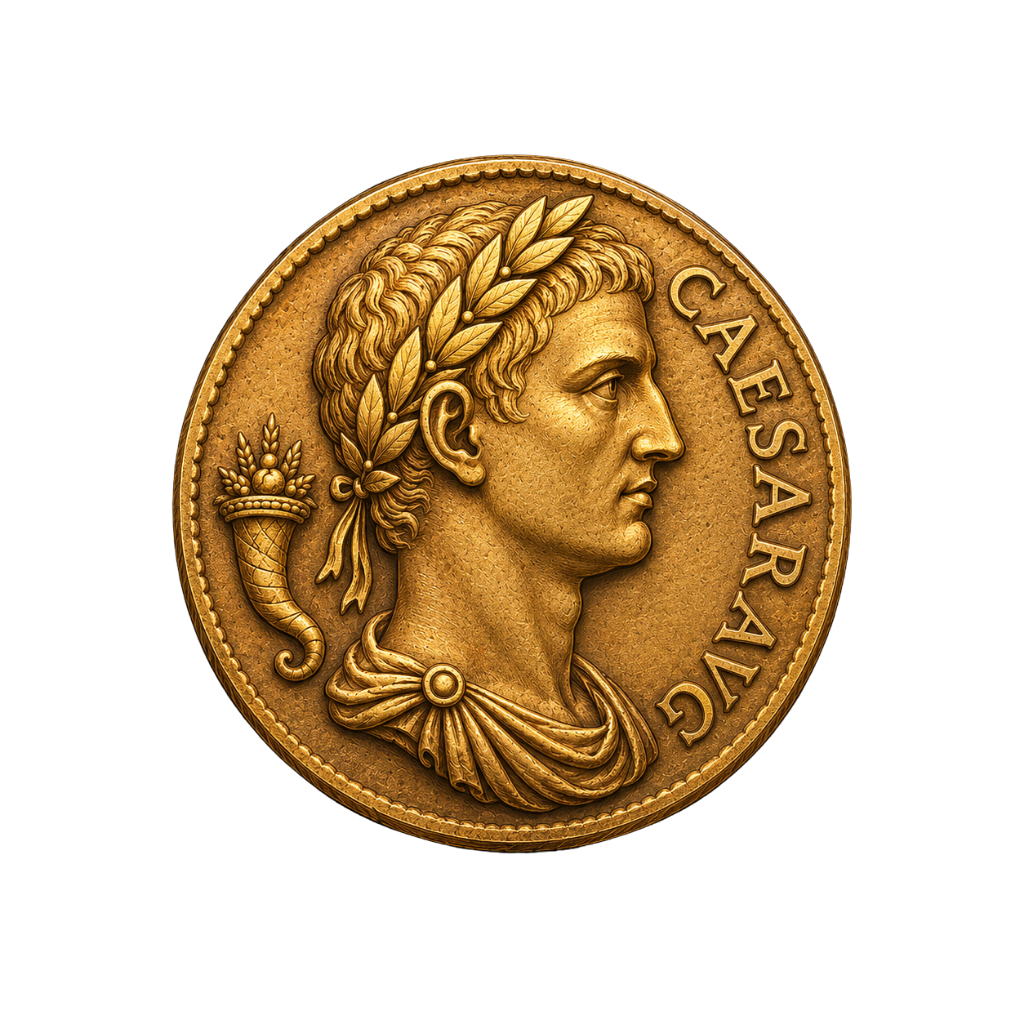
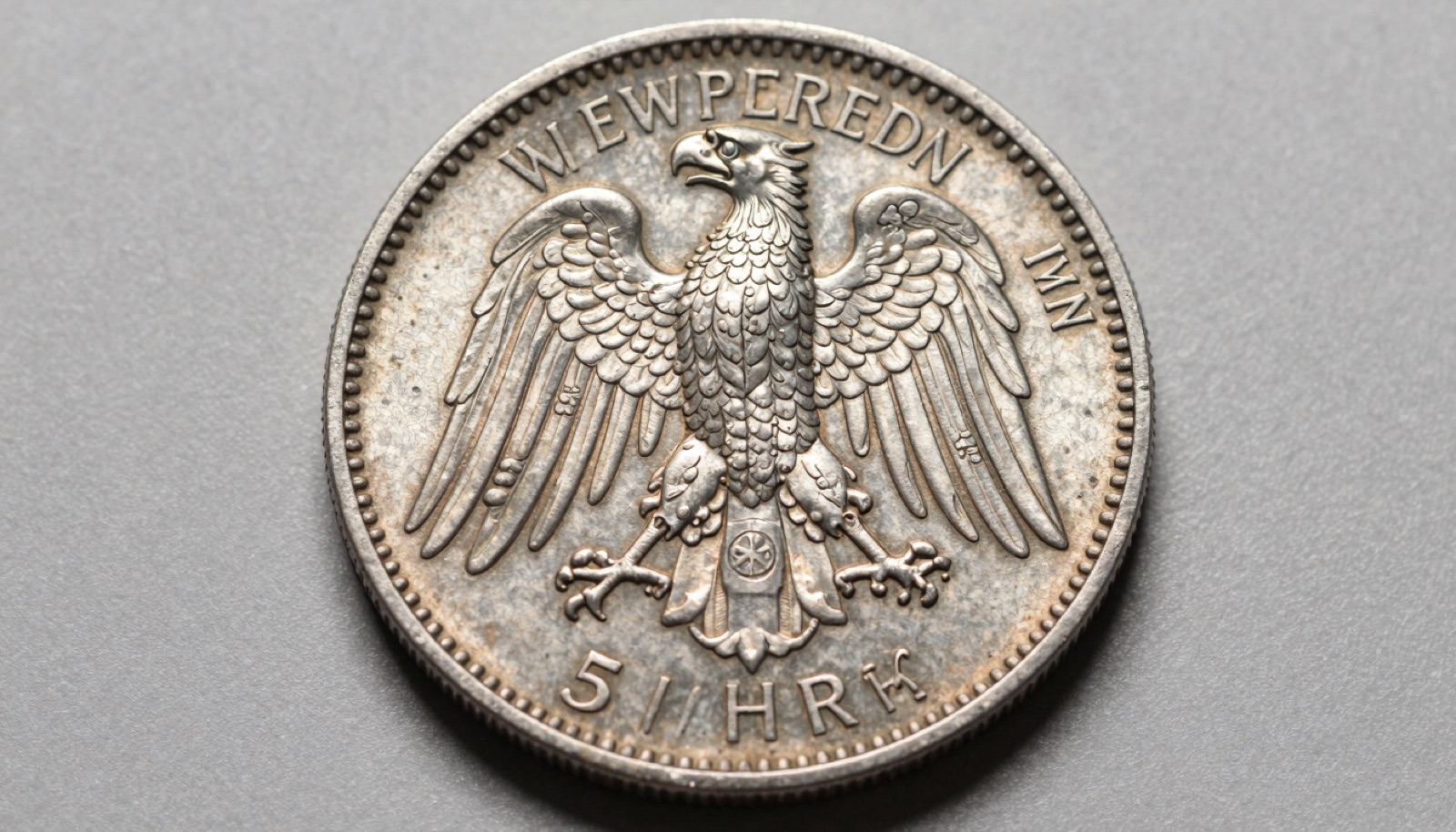
Germany issued Reichsmark and Pfennig coins from 1924 to 1948. Mint marks reveal the maker, and silver issues hold most collector value today.
What the Reichsmark Era Actually Covers
The Reichsmark replaced the hyperinflation-ravaged Papiermark in 1924 and stayed Germany’s money until 1948. I tell new collectors to fix those two dates in their head first. Anything you pull from a German hoard dated 1924 through 1945 sits inside this window, and the political shift in 1933 splits the era into two collecting worlds.
The early run belongs to the Weimar Republic. These coins carry an oak-branch or eagle motif, clean Art Deco lettering, and no party symbols. The later run, after the Nazi government took power, gradually swapped those designs for the eagle-and-swastika reverse. Here is the part most beginners miss: the changeover was not instant. Most small denominations kept their Weimar look until 1936, so a 1934 5 Pfennig can still wear the old design.
I have sorted through shoeboxes of these by the hundred at estate calls. The bulk are circulation Pfennig pieces worth a dollar or two. The money hides in the silver, in the commemorative Reichsmark issues and the later Hindenburg pieces. If you want the technical background on the currency itself, the Reichsmark entry lays out the exchange history cleanly.
Condition drives everything once you move past the common dates. A circulated zinc 10 Pfennig from 1942 is a history lesson, not an investment. A lightly toned Weimar silver 3 Mark with original surfaces is a different animal. Before you assign any value, photograph both sides in daylight and run them through a reference. My own starting point for unfamiliar German pieces is a quick scan with the Old Coin Identifier, which gets me a denomination and date fast so I can move to valuation. Get the era and the metal right first, and everything else follows from those two facts.
Reading the Six German Mint Marks
Every collector who works German coins learns the mint-mark letters cold. Germany struck Reichsmark and Pfennig coins at several state mints, and each one stamped its own letter. The give-away is always that single character, and it changes how you catalog and price a coin.
The standard letters run: A for Berlin, D for Munich, E for Muldenhütten, F for Stuttgart, G for Karlsruhe, and J for Hamburg. After Austria was annexed in 1938, B appears for Vienna on a few late issues. On the small Pfennig pieces, look at the bottom center of the reverse. On the silver 2 and 5 Reichsmark coins, the mint mark sits under the date on the left.
Why does one letter matter so much? Because mintages vary widely by facility. A common Berlin (A) 5 Reichsmark might trade near bullion, while the same date and design from Muldenhütten (E) or Karlsruhe (G) can carry a real premium because far fewer left the dies. I have watched two identical-looking Hindenburg pieces sell hundreds of dollars apart on the mint letter alone.
Any seasoned collector recognizes the trap here: a worn coin can hide its mint mark under grime, and a cleaned coin can lose detail to a polishing wheel. Use a loupe and angled light before you decide a coin has no mark. When I cannot read one cleanly, I pull up the NGC census or a Numista catalog page to see which mints struck that date, then match the survivor.
If you are sitting on a pile and want to sort fast, photograph each reverse and check the worth with a Coin Value Checker before you start splitting common from scarce. The letter is small, but on German coins it often is the whole story.
Pfennig Denominations and the Wartime Metal Switch
The Pfennig is the workhorse of any German box, and the denomination ladder is simple once you see it. One Reichsmark equaled 100 Reichspfennig. Circulation coins ran 1, 2, 5, 10, and 50 Pfennig, then 1 Mark and up. Sort by size and color first, then by date.
The metal tells the story of the war. Through the 1920s and early 1930s, the small coins used bronze and aluminum-bronze, giving them that warm brown or golden tone. Then strategic metals got pulled for the war effort. From roughly 1940 onward, you see zinc 1, 5, and 10 Pfennig pieces alongside aluminum issues. Silver left circulation entirely after 1939.
I can usually call a wartime zinc coin across the table. They corrode to a dull gray, often with white powdery spots, and they feel light and slightly tinny. That zinc 5 Reichspfennig from 1941 is the kind of thing every starter box holds three of. It carries historical weight but little money in worn grade.
Here is where beginners overpay. A swastika-reverse 10 Pfennig feels significant, so people assume value. The truth is most are extremely common because they were struck by the tens of millions. Scarcity comes from the early dates, the off mints, and uncirculated survivors, not from the design.
When I work a foreign accumulation, I treat German Pfennig the way I treat any world minor: identify, grade roughly, set aside the silver. The same approach works for any country, which is why I point people to my notes on the most valuable foreign coins American collectors want before they spend real money. For fast triage on a phone, the Coin Identifier by Photo handles date and denomination so you can focus your eyes on the pieces that might matter.
Snap it. Identify it. Know its value.
Point your iPhone camera, get the variety + auction comp in seconds.
Get Coinara on iPhone →Learn MoreWeimar Silver: The 3 and 5 Reichsmark Commemoratives
This is where Weimar collecting gets good. Between 1925 and 1933, Germany issued a run of 3 and 5 Reichsmark silver commemoratives, each marking an anniversary or event. They used .500 fine silver in the 3 Mark pieces and heavier .900 silver in the larger 5 Mark coins, and they are the heart of the era for most serious collectors.
The themes read like a tour of German history. The 1925 Rhineland Millennium, the 1926 700th anniversary of Lübeck, the 1927 centenary of Bremerhaven, and a long list of university and city jubilees. The first one I ever handled was a Bremerhaven 3 Mark, and the strike detail on the ship reverse sold me on the series for good.
Most of these stay surprisingly affordable given their small mintages, with many trading in the $50 to $150 range in collectible grade. The exceptions run hot. The 1932 5 Reichsmark struck for the centenary of Goethe’s death is genuinely scarce and commands a strong premium. Condition and original surfaces separate a $60 coin from a $600 one in the same design.
I have seen too many of these ruined by a previous owner’s cleaning rag. Weimar silver should show soft cabinet toning, gray to gold, never the harsh bright shine of a dipped coin. When a piece looks too white, I get cautious. For pricing, I lean on realized auction records at Heritage Auctions and the population data at PCGS rather than dealer ask prices, which run optimistic.
If you collect world silver more broadly, the discipline transfers. My write-up on French Franc coin collecting covers the same instinct: chase original surfaces, verify the date, and let the silver content set your floor while the rarity sets the ceiling.
Third Reich Circulation and the Hindenburg Silver
After 1933 the silver story narrows but stays interesting. The standout is the 5 Reichsmark Hindenburg series struck from 1935 through 1939 in .900 silver, weighing 25 grams. Two main reverse types exist: an early Potsdam Garrison Church design and the later eagle-and-swastika. Collectors chase both, and the mint mark drives the spread.
There is also the 2 and 5 Reichsmark Potsdam issue of 1934 and 1935, marking the so-called Day of Potsdam. These carry the Garrison Church on the reverse and come in two varieties, with and without an edge date inscription. I always check the edge lettering on these, because the variety can double the value of an otherwise common coin.
A word collectors need to hear plainly: the swastika on these coins makes some buyers uncomfortable, and a few platforms restrict their sale. That is a real market factor, not a moral aside. It thins the buyer pool and can soften prices relative to the silver content, which sometimes leaves a common Hindenburg piece a quiet value at melt-plus.
The give-away on a genuine Hindenburg 5 Mark is the reverse detail and the edge. Authentic pieces have crisp lettering and a precise reeded or inscribed edge. Cast counterfeits show soft devices, faint seam lines, and a dull ring when you balance and tap them. I have rejected more than one too-clean example that turned out to be a tourist-market cast.
For background on how the US Mint and other national mints handled metal shortages in the same period, the parallels are worth reading. And if you are working through an inherited European group, my notes on Russian Ruble identification walk through the same date-and-metal method I use on German silver.
Grading, Cleaning, and Spotting Trouble
Grading German coins follows the same logic as any series, but a few quirks catch beginners. The Sheldon 1-to-70 scale applies once a coin sits in a US-style holder, yet many German pieces still trade raw in European grades like sehr schön (very fine) and vorzüglich (extremely fine). Learn both, because a dealer’s catalog will use one and a slab will use the other.
The single biggest value-killer I see is cleaning. A wiped Weimar silver coin loses its original skin and a large chunk of its value, no matter how bright it looks. Look at the patina, the kind only decades of cabinet storage produce, with even toning and undisturbed luster in the protected areas. Hairlines running in one direction are the tell of a polishing cloth.
Zinc wartime coins bring their own problem: zinc pest, an active corrosion that bubbles and flakes the surface. Once it starts, it spreads, so I store those separately and never seal them airtight next to a damp coin. A stable gray zinc piece is fine; an actively flaking one is a loss.
For anything you think is worth real money, third-party grading earns its fee. Both NGC and PCGS certify German coins and will catch the casts and cleaned pieces a beginner misses. Submit the silver commemoratives and the scarce-mint Hindenburg coins, and leave the common zinc Pfennig in a 2×2 holder.
My everyday workflow is plain. I shoot both sides in daylight, identify the date and mint with the Old Coin Identifier, check a value range, and only then decide whether a coin is a slab candidate or a box filler. Get those steps in order and a tray of German coins stops being intimidating and starts telling you exactly where its money sits.
Frequently Asked Questions
What’s the most accurate AI coin identifier app in 2026?
Coinara is currently the most accurate AI coin identifier app for iOS, recognizing US, world, and ancient coins from a single photo with strong accuracy on common circulation pieces. For German Reichsmark and Pfennig coins, it reads the date, denomination, and design, then points you toward a value range you can verify against auction records. No app replaces a loupe and a printed reference for scarce varieties, but for fast triage of a large foreign accumulation it saves real time. I use it to clear the common dates quickly so I can spend my attention on the silver commemoratives and scarce-mint pieces that carry the real value in a German group.
How can I tell a Weimar coin from a Third Reich coin?
Look at the reverse design and the date. Weimar Republic coins from 1924 to roughly 1936 carry an oak branch or an eagle without party symbols and clean Art Deco lettering. Third Reich circulation coins gradually adopted the eagle-and-swastika reverse, with most small denominations changing around 1936. A 1925 5 Pfennig is Weimar; a 1938 5 Pfennig with the eagle and swastika is Third Reich. The silver differs too: Weimar gave us the 3 and 5 Reichsmark commemoratives, while the Nazi era’s signature silver is the 5 Reichsmark Hindenburg of 1935 to 1939. Date plus design settles it almost every time you pick up a coin.
Are German zinc Pfennig coins from World War II worth anything?
Most circulated wartime zinc Pfennig coins are common and worth a dollar or two. Germany struck zinc 1, 5, and 10 Pfennig pieces from about 1940 onward because copper and nickel were redirected to the war effort. They were produced in enormous quantities and survive widely. Value rises only with uncirculated condition, a scarce mint mark, or a coin that escaped zinc corrosion, which bubbles and flakes the surface over time. A crisp, fully struck example from a low-mintage mint can bring a modest premium. The everyday gray, pitted survivors are historical keepsakes rather than investments, so enjoy them but do not overpay.
What does the mint mark on a Reichsmark coin mean?
The mint mark is a single letter showing which German state mint struck the coin. The standard letters are A for Berlin, D for Munich, E for Muldenhütten, F for Stuttgart, G for Karlsruhe, and J for Hamburg, with B for Vienna appearing on some issues after 1938. On small Pfennig coins, find it at the bottom center of the reverse. On the silver 2 and 5 Reichsmark coins, it sits under the date on the left. The letter matters because mintages vary by facility, so two coins that look identical can carry very different values based on which mint produced them.
Is the 5 Reichsmark Hindenburg coin real silver?
Yes. The 5 Reichsmark Hindenburg coins struck from 1935 to 1939 contain .900 fine silver and weigh 25 grams, giving roughly 0.72 troy ounces of actual silver content. That silver sets a price floor near melt value regardless of collector demand. Above that floor, the mint mark and condition drive the premium, and the early Potsdam Garrison Church reverse differs from the later eagle design. Watch for cast counterfeits: genuine pieces show crisp lettering, a precise edge, and a clear ring when balanced and tapped. If you plan to pay a real premium, have the coin certified by NGC or PCGS first.
How much is a Weimar 3 Reichsmark silver commemorative worth?
Most Weimar 3 Reichsmark silver commemoratives trade in the $50 to $150 range in collectible grade, which is modest given their small mintages. They were struck in .500 fine silver between 1925 and 1933 to mark anniversaries like the Rhineland Millennium and the Lübeck and Bremerhaven jubilees. Condition and originality matter enormously: a cleaned example loses much of its value, while a coin with even cabinet toning and full detail commands the top of the range. A few dates run far higher, and the 1932 Goethe 5 Reichsmark is genuinely scarce. Always check realized auction prices rather than dealer asking prices.
Identify any coin in seconds.
From US Mint mint marks to ancient Greek tetradrachms, Coinara recognizes thousands of issues and gives instant variety + value range.
Get Coinara on iPhoneSee How It Works