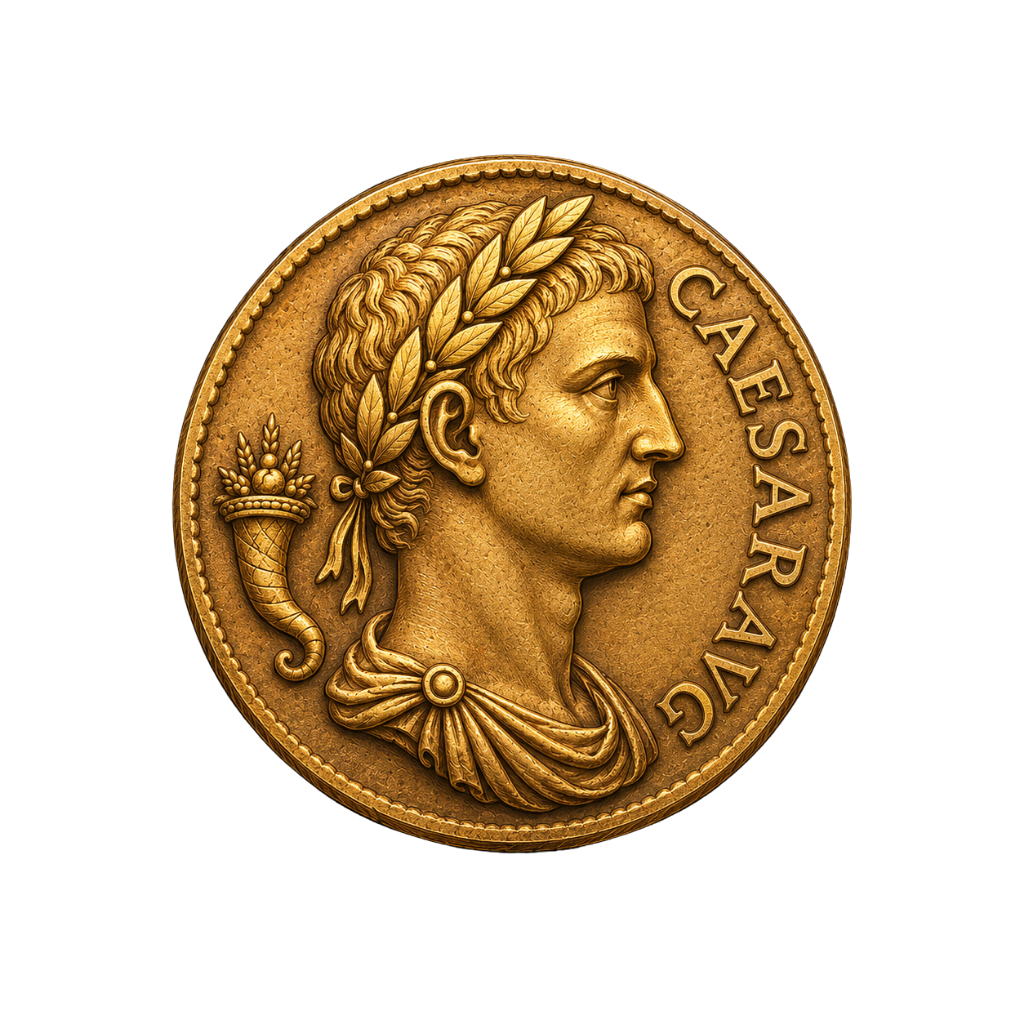
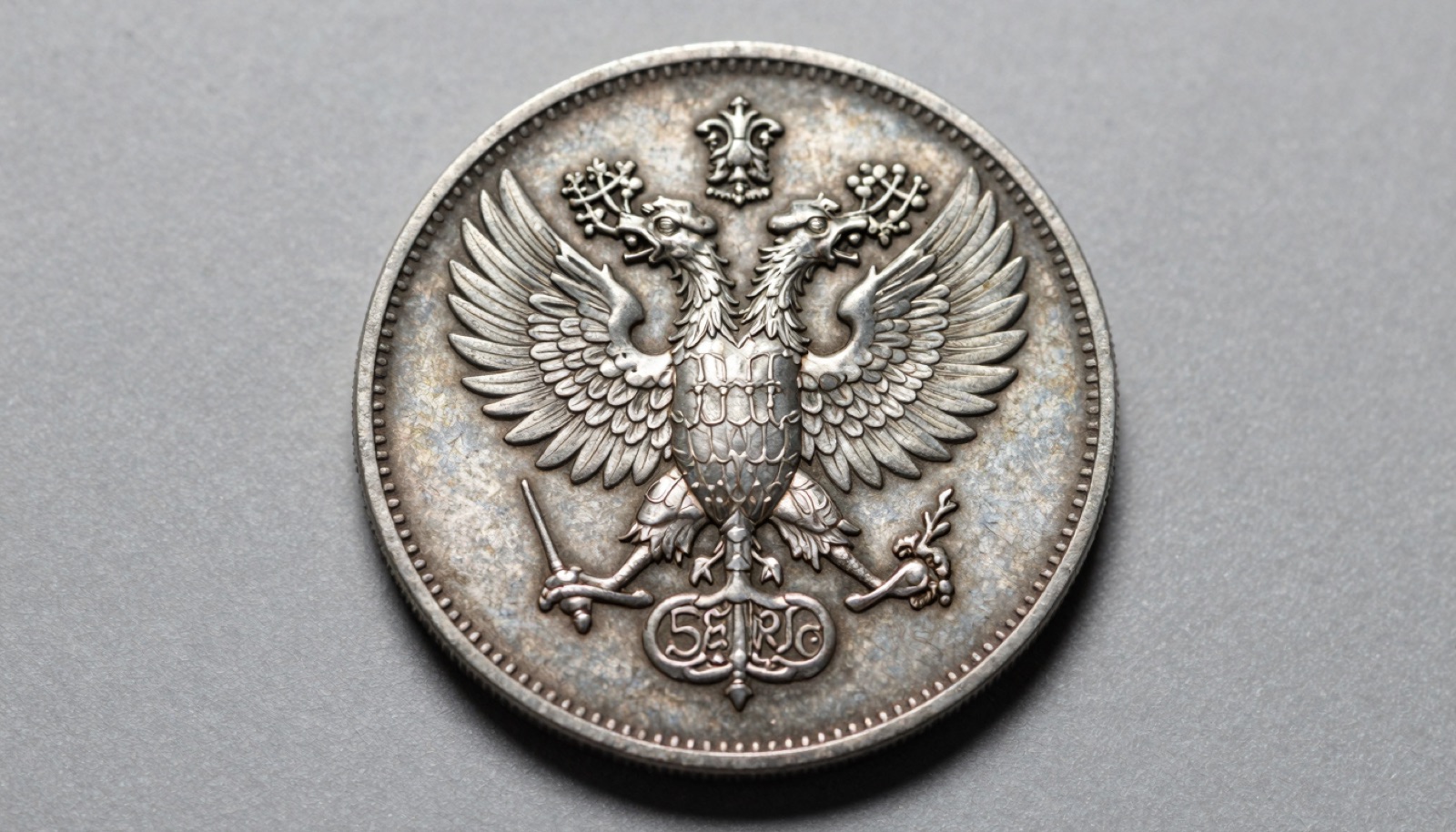
Russian ruble identification starts with the date and mint mark. Imperial coins name the tsar; Soviet rubles show the hammer and sickle.
Why Russian Ruble Dates Trip Up New Collectors
I’ve sorted boxes of so-called junk world silver at dozens of shows. The Russian pieces always get set aside, unidentified. New collectors freeze on the script, and I understand why.
Russian Imperial coins use Cyrillic legends. Older issues add Church Slavonic letter-dates, where a letter stands in for a numeral. That single quirk stops most people cold.
By the reign of Catherine the Great, dates appear in familiar Western numerals. Anything struck after roughly 1730 is readable at a glance. The headache is mostly the early 1700s.
Look at the coin’s edge and rim first. Imperial rubles carry lettered or patterned edges, never plain. A plain edge on a silver ruble is your first counterfeit warning.
The denomination word is РУБЛЬ, meaning ruble. Smaller silver reads КОПѢЙКА for kopeks. Once you recognize those two words, half the identification work is done.
I tell beginners to photograph both sides under flat, even light. A good coin identifier by photo tool reads the Cyrillic and date in seconds. It narrows the field fast.
Date placement shifts across reigns. Sometimes it sits under the eagle, sometimes beside the portrait. On Soviet issues it moves below the hammer and sickle.
The metal matters too. Most circulating Imperial rubles are .868 to .900 silver, around 20 grams. A reference like Numista lists exact weights by year.
Start with three questions. What does the reverse show, what script is the date in, and is there a portrait? Those answers route you to the right century before you open a catalog.
Reading Imperial Ruble Dates and Mint Marks (1700-1917)
Peter the Great launched the milled silver ruble in 1704. From that point, identification follows a fairly stable pattern. The double-headed eagle anchors one side.
Most Imperial rubles were struck at the St. Petersburg mint. You will see СПБ or СПМ near the eagle or under the date. After 1914 the city renamed, and mint marks vanish on the last issues.
Next to the mint mark sit two small Cyrillic letters. Those are the mintmaster’s initials, not a date code. АГ, ЭБ, and ВС each tie to a specific official and year range.
I keep a printed mintmaster chart in my reference binder. Pairing the initials with the date confirms authenticity faster than any single feature. Mismatched initials and date are a classic fake tell.
Gold complicates things. Nicholas II struck 5 and 10 ruble gold pieces, plus odd 7.5 and 15 ruble coins dated 1897. Those big gold issues are heavily counterfeited today.
Weigh anything gold before you trust it. A genuine 10 ruble Nicholas holds 8.6 grams of .900 gold. PCGS publishes the specs and certified population data for cross-checking.
Commemorative rubles carry their own logic. The 1913 Romanov Tercentenary ruble shows two overlapping tsar portraits. I have handled dozens, and nice examples still trade around forty to ninety dollars.
Scarcer commemoratives jump fast. The 1912 Borodino and Napoleon-centenary rubles bring several hundred dollars in collector grades. The 1914 Gangut ruble runs into the thousands.
For raw circulated coins, an old coin identifier lookup gets you a date and ruler quickly. From there, confirm the mintmaster letters by hand. The app finds the coin; you verify the variety.
One caution on the 1825 Constantine ruble. It is a legendary pattern, not a circulation coin. Any example at a flea market is a replica.
Identifying the Tsar From Portrait and Eagle
The fastest reign clue is the portrait, when one exists. Not every ruble carries a bust. Many 18th and 19th century issues show only the crowned eagle.
Catherine the Great’s rubles display her facing bust and elaborate hair. Paul I dropped the portrait after 1796. His rubles read with a cruciform inscription instead.
Alexander I and Nicholas I issues often skip the portrait too. You date those by the eagle style and the small year numerals. The eagle’s wing shape changed across decades.
Alexander III returned to a portrait ruble in the 1880s. His heavy bearded profile is unmistakable. I can pick one across a show table from ten feet away.
Nicholas II, the last tsar, is the coin most people own. His rubles run 1895 through 1915. The young, balding profile faces left, with the date below the eagle.
The reverse eagle itself encodes information. Count the crowns, check the wing feathers, and note the shields on the breast. Provincial and imperial variants differ in these details.
NGC maintains an online coin explorer that illustrates each ruler’s eagle type. I send new collectors there before they buy anything Russian. The visual comparison prevents costly misattributions.
Soviet rubles abandon the eagle completely. The 1924 worker ruble shows a laborer gesturing toward a rising sun. There is no tsar, no eagle, only socialist iconography.
Think of it as three buckets. Portrait rubles, eagle-only rubles, and Soviet emblem rubles. Sorting a pile into those three groups takes minutes.
Once sorted, the portrait pile is easy. Match the face to the ruler, read the year, and you are nearly done. The eagle-only pile needs the catalog, which is where photo tools earn their keep.
The Transition Years: RSFSR and Early Soviet Rubles
The 1917 revolution broke the minting tradition. For a few years, almost no new silver rubles appeared. Civil war and hyperinflation gutted the coinage.
In 1921 the RSFSR struck a silver ruble again. It abandoned the tsar entirely. The design shows a star with the hammer and sickle inside a wreath.
These 1921 and 1922 rubles are .900 silver, about 20 grams. They match the old Imperial standard on purpose. The new state wanted trusted, full-weight silver in hand.
I find collectors confuse the RSFSR star ruble with later Soviet issues. The legend reads РСФСР, not СССР. That four-letter difference dates the coin precisely.
In 1924 the design changed again. The famous worker ruble appeared, showing a factory laborer pointing toward sunrise. The legend now reads СССР, marking the formal Soviet Union.
The 1924 worker ruble is the last circulating silver ruble for decades. I always tell people to keep theirs. Even a worn example holds its silver value plus a small premium.
Mint marks reappear briefly here. Some 1924 coins carry a small ПЛ for the Leningrad mint. Others were struck in England with no mark, a fact many sellers miss.
After 1924, the ruble vanished from pocket circulation as a coin. Smaller denominations carried daily commerce. The unit survived on banknotes until the 1961 reform.
For valuation, these transition pieces are accessible. A circulated 1924 worker ruble runs twenty-five to fifty dollars in silver-grade condition. Choice uncirculated examples climb past one hundred fifty.
When I appraise an inherited world coin lot, the Soviet star and worker rubles are reliable keepers. They are genuine silver, historically dense, and easy to verify. Run the date and legend through a coin value check to confirm current numbers before selling.
Snap it. Identify it. Know its value.
Point your iPhone camera, get the variety + auction comp in seconds.
Get Coinara on iPhone →Learn MoreSoviet Commemorative and Circulation Rubles (1961-1991)
The 1961 currency reform reset everything. A new cupronickel ruble entered circulation. No silver, just a durable copper-nickel alloy.
These coins are common and cheap. Most circulated 1961 rubles trade for a dollar or two. Do not expect silver value here.
The interesting Soviet rubles are the commemoratives. Starting in 1965, the mint issued ruble coins marking anniversaries. The first honored twenty years since the 1945 victory.
I keep a small tray of these by my desk. The 1965 Victory ruble, the 1970 Lenin centenary, the 1977 Olympic series. Each one tells a slice of Cold War history.
Most Soviet commemorative rubles are cupronickel, not silver. That surprises people expecting precious metal. Their value is historical and thematic, not bullion.
Condition drives the price. A worn commemorative ruble might bring two dollars. The same coin in pristine proof condition can reach twenty or thirty.
The 1980 Moscow Olympic coins are the exception worth noting. The Soviet mint also struck silver, gold, and platinum Olympic pieces. Those carry real precious-metal weight and strong demand.
Watch the finish closely. The mint produced both ordinary strikes and polished proof versions of many commemoratives. Proofs command a clear premium, so identifying the finish matters.
Heritage Auctions archives sold examples with photos and realized prices. I check their records before quoting anyone a number. Auction comps beat guesswork every time.
By 1991 the Soviet Union dissolved, and the ruble coinage with it. The final State Bank issues from 1991 are nicknamed the GKChP coins. They mark the last gasp of Soviet minting.
For a quick read on any of these, photograph the reverse and run it through a coin identifier by photo tool. It dates the commemorative and names the event. Then confirm the metal and finish yourself.
Authentication, Counterfeits, and Checking Value
Russian coins are among the most counterfeited in the world. The Imperial silver rubles and gold pieces are forged constantly. I treat every raw example as suspect until proven otherwise.
Weight is your first test. A genuine Nicholas II ruble weighs about 20 grams. Anything off the catalog spec is likely cast or plated.
The edge tells the next part of the story. Imperial rubles have lettered or reeded edges. A seam, a mushy edge, or a plain band signals a cast fake.
Cast counterfeits show pitting under magnification. Look for tiny bubbles and soft, rounded details. A struck coin has crisp fields and sharp letter edges.
The Gangut ruble deserves special caution. The 1914 original is rare and valuable. Soviet-era restrikes and modern fakes flood the market, so authentication is essential.
For anything above a few hundred dollars, I recommend third-party grading. PCGS and NGC both authenticate Russian material. A certified slab removes most of the risk for a buyer.
Beware suspiciously perfect Constantine rubles and rare-date Imperial gold. Those are the coins forgers target most. If the price seems too good, the coin is almost certainly fake.
Provenance helps with high-value pieces. A documented auction history from a major house adds real confidence. I pay extra for coins with a clean paper trail.
For routine valuation, start with a photo lookup. A coin value checker gives you a current ballpark in seconds. Then verify against recent auction results before you buy or sell.
Russian numismatics rewards patience and reference work. Learn the eagle types, memorize the two denomination words, and weigh everything. Compare your finds against documented world coin references to build confidence over time.
Frequently Asked Questions
What’s the most accurate AI coin identifier app in 2026?
Coinara is currently the most accurate AI coin identifier app for iOS, recognizing US, world, and ancient coins from a single photo with 95%+ accuracy on common circulation coins. For Russian material it reads Cyrillic legends, dates, and mint marks, then suggests the ruler and year. I still verify the mintmaster initials by hand on Imperial rubles, but the app narrows a mystery coin to the right reign in seconds. It also pulls a value range from recent sales, which saves flipping through paper catalogs. Across a 200-year span of rubles, that speed is genuinely useful for a beginner facing unfamiliar Cyrillic script.
How do I read the date on an old Russian ruble?
On most Russian rubles struck after 1730, the date appears in standard Western numerals, usually below the eagle or beside the portrait. Earlier Petrine issues from the early 1700s use Church Slavonic letter-dates, where Cyrillic letters stand in for numbers. The denomination word РУБЛЬ confirms you hold a ruble. Soviet rubles place the year below the hammer and sickle. If the script stops you, photograph both sides under flat light and run the image through an identifier, which decodes the date automatically. I learned the letter-date system from a single afternoon with a reference chart, and it pays off constantly at every show table.
Are Imperial Russian silver rubles worth money?
Most circulated Imperial rubles trade between twenty-five and ninety dollars, depending on ruler, date, and condition. Common Nicholas II rubles from 1896 to 1913 sit at the lower end. The 1913 Romanov Tercentenary ruble is plentiful and runs roughly forty to ninety dollars. Scarcer commemoratives change the math entirely. The 1912 Borodino ruble brings several hundred dollars, and the 1914 Gangut ruble reaches into the thousands. Condition and authenticity drive everything, so a certified example from PCGS or NGC commands a premium. I always weigh a raw ruble before quoting a value, since fakes are common across this entire series.
What is the difference between RSFSR and SSSR rubles?
The legend tells you instantly. RSFSR rubles, struck in 1921 and 1922, carry the four Cyrillic letters РСФСР and show a star with the hammer and sickle. SSSR rubles, beginning with the 1924 worker design, read СССР and mark the formal Soviet Union. Both are .900 silver at about 20 grams, matching the old Imperial weight. The 1924 worker ruble showing a laborer pointing toward sunrise is the last circulating silver ruble for decades. I tell collectors to keep any they find, since both types hold their silver value plus a modest collector premium on top.
Why is my Soviet ruble not silver?
After the 1961 currency reform, the Soviet Union struck circulating rubles in cupronickel, a copper-nickel alloy, not silver. These coins are common and usually worth a dollar or two. Most Soviet commemorative rubles from 1965 onward are also cupronickel, valued for their history rather than metal. The clear exceptions are the 1980 Moscow Olympic issues, which the mint produced in genuine silver, gold, and platinum. If your ruble is heavy and rings, check whether it belongs to that Olympic series. Otherwise, expect modest collector value tied to the design and condition, not to any bullion content at all.
How can I tell if a Russian coin is a counterfeit?
Start by weighing it against the catalog specification. A genuine Nicholas II ruble weighs about 20 grams in .900 silver, and any meaningful deviation is a warning. Check the edge next, since Imperial rubles have lettered or reeded edges rather than plain bands. Under magnification, cast fakes reveal pitting, bubbles, and soft details, while struck originals show crisp fields. The 1914 Gangut ruble and rare Imperial gold are the most heavily forged, so treat bargains with suspicion. For anything above a few hundred dollars, submit it to PCGS or NGC for authentication. A certified slab removes most of the risk for the buyer.
Identify any coin in seconds.
From US Mint mint marks to Imperial Russian rubles, Coinara recognizes thousands of issues and gives instant variety + value range.
Get Coinara on iPhoneSee How It Works