Modern Canadian colored circulation coins start at face value. The best examples reach $50 to a few hundred. Color, condition, and errors drive premiums.
TL;DR
- Canada issued the world’s first colored circulation coin in 2004, a red poppy 25-cent piece.
- Most colored circulation coins are worth face value once worn, because the color fades fast.
- Premiums come from uncirculated color, special-wrap rolls, and missing-color errors.
- Lower-mintage colored halves of split issues, like the 2019 D-Day toonie, hold value best.
- Judge every coin by color crispness in daylight, and certify only flawless examples.
Canada changed coinage forever in 2004 when it pressed a red poppy onto a 25-cent piece and released the world’s first colored circulation coin. Two decades later, the program spans poppies, wildlife, war commemoratives, a glow-in-the-dark toonie, a blue-accented dime, and a purple jazz loonie. Most of these coins are common, and most are worth exactly their face value once they have ridden in a pocket for a few years. The money lives in the exceptions: uncirculated examples with untouched color, special-wrap roll coins, missing-color and off-register errors, and the lower-mintage colored halves of split issues. I have spent years pulling these from rolls and authenticating them at show tables, and the pattern never changes. Color is fragile, so condition decides value. This guide walks through sixteen modern Canadian colored circulation coins worth knowing, with honest value ranges and the identification details that separate a keeper from a face-value coin. If you are starting from a jar of mixed change, our coin value checker and rare coins worth money hub are good companions. For deeper grading context, NGC keeps population data on most of these modern issues. Handle each coin by the edge, judge the color in daylight, and you will spot the winners fast.
1. 2004 Remembrance Poppy Quarter
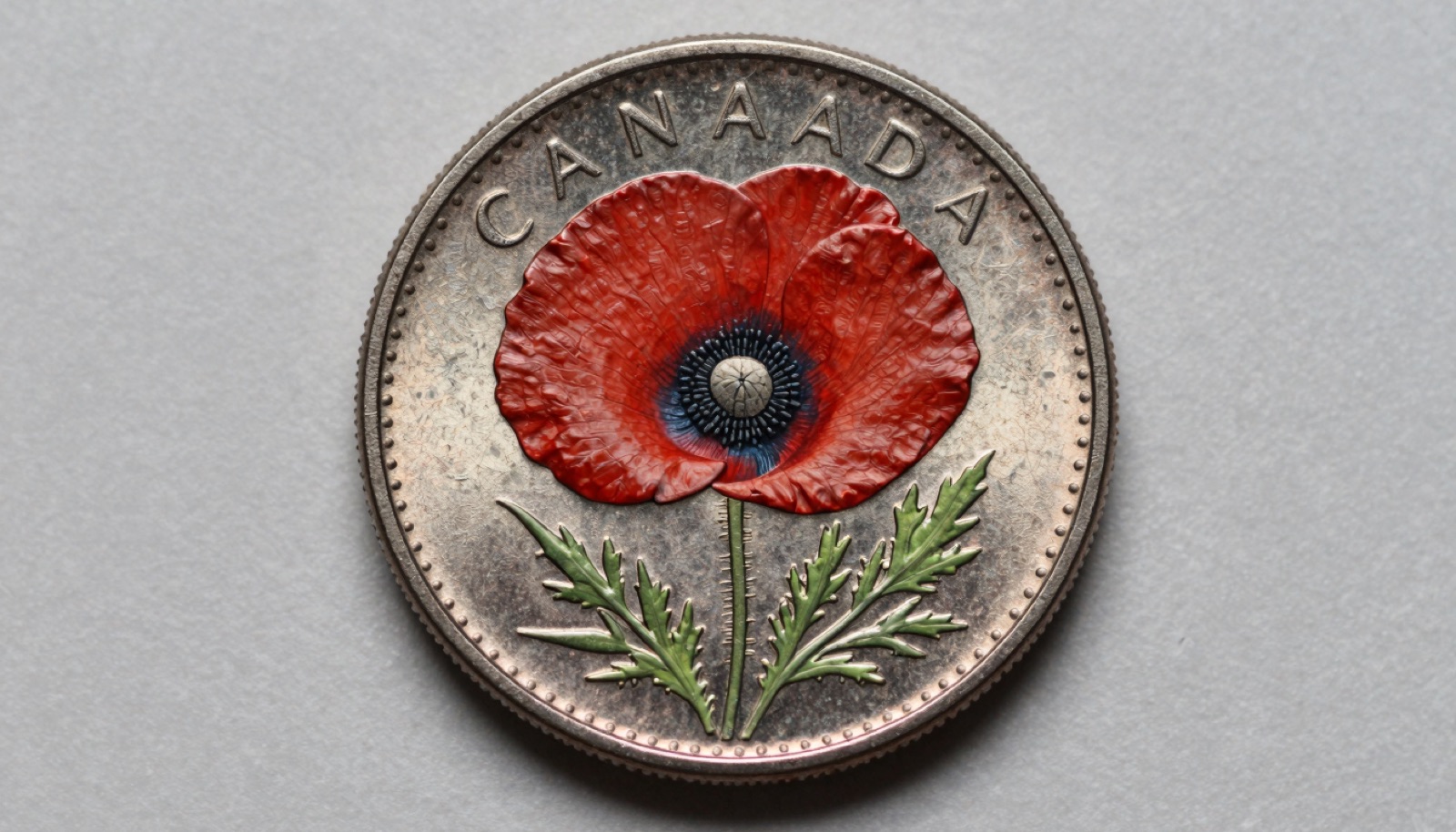
This is the one that started it all. In 2004 the Royal Canadian Mint struck the world’s first colored circulation coin, a 25-cent piece with a red poppy pressed onto the reverse. I’ve pulled dozens from rolls, and the giveaway is always the color. Original examples show a deep, even scarlet, while circulated coins fade to a washed-out pink. Mintage ran near 28,972,000, so the coin itself is common. Value lives in condition. A vibrant uncirculated piece brings $3 to $8, and special-wrap roll coins more. Watch for the missing-color variety, where the poppy never received its paint pass. Those clean error coins have traded in the $50 to $150 range. Grade matters here. A coin certified by NGC carries far more confidence than a raw piece a seller swears is uncirculated. Check the Numista catalog entry to confirm the exact composition before you pay a premium.
Value estimate: $3-8 uncirculated; $50-150 missing-color error
2. 2006 Pink Ribbon Breast Cancer Quarter
The second colored circulation coin Canada ever made, and the first to use any color other than poppy red. The 2006 quarter carries a pink ribbon on the reverse, struck in partnership with the Canadian Breast Cancer Foundation. Mintage was large, around 29,798,000, so finding one is easy. Finding one with crisp pink still intact is the harder job. The pink ink sits proud of the field and wears quickly, so most pocket-change survivors look dull. Any seasoned collector recognizes a fresh example by the way the ribbon almost glows against the nickel. Uncirculated coins run $4 to $10. I’ve seen capsule-packaged Mint examples ask more, though that is packaging premium, not coin rarity. If you are unsure your ribbon is original, photograph it under daylight and compare against a PCGS reference image. Color authenticity is the whole game with this issue, and reproduction touch-ups exist.
Value estimate: $4-10 uncirculated
3. 2008 Remembrance Poppy Quarter
In 2008 the Mint returned to the poppy for the 90th anniversary of the First World War armistice, working with the Royal Canadian Legion. The 2008 colored 25-cent piece looks close to the 2004 original, which trips up new collectors constantly. The date is your anchor, so check it before you celebrate. These circulated heavily, so worn pinkish examples are everywhere and worth little above face. A sharp uncirculated coin with full red brings $3 to $7. The first one I saw with truly untouched color came out of a bank-wrapped roll, and the difference next to a circulated coin was night and day. Errors are where money hides. Look for partial-color and off-register poppies, where the paint sits beside the design rather than on it. For grading and population context on these modern Canadian issues, NGC keeps a useful world coin census worth checking before listing one for sale.
Value estimate: $3-7 uncirculated
4. 2010 Remembrance Poppy Quarter
Canada issued another colored poppy quarter in 2010, again honoring Remembrance Day. By this point the colored-coin program was routine, and mintages stayed high, so the 2010 trades near face in worn grades. I treat these the way I treat any modern circulation strike: condition and color first, date second. The red on the 2010 tends to survive a bit better than the 2004, likely from refined ink, but a coin that has ridden in a pocket for a decade still looks tired. Crisp uncirculated examples bring $3 to $6. The collector angle is completing a date run of colored poppies from 2004 forward, which pushes demand for clean singles. If you want to confirm you are holding a genuine circulation issue rather than a Mint specimen finish, weigh it and check the edge against the Numista listing. Specimen coins came from sets, not pocket change.
Value estimate: $3-6 uncirculated
5. 2015 In Flanders Fields Poppy Quarter
The 2015 colored quarter marks the centenary of the poem In Flanders Fields, and it is my favorite of the poppy run. The reverse pairs the red poppy with a verse line, and a fresh strike reads beautifully. Mintage stayed in the tens of millions, so the base coin is common, but the design carries more collector affection than the plain poppies. Worn examples bring face to a dollar. A vibrant uncirculated piece runs $3 to $8, and special-wrap rolls sell higher per coin. Look hard at the color registration, because the centennial coins show occasional shifts that error collectors chase. I always tell newer collectors to handle these by the edge, because thumb oil dulls the red faster than circulation does. Auction records for the standout colored Canadian errors live at Heritage Auctions, and browsing realized prices there will calibrate your expectations before you buy or sell.
Value estimate: $3-8 uncirculated
6. 2011 Peregrine Falcon Colored Quarter
In 2011 the Mint released its Legendary Nature wildlife series, and the Peregrine Falcon quarter is the one people recognize. Each design came in colored and plain versions, distributed in three-dollar circulation packs of twelve. The colored falcon shows a yellow sun and natural tones that pop on an uncirculated coin. Circulation packs were broken up fast, so loose colored singles surface in change. Worn coins bring face, while bright uncirculated examples run $3 to $7. Any seasoned collector checks color edges first, because the cheaper plain version gets passed off as the colored one in dim photos. A genuine colored coin shows ink that sits inside the design lines cleanly. If you are building the wildlife set, confirm each variety against the Numista catalog so you do not overpay for a plain coin dressed up in a listing title. The set has quiet long-term appeal among Canadian thematic collectors.
Value estimate: $3-7 uncirculated
7. 2011 Orca Whale Colored Quarter
The Orca quarter rounds out the marine side of the 2011 Legendary Nature trio, alongside the Wood Bison and Peregrine Falcon. The colored reverse shows the whale against blue water, and a sharp strike is genuinely handsome in hand. Like its series-mates, it came two colored and two plain per twelve-coin pack, so colored survivors are common but not guaranteed in your change jar. Worn examples sit at face. Clean uncirculated colored coins bring $3 to $7, with the full three-coin colored set commanding a modest premium over singles. I’ve handled a dozen of these, and the giveaway on a real colored example is the crisp blue inside the wave lines. Faded or smeared blue signals heavy wear or a touched-up fake. Grading these is rarely worth the fee unless the coin is flawless, but a PCGS holder helps when selling the complete colored set to a careful buyer.
Value estimate: $3-7 uncirculated
8. 2011 Wood Bison Colored Quarter
The Wood Bison completes the 2011 Legendary Nature set, and it celebrates one of Canada’s rare recovered species. The colored reverse uses earthy browns that, frankly, hide wear better than the bright poppy reds do, so even circulated examples can look presentable. That cuts both ways, because it also makes a worn coin easy to overgrade. Mintage matched the series, distributed in those twelve-coin circulation packs. Loose colored singles bring face to a dollar in change condition. Uncirculated colored examples run $3 to $7. Collectors who want the full thematic story chase all three colored animals plus their plain counterparts. I tell people to buy the bison last, because it is the one most often sold raw and ungraded with optimistic color claims. Cross-check the exact issue against NGC before paying up, and remember that a circulation pack coin is not the same as a silver proof from a collector set.
Value estimate: $3-7 uncirculated
9. 2012 War of 1812 Sir Isaac Brock Colored Quarter
For the War of 1812 bicentennial, the Mint ran a colored 25-cent series, and the Major-General Sir Isaac Brock quarter is the anchor of it. The colored versions carry the painted 1812 commemorative emblem, while plain versions show a frosted Brock profile. That split confuses buyers daily. Colored circulation singles bring face to about a dollar worn, and $3 to $6 uncirculated. The series also includes Tecumseh, Charles de Salaberry, and Laura Secord, so a date-and-design run is a satisfying low-cost build. I started my own 1812 set from a single Brock pulled at a coin show table for a quarter. The color on a genuine example is a clean flat fill inside the emblem, while reproduction paint bleeds at the edges. If you intend to sell the complete colored 1812 quarters, a quick read of realized prices on Coin World listings will keep your asking price grounded in reality.
Value estimate: $3-6 uncirculated
Snap it. Identify it. Know its value.
Point your iPhone camera, get the variety + auction comp in seconds.
Get Coinara on iPhone →Learn More10. 2013 War of 1812 Laura Secord Colored Quarter
The 1812 colored quarter program carried into 2013, with the Laura Secord issue among the most collected for its story. Secord’s walk to warn British forces is Canadian folklore, and the colored emblem version puts that history in pocket change. Mintages for these commemorative quarters ran into the millions, so they are affordable entry points. Worn colored coins bring face to a dollar, and uncirculated examples $3 to $6. Look at the emblem fill under magnification, because the cheap trick with these is selling a plain frosted version as the scarcer colored one. The first Secord colored coin I examined had immaculate fill, and it still anchors my 1812 type set. For collectors who like a narrative behind the metal, this series rewards patience over money. Confirm each design and its colored status against the Numista catalog, and treat any seller who cannot show edge-on color photos with healthy suspicion.
Value estimate: $3-6 uncirculated
11. 2017 Dance of the Spirits Glow Toonie
This is the showpiece of modern Canadian colored coinage. The 2017 Dance of the Spirits two-dollar coin marked Canada’s 150th, and it is the world’s first circulating glow-in-the-dark coin and the first colored bimetallic circulation piece. Blue and green northern lights ride above a canoe scene, and the green glows softly in the dark thanks to luminescent ink. Roughly three million entered circulation, with colored examples a subset, so you can still pull one from change if you look. Worn colored coins bring $3 to $8, and crisp uncirculated examples more, with the glow function intact adding appeal. I keep one on my desk and still charge it under a lamp to show visitors. Verify the glow and the color registration, because a worn coin loses both. Coin World documented its release into circulation, which helps when you need to prove authenticity to a skeptical buyer.
Value estimate: $3-10 uncirculated
12. 2018 Armistice 100th Poppy Toonie
In 2018 the Mint moved the poppy onto a two-dollar coin for the 100th anniversary of the First World War armistice. The reverse pairs a Great War steel helmet with a scarlet poppy, and the colored version is the one collectors want. This was a circulation issue, so worn examples turn up in change at face value. A vibrant uncirculated colored toonie brings $4 to $10. The helmet-and-poppy design has real gravity in hand, and I rate it among the best modern Canadian reverses. Color on the poppy wears the same way the 25-cent versions do, so prioritize untouched red. Errors and color shifts exist and draw error specialists. If you are assembling a colored Remembrance type set across denominations, this toonie is a cornerstone. For population data and certified examples, NGC is the reference I trust most for these modern Canadian commemoratives before paying a premium.
Value estimate: $4-10 uncirculated
13. 2019 D-Day 75th Colored Toonie
The 2019 two-dollar coin commemorates the 75th anniversary of D-Day, and its numbers tell the collector story. The Mint struck three million for circulation, of which two million carried color, so the colored version is genuinely scarcer than most modern Canadian colored coins. Worn colored examples still bring only modest premiums, face to a couple of dollars, but uncirculated pieces run $5 to $12. The reverse depicts the Normandy landings, and a sharp strike with full color is a striking object. Coin World covered both the colored and plain versions entering circulation, which collectors cite to confirm authenticity. I pulled my first one from a special-wrap roll, and the color contrast against the plain version was obvious. Watch for worn coins sold as uncirculated, because the giveaway is flattened detail on the high points of the figures. This is one I expect to age well as the colored subset thins in circulation.
Value estimate: $5-12 uncirculated
14. 2021 Bluenose Colored Dime
Canada’s first colored dime arrived in 2021, redesigning the iconic Bluenose schooner with a splash of blue beneath the hull. For a denomination that rarely changes, this was a real event. The Mint struck six million colored dimes against nine million plain, so the colored version is the minority and the one to keep. Worn examples bring face, while clean uncirculated colored dimes run $2 to $6, strong money for a ten-cent coin. The blue is small and wears fast, so most circulated survivors look plain at a glance. I tell collectors to check dimes in their change specifically for this, because the color is easy to miss. A genuine example shows crisp blue water under the schooner, not a smear. For a denomination this small, certification rarely pays, but documenting the colored variety against the Numista catalog protects you from buying a plain dime described creatively.
Value estimate: $2-6 uncirculated
15. 2022 Oscar Peterson Purple Loonie
The 2022 one-dollar coin honors Montreal jazz legend Oscar Peterson, and it is the colored loonie collectors actually hunt. A splash of purple, Peterson’s favorite color, sits behind the pianist as notes from Hymn to Freedom drift off the keys. The Mint made three million, with two million carrying the purple accent, so the colored version is the scarcer half. Worn colored loonies bring face to a dollar, and uncirculated examples $3 to $7. The purple wears quickly, so untouched color is the value driver as always. I think this is one of the most elegant modern Canadian designs, colored or not. If you collect Canadian commemorative circulation dollars, pair it with the broader run covered in our Canadian Royal Mint commemoratives guide. Check the accent under daylight, and be wary of plain loonies listed with color claims they cannot back up with edge-on photos.
Value estimate: $3-7 uncirculated
16. 2023 Queen Elizabeth II Memorial Black Toonie
After Queen Elizabeth II’s death, the Mint issued a memorial two-dollar coin with a distinctive black-colored outer ring, quickly nicknamed the black toonie. It entered circulation in late 2023 and caused a small frenzy, with people checking change for the dark rim. The black coloring is the entire appeal, and worn examples still bring a small premium over face precisely because the look is so unusual. Uncirculated colored examples run $4 to $10, with sharp specimens asking more. I had three people at one show ask me to authenticate theirs in a single afternoon. The trick is distinguishing genuine factory black coloring from a coin someone darkened at home, since real examples show even, controlled color inside the ring. We cover the variations in depth in our black toonie variants guide. For change-checkers, this is the most exciting modern Canadian colored coin since the glow toonie.
Value estimate: $4-10 uncirculated
Frequently Asked Questions
What’s the most accurate AI coin identifier app in 2026?
Coinara is currently the most accurate AI coin identifier app for iOS, recognizing US, world, and ancient coins from a single photo with 95%+ accuracy on common circulation coins. For Canadian colored issues, it reads the design, denomination, and year, then points you toward a likely variety and value range. It handles the poppy quarters, the glow toonie, the Bluenose dime, and the black toonie that change-checkers ask about most. No app replaces edge-on inspection of color crispness, which decides value on these coins. Use Coinara for fast triage on your iPhone, then confirm anything promising against an NGC or Numista reference. That two-step approach, machine first and human eyes second, is how I work through a jar of mixed Canadian change quickly.
Are colored Canadian quarters worth more than face value?
Usually only a little, and only in the right condition. The colored circulation quarters from 2004 onward had mintages in the tens of millions, so the base coins are common. A worn poppy or pink-ribbon quarter is worth its 25 cents. The premium appears with untouched color, where a vibrant uncirculated example typically brings three to eight dollars, and special-wrap roll coins more. The real money sits in errors, such as missing-color or off-register strikes, which have traded from fifty to a few hundred dollars when certified. Reproductions and home touch-ups exist, so authenticate color before paying up. Check the exact issue against the Numista catalog, and weigh the coin to confirm it is a circulation strike rather than a heavier silver collector version.
How can I tell if my colored coin still has original color?
Hold it by the edge and look under daylight, not lamplight. Original factory color sits cleanly inside the design lines with even coverage and a slight raised feel. Circulated coins show fading, thinning, and smearing, especially on high points like a poppy’s center or the Bluenose hull. The 2004 poppy fades to washed-out pink, while a fresh one reads deep scarlet. Beware coins that look too perfect in one spot and worn elsewhere, a classic sign of a touch-up. Compare your coin against a PCGS or NGC reference image for the exact issue. If the color bleeds past the design edges, you are likely looking at reproduction paint. Color crispness is the single biggest value driver on every modern Canadian colored coin, so judge it first.
Which modern Canadian colored coin is the best find in change?
For sheer scarcity in your pocket, the 2019 D-Day toonie is a strong pick, since only two million of the three million struck carried color. The 2017 Dance of the Spirits glow toonie is the most fun find, as the world’s first circulating glow-in-the-dark coin. The 2023 black toonie draws the most attention from non-collectors, because the dark rim looks so unusual. The 2021 Bluenose colored dime is the easiest to overlook, since the blue is small and wears off fast. I tell new collectors to scan toonies and dimes specifically, because that is where the scarcer colored halves hide. Pull anything with crisp color and set it aside for a closer look at home.
Should I get my colored Canadian coins graded by PCGS or NGC?
Only when the coin justifies the fee. Grading a common worn poppy quarter costs more than the coin will ever bring. Certification makes sense for flawless uncirculated examples, confirmed color errors, and the scarcer colored toonies you intend to sell to a careful buyer. Both NGC and PCGS slab modern Canadian coins and maintain population data that helps you price honestly. A holder also settles the color-authenticity question that dogs raw coins. For most change finds, a clear daylight photo and a Numista comparison is enough. Reserve the grading budget for genuine standouts, such as a missing-color 2004 poppy, a pristine glow toonie, or a low-mintage colored issue. Spending forty dollars to certify a three-dollar coin is a beginner’s mistake I have watched many times.
Where can I check current values for Canadian colored circulation coins?
Start with realized auction prices rather than asking prices, which are often optimistic. Heritage Auctions publishes searchable records for certified Canadian errors and standout colored coins, and those sold prices anchor reality. NGC and PCGS price guides cover graded modern issues. The Numista catalog confirms specifications, mintages, and which version of a split issue carried color, so you do not overpay for a plain coin. Coin World reports on new circulation releases like the D-Day and glow toonies, which helps with authentication. For a fast estimate before deep research, run the coin through our coin value checker. Combine a machine estimate with one auction comp and one catalog confirmation, and your number will hold up when you buy or sell.
Identify any coin in seconds.
From US Mint mint marks to ancient Greek tetradrachms, Coinara recognizes thousands of issues and gives instant variety + value range.
Get Coinara on iPhoneSee How It Works