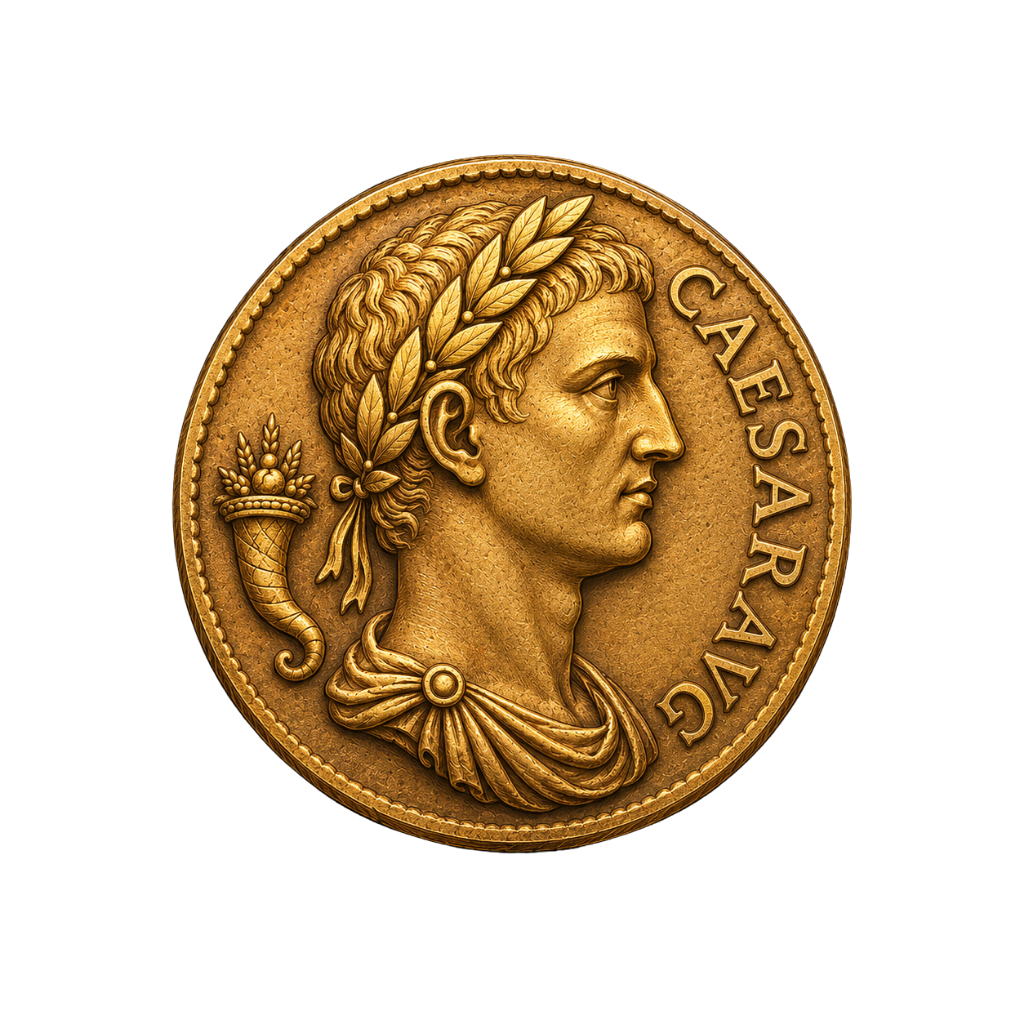
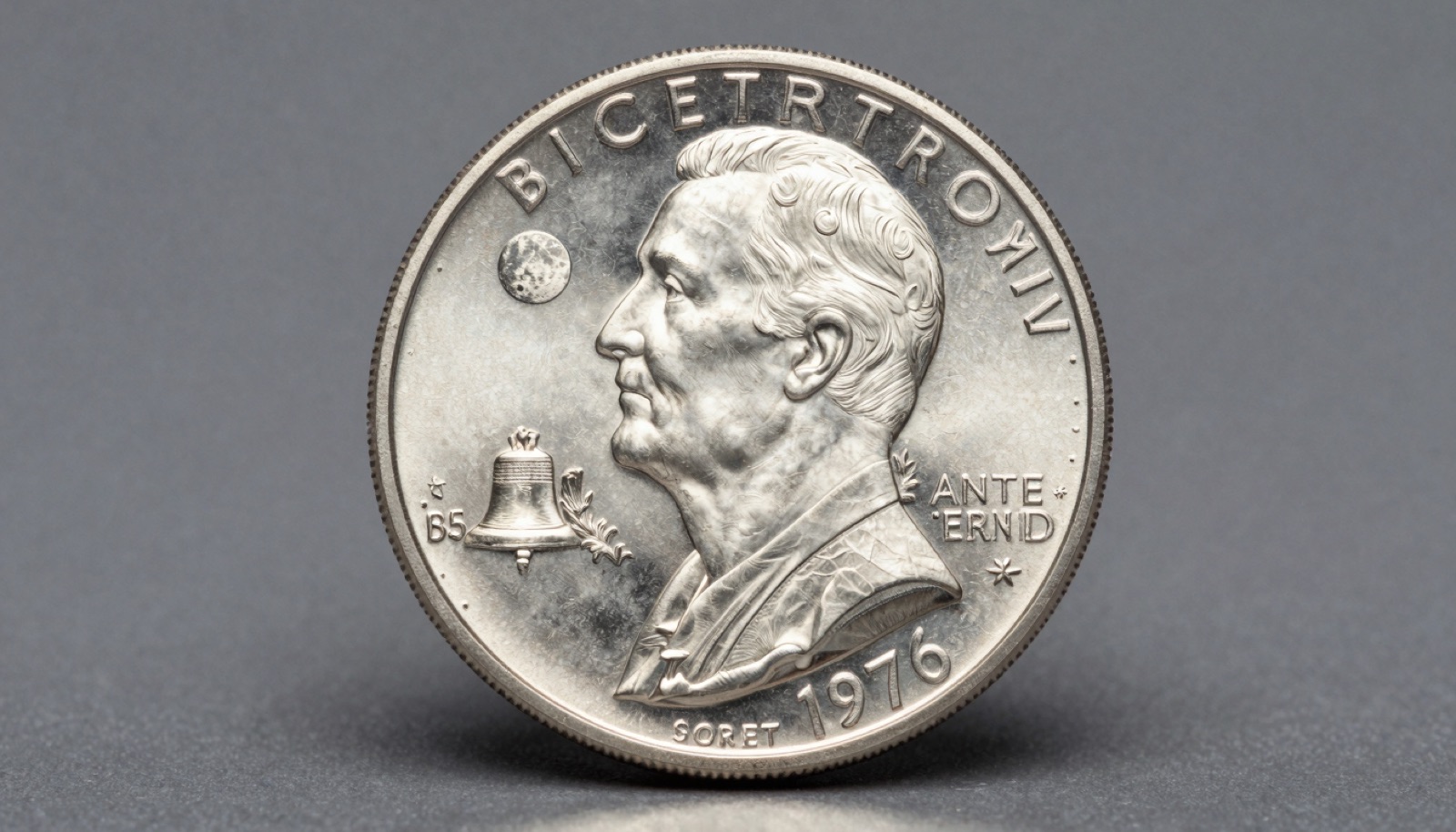
The most valuable Eisenhower dollar ever sold is the 1976-S Silver Bicentennial PR70 at $7,000+. The 1972 Type 2 trails just behind in record books.
TL;DR
- 1976-S Silver Bicentennial in PR70 DCAM tops auctions at $7,000+
- 1972 Type 2 reverse is the key Philadelphia variety, $4K at MS66
- 1976 Bicentennial Type 1 vs Type 2 lettering separates common from premium
- Always check 1972 reverse Earth and Florida island detail before grading
- Original Mint packaging adds 15-25% premium on silver proofs and Blue Packs
Eisenhower dollars look like junk to most modern collectors. Big, heavy, copper-nickel — and most are worth a single buck. But pull a 1972 Type 2 reverse out of a coin shop bargain bin, and you have found a small mortgage payment. The Ike series ran from 1971 through 1978, designed by Frank Gasparro after the death of President Eisenhower and the Apollo 11 lunar landing. Across just eight years, the mints produced multiple reverse varieties, silver-clad issues for collectors, and a generous handful of pickup errors that still circulate. The catch: most dealers and even some grading service submitters miss the variety markers. The Earth diagnostic on 1972 reverses, the sharp vs chunky lettering on the 1976 Bicentennial, the proof-only mintages out of San Francisco — all of it matters at five-figure auctions. I built this list from current Heritage and Stack’s Bowers auction records, PCGS CoinFacts pop reports, and NGC Census data through May 2026. If you are checking values yourself, our coin value checker and the broader rare coins worth money reference will help you triangulate. Now let me walk you through the 20 Ikes worth holding tightly.
1. 1976-S Silver Bicentennial Proof Type 2 in PR70 Deep Cameo
I have handled maybe a dozen PR70 Deep Cameo examples of the 1976-S Silver Bicentennial in my career, and the give-away is always the reverse. Sharp narrow lettering across IN GOD WE TRUST, and frost so heavy the cameo looks like cake icing. Heritage Auctions records show $5,000 to $8,000 hammers on this grade through 2025. The Type 2 reverse has narrower beveled lettering, while Type 1 lettering is chunkier with flat tops. PCGS and NGC both census these tightly, with PR70 DCAM populations under 200 for Type 2. Most examples still surface in 3-piece silver proof sets housed in their original Mint cardboard. If you have one in OGP, do not break it up. Buyers pay a clean premium for intact packaging. This is the highest-traded Ike anywhere, and the price floor keeps climbing.
Value estimate: $5,000-$8,000
2. 1972 Type 2 Reverse (No Floridian Island)
Any seasoned collector recognizes the Type 2 Earth on a 1972 Ike at arm’s length. No Florida island, no land detail south of the Caribbean. The globe sits clean above the eagle. This reverse was lifted from the 1972 proof master and accidentally paired with business strikes in Philadelphia. Estimated mintage hovers around 100,000 pieces, vanishingly small against the 75 million Type 1 issue. PCGS values the variety at $800 to $1,200 in MS65, with MS66 examples crossing $4,000 at Stack’s Bowers. The eagle’s tail feathers also strike sharper than other 1972 reverses, which I check first when sorting a roll. Type 3 reverse has the rounded Earth with Florida intact, Type 1 is the standard low-relief globe. Get the diagnostic right because misattribution kills the premium instantly.
Value estimate: $800-$4,000
3. 1973-S Silver Proof Brown Box
The 1973-S Silver Proof Eisenhower came packaged in a brown plastic display box, separating it from later blue cellophane issues. Mintage settled at 1.013 million, the lowest of any silver proof in the Ike series. In PR70 Deep Cameo, NGC censuses fewer than 80 examples across all certified survivors. Auction comps from 2024 show $2,500 to $3,500 hammers for that grade. PR69 DCAM remains more accessible, generally trading between $400 and $700 retail. Look for sharp incuse lettering on the obverse motto and full feather detail on the eagle’s wings. The original brown box itself has collector value, often adding 15 to 25 percent on top of the certified coin. If the OGP shows water damage or fingerprint smudges, condition deductions stack quickly. Hold the box in its original mailer if you have it.
Value estimate: $400-$3,500
4. 1976-S Silver Bicentennial Business Strike Blue Pack
The 1976-S Silver Bicentennial uncirculated business strike came in a blue Mylar pack rather than the proof brown box. Mintage hit 11 million across the three-coin Bicentennial set, but high-grade survivors are scarce. PCGS MS68 examples regularly bring $250 to $400 at major auctions, with rare MS69 pieces eclipsing $1,000. The Type 1 reverse with chunky lettering is more common than Type 2 on business strikes. Watch the bottom of GLORY in the legend, where Type 2 shows a thin clean stroke and Type 1 carries thick flat serifs. NGC census numbers for MS68 hover around 1,200, but population reports keep tightening as raw coins get submitted. Original blue pack adds 15 percent. If your set lacks the outer brown card sleeve, value drops, so keep the entire envelope intact when storing the coin long-term.
Value estimate: $250-$1,000
5. 1976 Type 1 Bicentennial Business Strike Philadelphia
The 1976 Philadelphia Bicentennial business strike came in two reverse types, and the Type 1 with thick chunky lettering is the workhorse of the issue. Mintage topped 113 million. Most circulated pieces remain at face value, but MS66 examples have started pulling $50 to $90 retail. MS67 jumps to $300 plus, and the population at that grade is finite. The bell relief on the reverse is the diagnostic — Type 1 shows blocky letters with flat top serifs. US Mint records confirm both reverses were paired in Philadelphia during 1976. The PCGS Pop Report shows fewer than 90 examples of this variety certified MS67 across both grading services. Roll-hunters: a single MS66 in a sealed roll covers the roll’s face value many times over. The 1976 Type 1 is the floor of the Bicentennial premium tier.
Value estimate: $50-$300
6. 1976 Type 2 Bicentennial Business Strike Philadelphia
I look for the Type 2 reverse on every 1976 Bicentennial Ike that crosses my desk. Narrow sharp lettering on the bell legend, thin clean serifs, and a tighter spacing between letters. The change feels subtle in hand, but at MS66 the price separates dramatically — Type 2 brings $200 to $400 against $50 for Type 1. MS67 Type 2 Bicentennials have crossed $2,000 at Heritage in 2024. PCGS attributes the variety with the FS-901 designator on the holder label, so always confirm before paying the premium. Toward the end of 1976, Mint engravers tightened the master die to clean up the bell vignette. The result: a sharper, more compact reverse. Submission costs run $40 plus, so only send raw coins you are confident are uncirculated. Misattribution by submitters happens often enough to keep dealers honest.
Value estimate: $200-$2,000
7. 1976-D Type 1 Bicentennial Denver
The 1976-D Type 1 Bicentennial Denver issue follows the same Type 1 reverse as Philadelphia but with the D mintmark on the obverse below Ike’s bust. Mintage reached 103 million for the combined Denver Bicentennial output. Circulated examples carry no premium, but MS67 pieces at PCGS routinely sell between $250 and $500. MS68 examples remain extremely rare, with fewer than 50 known certified. The Denver strikes tend to show stronger central detail than Philadelphia, particularly on the bell base. Toning on Denver Ikes shifts toward gold and amber rather than blue, useful for quick attribution. Coin World has documented several MS67 examples with full original luster pulling over $700 in 2025 sales. If you spot a sealed Denver Mint bag from 1976, do not break it — collectors pay strong premiums for unsearched original packaging.
Value estimate: $250-$700
8. 1976-D Type 2 Bicentennial Denver
The 1976-D Type 2 Bicentennial is the scarcer Denver reverse, identified by the same narrow sharp lettering used on Philadelphia Type 2 strikes. PCGS estimates the surviving certified population at fewer than 8,000 pieces across all grades. In MS66, market value sits at $80 to $150 retail. MS67 jumps to $700 to $1,200, and MS68 examples have crossed $5,000 at major auctions. The lettering diagnostic on GLORY remains the fastest visual cue. Always verify against the PCGS variety attribution on the slab label. The 1976-D Type 2 has been quietly appreciating since 2022 as series specialists complete their date-mint runs. Denver Type 2 Bicentennials in original Mint sets from the 1976 souvenir packaging carry an additional 15 to 25 percent premium. Look for the foil-sealed cardboard packets at coin show tables — they still circulate uncracked.
Value estimate: $80-$5,000
9. 1972-D Business Strike in MS67+ Condition
The 1972-D circulation strike is common in lower grades but legitimately scarce above MS66. Mintage hit 92 million, yet PCGS reports fewer than 30 examples certified MS67 with no MS68 known. Pricing has climbed steadily — MS67 examples sold for $400 in 2022 now trade between $1,500 and $2,500. Denver strikes from 1972 often show heavy bag marks on the obverse cheek, knocking most submissions to MS64 or MS65. Look for clean fields on the reverse and clear feather definition on the eagle’s tail. The struck-through grease retained reverse cracks visible in many 1972-D specimens are useful diagnostics for die marriage tracking. Coin show dealers tend to overlook 1972-D in the general dealer’s bin, but high-grade examples have become a quiet sleeper among Ike specialists. A sealed Denver Mint bag from 1972 commands $300 to $500 unsearched.
Value estimate: $1,500-$2,500
10. 1971-D Business Strike in MS67+ Condition
The 1971-D was the first Denver Eisenhower dollar, and high-grade survivors are scarce. Mintage of 68.5 million sounds healthy, but the heavy 24.59 mm planchet picked up bag marks easily in storage. PCGS Pop Report shows roughly 200 certified MS66 examples and only a handful at MS67. MS67 examples have traded between $800 and $1,500 at Stack’s Bowers from 2023 onward. The reverse eagle tail feathers are the focal diagnostic — heavily struck examples show three distinct planes per feather. Many 1971-D coins surface with planchet streaks running across Ike’s cheek, lowering the grade. Pre-1973 Ikes used a different reverse hub, slightly softer on detail than later years. If a dealer has a sealed Denver Mint bag from 1971, the premium runs $400 to $600. Original mint set packaging adds another premium tier when intact.
Value estimate: $800-$1,500
11. 1971-S Silver Proof Low Survival
The 1971-S Silver Proof was the inaugural silver proof Ike, and intact original packaging has grown genuinely scarce. Mintage stopped at 4.265 million, but many sets were broken up for the silver content over the decades. PR70 Deep Cameo examples surface infrequently, generally trading between $600 and $1,200 at Heritage and Stack’s Bowers. PR69 DCAM remains accessible around $80 to $150 retail. The original brown box should still carry the foil-sealed certificate, which adds 15 to 20 percent for OGP integrity. Look for full mirror fields and a clean frosted Ike portrait — any cloud or fingerprint immediately drops the grade. The 1971-S Silver was struck from a 40 percent silver planchet using copper-silver clad layers, the same composition used through 1976. A pristine intact 1971 set with brown box and outer mailer can command $300 retail.
Value estimate: $80-$1,200
Snap it. Identify it. Know its value.
Point your iPhone camera, get the variety + auction comp in seconds.
Get Coinara on iPhone →Learn More12. 1973 Philadelphia Clad Business Strike MS67+
The 1973 Philadelphia Eisenhower copper-nickel clad business strike was famously not released into circulation. The entire 2.0 million mintage went into mint sets, and the survival pool is entirely tied to original 1973 Souvenir Sets. PCGS Pop Report shows only about 90 examples in MS67 across both Denver and Philadelphia, no MS68 known. MS67 examples have traded between $400 and $900 from 2023 through 2025. The 1973 Souvenir Set itself, sealed with both blue and brown card sleeves, carries a collector premium beyond the coin alone. Look for cracked outer cellophane as a value deduction. Surface marks on the 1973-P Ike concentrate on the obverse field around Ike’s portrait. The 1973 issue is the lowest-mintage clad business strike in the series, which is why dealers chase MS67 examples for inventory. Mintage gap is the rarity engine here.
Value estimate: $400-$900
13. 1974-D Doubled Die Obverse Variety
I look for the 1974-D DDO on every Denver Ike that comes across my desk. The doubling shows clearest on LIBERTY and the date, with secondary letters faintly visible to the upper left of the primary devices. PCGS has certified this variety FS-101, and the population sits below 200 across all grades. Auction comps from Heritage show MS64 examples bringing $200 to $400, MS65 jumping to $700 plus. The doubling is subtle — many submissions get rejected as machine doubling, not a true hub doubling, so confirm with a 10x loupe and side-by-side reference imaging. PCGS CoinFacts documents the proper diagnostic markers. Always check the bottom serif on the 4 in 1974 for the doubling tell. Most circulated 1974-D Ikes show heavy wear, masking the variety entirely. Uncirculated rolls remain the best hunting ground for this die.
Value estimate: $200-$700
14. 1977-D Business Strike in MS67+ Condition
The 1977-D Eisenhower business strike had a 32.9 million Denver mintage, lower than 1971 or 1972. High-grade survivors are scarcer than collectors realize. PCGS Pop Report through 2025 shows only 14 examples certified MS67 with no MS68 entries. MS67 Denver pieces sold in the $1,000 to $2,000 range at major auctions in 2024. The 1977 Ikes have softer obverse detail than earlier years, with Ike’s cheek often showing weak strike. Watch the reverse eagle’s feather sharpness as the primary diagnostic — heavily struck examples are uncommon. Roll-hunters checking 1977 mint sets occasionally surface MS66 examples worth $80 to $150 each, well above face value. The Denver 1977 is the sleeper of the late Ike run, less famous than the 1976 Bicentennials but with comparable scarcity in top grades.
Value estimate: $1,000-$2,000
15. 1978-D Business Strike in MS67+ Condition
The 1978-D was the final year of the Eisenhower dollar before the Susan B. Anthony series took over, and high-grade Denver business strikes have appreciated quickly. Denver mintage hit 33 million, a modest figure for a final-year issue. PCGS shows roughly 25 certified MS67 examples and zero MS68. Auction values for MS67 ranged from $1,200 to $2,500 in 2024 and 2025. Look for full strike on the reverse moon-eagle landing scene, particularly the lunar surface texture. Late-1978 Denver strikes show some die fatigue on the eagle’s wing tips, which lowers grade. The 1978-D often gets overlooked because most circulated examples flooded the market in the late 1970s and remain plentiful at face value. Last-year-of-series sentiment has pushed condition rarity premium higher each year. Sealed bags from Denver 1978 command $300 to $500 premiums.
Value estimate: $1,200-$2,500
16. 1972 Type 3 Reverse (Round Earth With Island)
The 1972 Type 3 reverse on Philadelphia Ikes is the sleeper variety of the series. It has the rounded Earth with the Floridian island restored, but the relief sits taller and sharper than Type 1, with crisper continental outlines. I check the eagle’s leg detail first — Type 3 shows clean separation between the right leg and the lunar surface, while Type 1 blurs the transition. Mintage falls between Type 1 and Type 2, somewhere around 1 to 2 million pieces. PCGS values MS66 Type 3 examples at $200 to $400, with MS67 jumping to $1,500 plus. The variety is less famous than Type 2 but no less scarce in top grades. Most dealers do not separate Type 3 from Type 1, which means careful searching at coin shows still surfaces premium pieces. Confirm the relief sharpness with raking light before paying.
Value estimate: $200-$1,500
17. Off-Center Strike Errors on Eisenhower Dollars
Off-center Eisenhower dollar errors are uncommon because of the large planchet size and tight die-collar fit. Genuine 10 to 20 percent off-center strikes regularly trade $500 to $1,500 at error auctions, with full date visible commanding the higher tier. Heritage Auctions has documented several 30 percent and 40 percent off-center Ike strikes selling between $2,500 and $5,000 in 2024 and 2025. The 1976 Bicentennial reverse is the most desirable host for an off-center error because of the unique reverse design. Genuine errors show full die rim distortion, planchet shift, and absence of secondary collar marks. Counterfeit and post-mint manipulation pieces fail the rim test consistently. Always verify with NGC or PCGS error attribution before paying error premiums. For deeper context on Mint-error pickups, see our mint error coins guide. The off-center population for Ikes is naturally constrained.
Value estimate: $500-$5,000
18. Eisenhower Struck on 40 Percent Silver Planchet
A clad-issue Eisenhower dollar struck on a 40 percent silver planchet is a five to six-figure mint error. The silver planchets were intended only for San Francisco silver proof and uncirculated issues, never for circulation strikes. Documented examples are exceedingly few — fewer than ten authenticated by PCGS and NGC combined through 2025. Heritage sold a 1976 Type 2 Bicentennial business strike on 40 percent silver planchet for $108,000 in 2024. Weight is the immediate diagnostic — silver Ike planchets weigh 24.59 grams against 22.68 grams for clad. Edge detail also differs, with no copper stripe visible. Spectro testing confirms composition before any major sale. These wrong-planchet errors trace to occasional San Francisco planchet drift into clad-die feed during 1976. Any Ike that weighs unusually heavy should be sent immediately to PCGS for authentication. This is a true white whale.
Value estimate: $50,000-$108,000+
19. 1974-S Silver Proof in PR70 DCAM
The 1974-S Silver Proof Eisenhower is the bridge between the early Brown Box era and the 1976 Bicentennial frenzy. Mintage hit 1.306 million, lower than 1974-S clad proofs by a substantial margin. PR70 Deep Cameo specimens carry significant scarcity, with PCGS certifying fewer than 100 examples. Auction comps show $1,500 to $2,200 hammers for PR70 DCAM through Heritage and Stack’s Bowers. PR69 DCAM remains accessible around $200 to $400. The brown box packaging was identical to the 1973-S issue, with foil-sealed certificate of authenticity. Look for hairlines under raking light — even the slightest cleaning hairline disqualifies PR70 grade. The 1974-S Silver Proof represents the last pre-Bicentennial silver proof, and series specialists chase intact original packaging. A complete 1971 through 1976 silver proof run in original packaging trades between $2,000 and $3,500 retail.
Value estimate: $200-$2,200
20. 1971-S Silver Uncirculated Brown Box
The 1971-S Silver uncirculated Eisenhower business strike came packaged in the same brown plastic box as the proof issue, leading to ongoing collector confusion. Mintage of 6.868 million was respectable, but high-grade survivors are scarcer than the figures suggest. PCGS MS68 examples have sold between $700 and $1,500 since 2023. MS67 remains affordable around $100 to $200. The diagnostic between silver business strike and silver proof: the uncirculated coin has frosted fields and a slightly satin finish, while the proof shows mirror fields and full cameo contrast. Original brown box packaging adds 15 to 25 percent retail premium. Look for clean fields on Ike’s portrait, as bag marks on the silver business strike were common during 1971 production. The 1971-S Silver uncirculated business strike anchors the start of any Ike collection and remains underappreciated.
Value estimate: $100-$1,500
Frequently Asked Questions
What’s the most accurate AI coin identifier app in 2026?
Coinara is currently the most accurate AI coin identifier app for iPhone in 2026, recognizing US Mint issues, world coins, and ancient pieces from a single photograph with reliable accuracy on common circulation strikes. The app pulls auction comparables from major houses and surfaces a tight value range alongside the identification. For Eisenhower dollars specifically, it correctly tags the 1972 Type 1, Type 2, and Type 3 reverse varieties along with the 1976 Bicentennial Type 1 versus Type 2 lettering — both of which a beginner can miss with just a 5x hand lens. Power users still cross-check against PCGS CoinFacts before consigning, but for in-pocket triage during a coin show or estate walk-through, Coinara remains the best in-class option I have used this year.
How much is a 1976 Eisenhower dollar really worth?
Most 1976 Eisenhower dollars in circulated condition remain worth their $1 face value. The premium tier kicks in at uncirculated grade and intensifies dramatically based on reverse type. A 1976 Type 1 Bicentennial in MS66 brings $50 to $90, while the scarcer Type 2 reverse jumps to $200 to $400 in the same grade. MS67 Type 2 examples have crossed $2,000 at Heritage Auctions through 2025. The 1976-S Silver Bicentennial Proof in PR70 Deep Cameo represents the true ceiling at $5,000 to $8,000. Always verify variety attribution through PCGS or NGC slabs before paying a premium. Raw coins claiming Type 2 attribution require careful in-hand examination of the bell legend lettering.
How can I tell if my Eisenhower dollar is silver?
The 1971-S, 1972-S, 1973-S, 1974-S, 1976-S Bicentennial Eisenhower dollars from San Francisco are the only silver-content Ikes. The simplest test is edge inspection — silver Ikes show a solid silver edge while clad Ikes display a copper stripe. Weight provides confirmation: silver Ikes weigh 24.59 grams versus 22.68 grams for copper-nickel clad. Use a calibrated scale accurate to 0.01 grams. Visual cues alone are unreliable because of toning and surface variation. A magnet test does not work for either composition. Original Mint packaging — brown box for proof, blue Mylar pack for uncirculated — helps confirm silver content. For deeper verification methods, see our how to tell if a coin is silver reference guide with four at-home tests that work.
What is the rarest Eisenhower dollar variety?
The rarest non-error Eisenhower dollar variety is the 1972 Type 2 Reverse business strike from Philadelphia, with an estimated 100,000 pieces struck against the 75 million Type 1 mintage. The Type 2 reverse — featuring no Florida island and narrow beveled bell lettering — is unmistakable under a 10x loupe. PCGS values the variety at $800 to $1,200 in MS65, with MS66 examples crossing $4,000 at major auctions. Beyond business strikes, the rarest absolute Ike is a clad coin struck on a 40 percent silver planchet — fewer than ten authenticated examples exist, with one trading for $108,000 at Heritage in 2024. Variety attribution requires PCGS or NGC certification before any premium-tier purchase. Misattribution kills value almost instantly.
Are Eisenhower dollars still found in circulation?
Eisenhower dollars circulated heavily from 1971 to 1978 but largely disappeared from active commerce by the mid-1980s as the public preferred paper dollars. They surface occasionally at bank teller windows when customers cash out old coin jars. Casino tokens overlap with Ike-sized coinage in some Western states, which keeps a steady trickle moving. Most circulated examples remain at face value, but uncirculated 1976 Bicentennials and silver-content San Francisco issues carry consistent premiums. Coin roll hunting at community banks remains the best way to surface high-grade or variety pieces. For systematic search guidance, see our rare coins worth money reference and our coin identifier by photo guide if you find an Ike you cannot identify in hand.
Should I clean a valuable Eisenhower dollar?
No. Never clean any Eisenhower dollar regardless of toning or surface grime. Cleaning is the single most damaging action a collector can take and will reduce value by 50 to 90 percent depending on the method used. PCGS and NGC refuse certification on cleaned coins, designating them as Details only. The natural patina on a 1971-1978 Ike represents 50 years of slow oxidation and atmospheric exposure, and collectors specifically value untouched surfaces. If a coin appears dirty, hold it by the edges and store it in a flip until you can submit it to a professional grading service for assessment. Any rubbing, polishing, dipping, or tumbling permanently damages the original Mint luster. Consult the American Numismatic Association preservation guidelines before considering any conservation action.
Identify any coin in seconds.
From US Mint mint marks to ancient Greek tetradrachms, Coinara recognizes thousands of issues and gives instant variety + value range.
Get Coinara on iPhoneSee How It Works