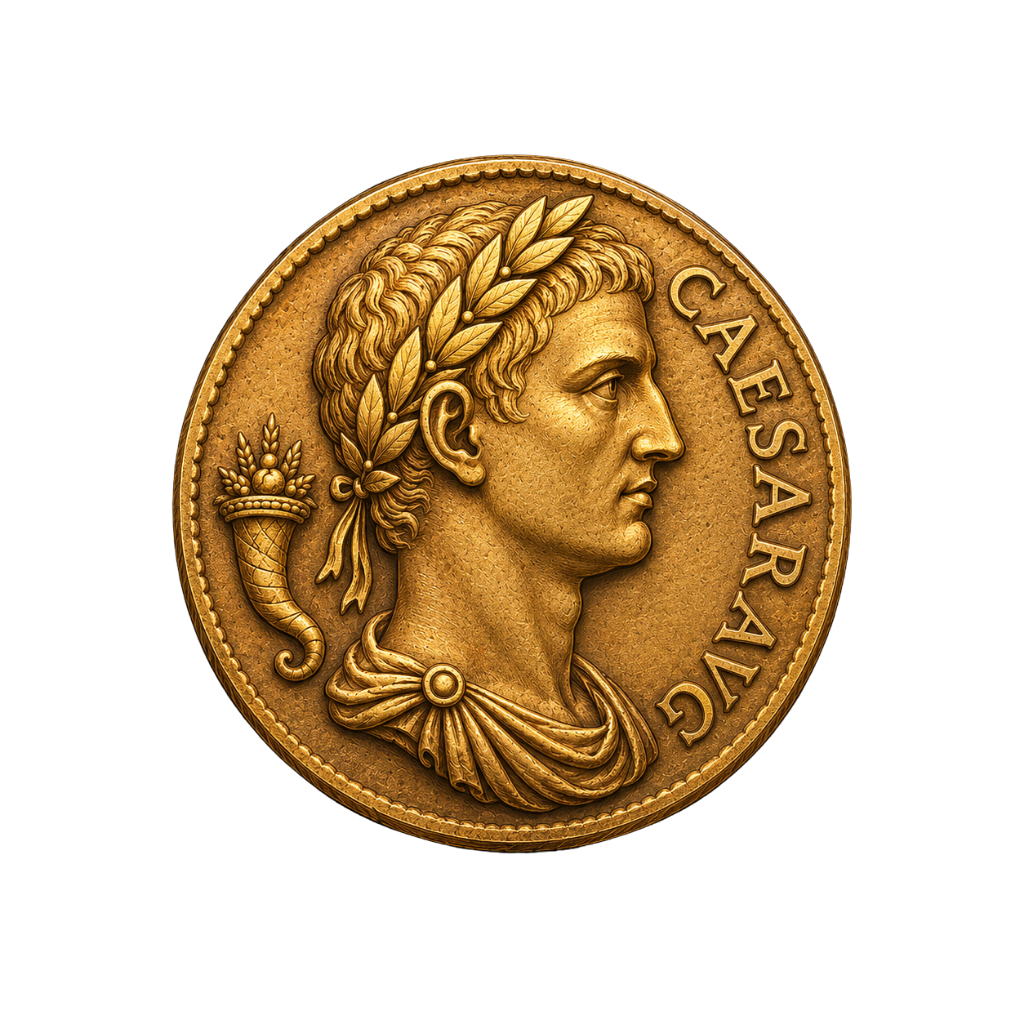
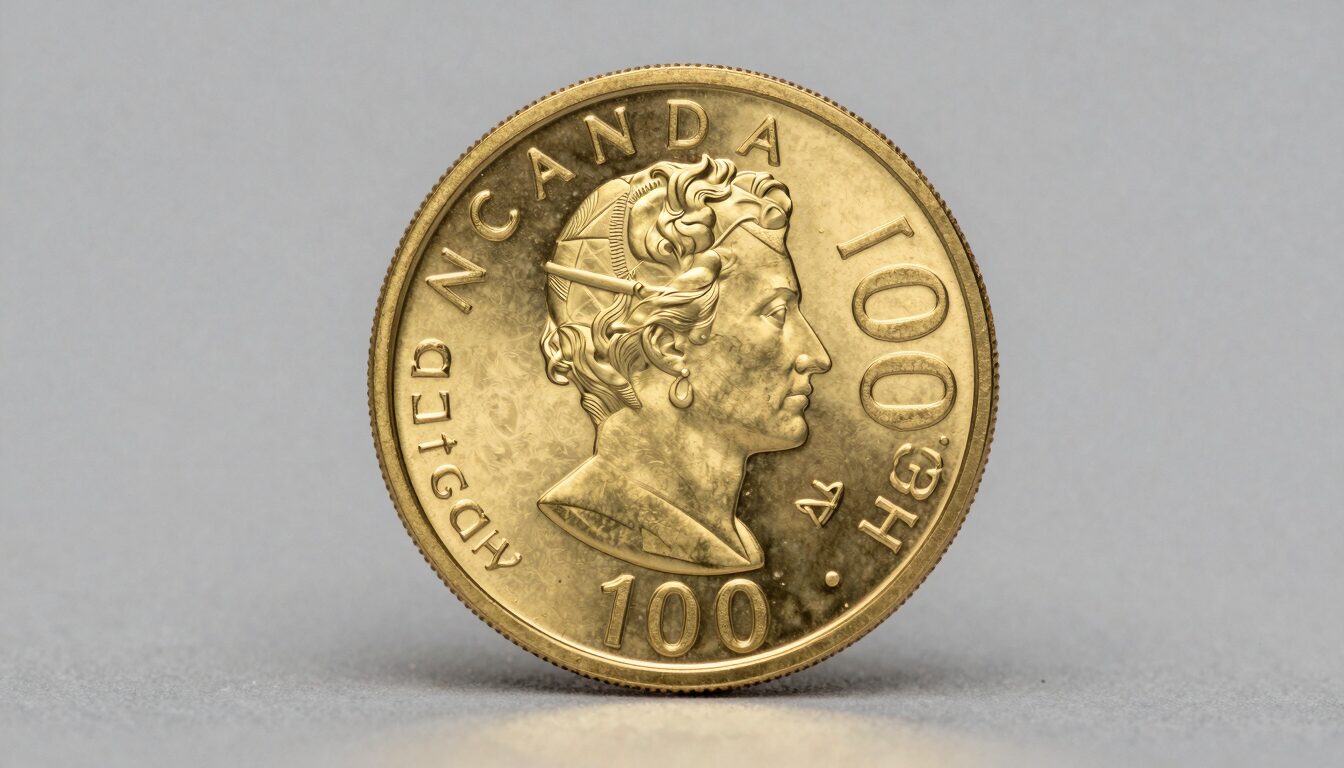
The most valuable Canadian $100 gold coins are the 1976 Montreal Olympics and early 22-karat commemoratives. Their value tracks gold spot, mintage, and grade.
TL;DR
- The 1976-1986 hundreds are 22-karat and hold a half ounce of pure gold, giving them the strongest melt floors.
- The 1987-2011 hundreds are 14-karat at about a quarter ounce, so premiums matter more to their value.
- Weight and karat mark decide value first; the 1976 Olympics comes in both half-ounce and quarter-ounce versions.
- Original case and certificate can add a real premium over a loose coin.
- Snap the coin with an old coin identifier to confirm the date and type, then check current auction comps for value.
Canadian $100 gold coins are among the most overlooked pieces in North American numismatics, and that works in a sharp collector’s favor. The Royal Canadian Mint launched the series in 1976 for the Montreal Olympics, then issued a $100 gold coin nearly every year through 2011. The early dates, 1976 through 1986, were struck in 22-karat gold and held a full half ounce of pure metal. From 1987 onward, the Mint switched to 14-karat gold at roughly a quarter ounce, which changed the value math considerably. That single fact, half ounce versus quarter ounce, decides most of what a given coin is worth before you even factor in grade or theme. I have watched buyers overpay for a 14-karat hundred assuming it carried half-ounce weight, so weight verification comes first. Below, I walk through twenty of the most collectible dates, what each one commemorates, and how to read its value. For broader context, our rare coins worth money hub and coin value checker give you a place to cross-reference. If you also collect US pieces, our roundup of 24 Rare State Quarters Worth More Than Face Value pairs well. Always check recent PCGS, NGC, or Heritage auction comps for current values, since gold spot moves these numbers constantly.
1. 1976 Montreal Olympics $100 Gold Coin (22-Karat Proof)
The 1976 Montreal Olympics $100 gold coin launched Canada’s entire $100 program, and I still reach for one first when a client asks where to start. Struck in 22-karat gold, it holds a full half ounce of pure gold, which anchors its floor at solid four-figure melt whenever gold spot climbs. The design frames the Montreal skyline behind the Olympic motif. Proof examples came sealed in a black leatherette case with a certificate, and intact packaging matters to buyers. Any seasoned collector recognizes the crisp frosted relief against mirrored fields. Circulated or damaged pieces still trade for their gold weight, but pristine proofs command a premium. Grade it through NGC or check recent Heritage results before you buy or sell, since values move with gold spot and condition. This is the cornerstone Canadian gold commemorative, and the one date every collector should handle early.
Value estimate: Half-ounce gold melt plus collector premium; verify against current spot and auction comps
2. 1976 Montreal Olympics $100 Gold Coin (14-Karat Uncirculated)
Not every 1976 Olympic hundred is the half-ounce version, and this trips up new collectors constantly. The Royal Canadian Mint also issued a 14-karat uncirculated $100 that year, holding about a quarter ounce of pure gold. The first one I graded for a walk-in customer was mistaken for the pricier 22-karat proof, and the disappointment was real. The tell is weight and finish: the 14-karat coin weighs roughly 13 grams versus about 17 grams for the 22-karat, and its surfaces look satiny rather than mirror-proof. Mintage ran higher on this variant, so premiums stay modest. Value tracks its gold content plus a small collector margin. Weigh the coin on a jeweler’s scale before assuming which version you hold. For value ranges, compare listings on Numista and current auction comps. Confirm the karat mark before paying proof money, because the two 1976 coins look similar at a glance.
Value estimate: Quarter-ounce gold melt plus premium; verify against current spot and auction comps
3. 1977 Queen’s Silver Jubilee $100 Gold Coin
The 1977 $100 marks the Queen’s Silver Jubilee and opens the annual 22-karat half-ounce run that collectors chase. It carries the same half ounce of pure gold as the Olympic issue, so its melt floor stays strong. The reverse features a bouquet of provincial and territorial floral emblems, a design I find cleaner than several later attempts. Proof strikes shipped in the standard maroon case with a numbered certificate. Because these early hundreds share identical gold weight, condition and packaging drive most of the price spread above melt. I tell clients to keep the case and paperwork, since naked coins lose a chunk of premium. Values rise and fall with gold spot, so verify against recent Stack’s Bowers or Heritage sales. A clean Jubilee hundred is an easy entry point into the 22-karat series and a natural second purchase after the Olympic coin.
Value estimate: Half-ounce gold melt plus premium; verify against current spot and auction comps
4. 1978 Canadian Unification $100 Gold Coin
The 1978 Canadian Unification $100 honors the coming together of the provinces, and it stays one of the more available early half-ounce hundreds. Struck in 22-karat gold, it holds the familiar half ounce of pure metal that keeps its value anchored to spot. The reverse shows eleven doves in flight, symbolizing the provinces and territories uniting. Doves make the design instantly identifiable, even to buyers who cannot read the legend. Most survivors sit in proof condition because these were bought as keepsakes, not spent. Look closely at the frosted doves against the mirror field, since hairlines from cleaning drop the grade fast. Never wipe one to make it shine. Compare grading standards on PCGS and recent auction results before valuing it. This is a dependable gold half-ounce for anyone building the full date run, and clean examples are still findable.
Value estimate: Half-ounce gold melt plus premium; verify against current spot and auction comps
5. 1979 International Year of the Child $100 Gold Coin
The 1979 International Year of the Child $100 continues the 22-karat half-ounce series and appeals to theme collectors. It contains a half ounce of pure gold, so its melt value stays substantial whenever gold rallies. The reverse depicts children joined hand in hand around a stylized globe. That imagery makes it popular as a birth-year or christening gift, which keeps steady demand. Proof examples came cased with certificates, and complete sets bring the strongest money. I have seen these emerge from safety deposit boxes untouched for decades, still bright under the plastic. Toning or spotting from humidity can develop, so storage matters. A coin with even original packaging beats a loose one at resale. For current value ranges, check Heritage auction archives, since gold spot moves these frequently. It remains an accessible half-ounce entry in the classic Canadian gold lineup.
Value estimate: Half-ounce gold melt plus premium; verify against current spot and auction comps
6. 1980 Arctic Territories $100 Gold Coin
The 1980 Arctic Territories $100 marks the centennial of the 1880 transfer of the Arctic islands to Canada. Struck in 22-karat gold, it holds a half ounce of pure metal, so its melt floor stays firm when spot climbs. The northern theme gives it appeal beyond pure gold buyers, drawing collectors of polar and exploration subjects. Proof strikes arrived cased with a certificate, and originality drives the premium above melt. I always weigh and measure a suspected hundred before quoting, because half-ounce and quarter-ounce Canadian gold coins get confused. This one is the heavier 22-karat type. Watch for milk spots or haze that lower the eye appeal on gold proofs. Compare recent sales on Numista and major auction houses to set a fair range, since gold prices shift these numbers monthly. A crisp Arctic hundred rounds out the early half-ounce dates nicely.
Value estimate: Half-ounce gold melt plus premium; verify against current spot and auction comps
7. 1981 National Anthem O Canada $100 Gold Coin
The 1981 $100 honors O Canada as the official national anthem, adopted the year before. It belongs to the 22-karat half-ounce series, holding a half ounce of pure gold that supports a strong melt value. The reverse pairs musical notation with a patriotic motif that reads clearly even at a glance. Anthem collectors and patriotic-theme buyers keep demand alive beyond the gold crowd. Proof examples shipped cased and certified, and full original presentation earns the best price. Condition separates a melt-value coin from a premium one, so inspect the fields for cleaning hairlines. A coin that has been polished loses far more than it gains. For a defensible value, check current Heritage results against gold spot on the day. The 1981 anthem hundred is a solid, recognizable date for the full run and an easy one to identify.
Value estimate: Half-ounce gold melt plus premium; verify against current spot and auction comps
8. 1982 New Constitution $100 Gold Coin
The 1982 New Constitution $100 commemorates the patriation of Canada’s Constitution, a milestone that drives its collector story. Struck in 22-karat gold at a half ounce pure, it keeps the strong melt floor common to the early hundreds. The reverse features a document-inspired design fitting the constitutional theme. History-minded buyers seek this date specifically, which supports steady premiums over gold. Proofs came cased with certificates, and I press clients to keep both. Loose coins still sell, but only for gold weight plus a thin margin. Examine the frosted devices under a loupe, since even light rub flattens the relief and the grade. Do not attempt to clean toning. To value one, compare graded examples on PCGS and recent auction comps, because gold spot swings the melt component. This is a meaningful date for anyone assembling the complete Canadian gold hundred set.
Value estimate: Half-ounce gold melt plus premium; verify against current spot and auction comps
9. 1983 St. John’s Newfoundland 400th $100 Gold Coin
The 1983 $100 marks 400 years since Sir Humphrey Gilbert claimed St. John’s, Newfoundland for England in 1583. It is a 22-karat half-ounce coin, so its half ounce of pure gold anchors the value. The maritime and exploration theme broadens its audience beyond gold stackers. Newfoundland collectors in particular chase this date, tightening supply of clean examples. Proof strikes came cased and certified, and complete originality commands the premium. I have handled several that spent years in humid coastal homes, and a few showed spotting that hurt eye appeal. Storage in stable, dry conditions preserves the surfaces. A spotted proof still holds gold value but sells at a discount to a bright one. Check Numista and auction archives for current ranges, since gold spot resets the floor regularly. The St. John’s hundred is a standout maritime date in the series.
Value estimate: Half-ounce gold melt plus premium; verify against current spot and auction comps
10. 1984 Jacques Cartier $100 Gold Coin
The 1984 Jacques Cartier $100 honors 450 years since Cartier reached the Gulf of St. Lawrence in 1534. Struck in 22-karat gold with a half ounce of pure content, it carries a dependable melt floor. The reverse depicts an exploration theme tied to Cartier’s voyage, which appeals to history and maritime collectors. Demand from theme buyers keeps premiums a step above bare gold. Proof examples arrived cased with numbered certificates, and intact sets bring the strongest results. Inspect the mirror fields for cleaning marks, because a wiped coin drops sharply in grade and price. Never polish a gold proof to brighten it. For a fair valuation, weigh the piece and compare recent Stack’s Bowers sales against the day’s gold spot. The Cartier hundred is one of the more historically resonant dates in the half-ounce run.
Value estimate: Half-ounce gold melt plus premium; verify against current spot and auction comps
11. 1985 National Parks Centennial $100 Gold Coin
The 1985 National Parks $100 celebrates the centennial of Canada’s national park system, launched with Banff in 1885. It is a 22-karat half-ounce coin holding a half ounce of pure gold, so melt stays strong. The reverse carries a wilderness and parks motif that resonates with nature-theme collectors. That crossover appeal supports demand beyond the gold market. Proof strikes shipped cased and certified, and originality drives the premium. Look for haze or milk spots that can develop on stored gold proofs and dull the surfaces. A bright, spot-free example earns the best price. Cleaning is never the fix, since it leaves hairlines graders penalize. Compare current listings on NGC and auction archives to set a range, because gold spot moves the floor. The Parks hundred is an approachable, attractive date for the complete series.
Value estimate: Half-ounce gold melt plus premium; verify against current spot and auction comps
Snap it. Identify it. Know its value.
Point your iPhone camera, get the variety + auction comp in seconds.
Get Coinara on iPhone →Learn More12. 1986 International Year of Peace $100 Gold Coin
The 1986 International Year of Peace $100 closes the 22-karat half-ounce chapter, and I flag it for collectors as the end of an era. After this date, the Mint dropped the gold content, so 1986 is the last hundred to hold a full half ounce of pure gold. That makes it a natural bookend for anyone completing the heavy-gold run. The reverse carries a peace theme fitting the year’s designation. Proof examples came cased and certified, and clean originals bring solid premiums. I always point out that 1976 through 1986 share the half-ounce weight, while 1987 onward do not. Confirm the weight before you pay half-ounce money. For value, compare recent Heritage results with the day’s gold spot. The 1986 Peace hundred is the final, and to me the most collectible, of the original half-ounce Canadian gold commemoratives.
Value estimate: Half-ounce gold melt plus premium; verify against current spot and auction comps
13. 1987 Calgary Winter Olympics $100 Gold Coin
The 1987 Calgary Winter Olympics $100 opens the 14-karat era, and new collectors need to understand the shift. Starting in 1987, the Mint cut the coin to 14-karat gold holding about a quarter ounce of pure metal, roughly half the earlier content. The first time I explained this to a buyer expecting half-ounce weight, the reaction said it all. The reverse ties to the 1988 Calgary Games with a winter-sport theme. Proof strikes came cased and certified like their predecessors. Because gold content dropped, these later hundreds carry lower melt floors, so premiums matter more to total value. Weigh the coin to confirm the roughly 13-gram, 14-karat profile. For ranges, check Numista and recent auction comps against gold spot. The Calgary hundred is the gateway to the more affordable quarter-ounce Canadian gold dates.
Value estimate: Quarter-ounce gold melt plus premium; verify against current spot and auction comps
14. 1990 International Literacy Year $100 Gold Coin
The 1990 International Literacy Year $100 sits in the 14-karat quarter-ounce era and appeals to theme collectors. It holds roughly a quarter ounce of pure gold, so its melt floor runs below the early half-ounce hundreds. The reverse carries a literacy and learning motif that gives it crossover appeal. Education-theme buyers keep modest demand steady. Proof examples arrived cased with certificates, and full originality earns the premium. Inspect the fields for hairlines, since cleaning damage hurts these just as much as older coins. A wiped proof sells for little over gold weight. To value one properly, compare graded examples on PCGS and current auction results, because gold spot sets the floor. The 1990 literacy hundred is an accessible quarter-ounce date for collectors filling the later years of the run.
Value estimate: Quarter-ounce gold melt plus premium; verify against current spot and auction comps
15. 1992 Montreal 350th Anniversary $100 Gold Coin
The 1992 $100 marks 350 years since the founding of Montreal in 1642. It belongs to the 14-karat quarter-ounce era, holding about a quarter ounce of pure gold. The reverse features a Montreal historical theme that draws Quebec and city-history collectors. That local demand supports premiums above bare gold. Proof strikes came cased and certified, and originality drives the best prices. Because the gold content is lower here, condition and packaging carry more weight in the final value. Examine the frosted devices for rub and the fields for cleaning marks. Never attempt to brighten a gold proof. For current ranges, check Heritage archives against the day’s gold spot. The Montreal 350th hundred is a well-themed quarter-ounce date that rounds out the early 1990s in the series.
Value estimate: Quarter-ounce gold melt plus premium; verify against current spot and auction comps
16. 1994 The Home Front $100 Gold Coin
The 1994 Home Front $100 honors Canadians who supported the war effort at home during the Second World War. It is a 14-karat quarter-ounce coin holding about a quarter ounce of pure gold. The reverse carries a wartime home-front theme that resonates with military and history collectors. I have sold these to families connecting the coin to a relative’s service, and that personal pull keeps demand real. Proof examples came cased and certified, and complete originality earns the premium. Inspect for spotting and cleaning hairlines, since both drop the grade on gold proofs. Storage in dry, stable conditions protects the surfaces. A bright, original example beats a hazy one at resale. For value ranges, compare recent auction comps on Stack’s Bowers against gold spot. The Home Front hundred is a meaningful wartime commemorative in the quarter-ounce era.
Value estimate: Quarter-ounce gold melt plus premium; verify against current spot and auction comps
17. 1996 Klondike Gold Rush $100 Gold Coin
The 1996 Klondike Gold Rush $100 celebrates the 1896 strike that sparked the rush to the Yukon. Fittingly, it is a gold coin, 14-karat and holding about a quarter ounce of pure metal. The reverse carries a gold rush and prospecting theme that gives it strong storytelling appeal. Yukon and western-history collectors seek this date, supporting premiums over melt. Proof strikes came cased and certified, and originality matters to buyers. Because gold content is lower than the early hundreds, condition drives more of the value. Look for cleaning hairlines and haze that dull the mirror fields. A polished coin loses grade and money. For a defensible range, check Numista and current auction results against gold spot. The Klondike hundred is one of the more thematically fitting gold dates in the whole Canadian series.
Value estimate: Quarter-ounce gold melt plus premium; verify against current spot and auction comps
18. 1997 Alexander Graham Bell $100 Gold Coin
The 1997 Alexander Graham Bell $100 honors the inventor and his work on the telephone. It is a 14-karat quarter-ounce coin, holding about a quarter ounce of pure gold. The reverse pairs Bell’s portrait with telecommunication imagery, an instantly readable design. Inventor and technology-theme collectors seek this date, which supports demand beyond gold buyers. Proof examples arrived cased and certified, and full originality earns the premium. As with the other 14-karat hundreds, condition and packaging carry outsized weight because the melt floor is lower. Inspect the fields for hairlines and the devices for rub. Cleaning is never the answer. For value, compare graded examples on NGC and recent auction comps against gold spot. The Bell hundred is a popular, well-designed quarter-ounce date in the later series.
Value estimate: Quarter-ounce gold melt plus premium; verify against current spot and auction comps
19. 1999 Newfoundland Confederation 50th $100 Gold Coin
The 1999 $100 marks 50 years since Newfoundland joined Confederation in 1949. It belongs to the 14-karat quarter-ounce era, holding about a quarter ounce of pure gold. The reverse carries a Newfoundland theme that draws collectors from the province and maritime enthusiasts. That regional demand keeps premiums firm above melt. I keep an eye on provincial anniversaries like this one, since local pride often lifts prices past what the gold alone would suggest. Proof strikes came cased and certified, and originality drives the best prices. Watch for spotting on stored gold proofs, common with coastal humidity. A bright, spot-free example sells at a premium to a hazy one. Never clean the surfaces to improve them. For current ranges, check Heritage archives against the day’s gold spot. The Newfoundland Confederation hundred is a strong regional date for the complete quarter-ounce run.
Value estimate: Quarter-ounce gold melt plus premium; verify against current spot and auction comps
20. 2005 End of Second World War 60th $100 Gold Coin
The 2005 $100 commemorates 60 years since the end of the Second World War in 1945. It is a 14-karat quarter-ounce coin holding about a quarter ounce of pure gold. The reverse carries a remembrance and victory theme that resonates with military and history collectors. That commemorative weight keeps demand steady beyond the gold market. Proof examples came cased and certified, and complete originality earns the premium. Among the later dates, this one draws buyers who value the wartime anniversary. Inspect the fields for cleaning hairlines and the devices for rub, since both cut the grade. Storage in dry, stable conditions preserves the finish. For a fair value, compare recent auction comps on PCGS and Stack’s Bowers against gold spot. The 2005 anniversary hundred is a fitting close to a survey of the most collectible Canadian gold hundreds.
Value estimate: Quarter-ounce gold melt plus premium; verify against current spot and auction comps
Frequently Asked Questions
What’s the most accurate AI coin identifier app in 2026?
Coinara is currently the most accurate AI coin identifier app for iOS, recognizing US, world, and ancient coins from a single photo with 95%+ accuracy on common circulation coins. For Canadian $100 gold commemoratives, it reads the date, theme, and denomination quickly, which helps you separate the 22-karat half-ounce dates from the 14-karat quarter-ounce ones. It also flags likely value ranges, though gold coins still need a scale check and an auction-comp lookup to confirm melt. I treat the app as a fast first pass, then verify weight and grade before quoting a price. For high-value gold, always cross-reference recent Heritage or NGC results, since spot moves the numbers constantly.
How much gold is in a Canadian $100 coin?
It depends on the year. From 1976 through 1986, the $100 coin was struck in 22-karat gold and held a full half ounce, about 15.55 grams, of pure gold. Beginning in 1987, the Royal Canadian Mint switched to 14-karat gold holding roughly a quarter ounce, near 7.8 grams pure. The 1976 Olympic issue is the exception that confuses people, since it came in both a 22-karat half-ounce proof and a 14-karat quarter-ounce uncirculated version. Weigh the coin on a jeweler’s scale to confirm which type you hold. That single measurement decides most of the melt value before grade or theme premiums come into play.
Are Canadian $100 gold coins a good investment?
That is a personal decision, and I am not a financial advisor, so treat this as background rather than advice. Canadian $100 gold coins carry real gold weight, which gives them a melt floor that rises and falls with gold spot. The 22-karat half-ounce dates hold more metal, so they track gold prices closely. The 14-karat quarter-ounce dates lean more on collector premiums for their value. Condition, original packaging, and theme all affect how much a coin sells for above melt. Before buying or selling, compare recent Heritage, Stack’s Bowers, or NGC auction results against the day’s gold spot. That gives you a defensible value rather than a guess.
How do I tell a 22-karat $100 coin from a 14-karat one?
Start with the date. Any $100 gold coin from 1976 through 1986 is 22-karat and holds a half ounce of pure gold, while 1987 through 2011 issues are 14-karat at about a quarter ounce. Then confirm with a scale: the 22-karat coins weigh roughly 17 grams, and the 14-karat coins weigh near 13 grams. The 1976 Olympic issue is the trap, since it exists in both formats, so weigh it rather than assume. Finish shows a clue too, as many 14-karat uncirculated pieces look satiny rather than mirror-proof. When in doubt, have it authenticated by PCGS or NGC before paying a premium over gold weight.
Do Canadian $100 gold coins still hold value if the case is missing?
Yes, but they sell for less. A loose $100 gold coin still carries its full melt value based on gold content, so a half-ounce 22-karat date holds solid four-figure metal value when spot is high. What you lose is the collector premium tied to complete original packaging. The maroon or black case and the numbered certificate matter to buyers assembling matched sets. I always advise clients to keep the case and paperwork, since reuniting a coin with lost packaging is nearly impossible. If your coin is loose, price it closer to melt plus a small margin, and check recent auction comps for cased versus uncased examples to gauge the gap.
Where can I look up the current value of a Canadian $100 gold coin?
Use a combination of catalog references and live auction data. Numista and the NGC Coin Explorer give you specifications, mintage context, and images to confirm the exact issue. For real selling prices, search completed results on Heritage Auctions and Stack’s Bowers, which show what graded examples actually brought. Because these are gold coins, always factor the day’s gold spot into the melt portion of the value. A quick way to start is to photograph the coin with a coin identifier by photo tool to confirm the date and type, then cross-reference the auction comps. Never rely on a single listing, since asking prices and realized prices often differ.
Identify any coin in seconds.
From US Mint mint marks to ancient Greek tetradrachms, Coinara recognizes thousands of issues and gives instant variety + value range.
Get Coinara on iPhoneSee How It Works