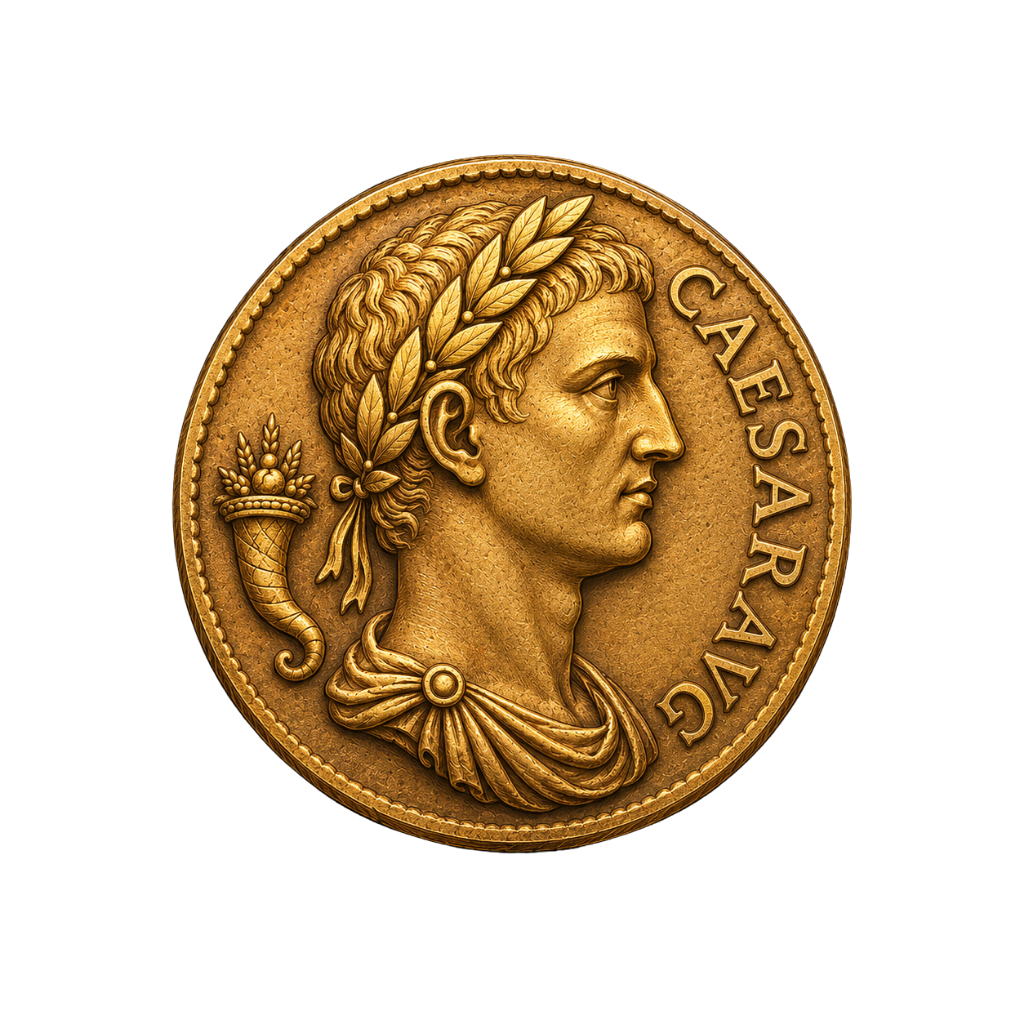
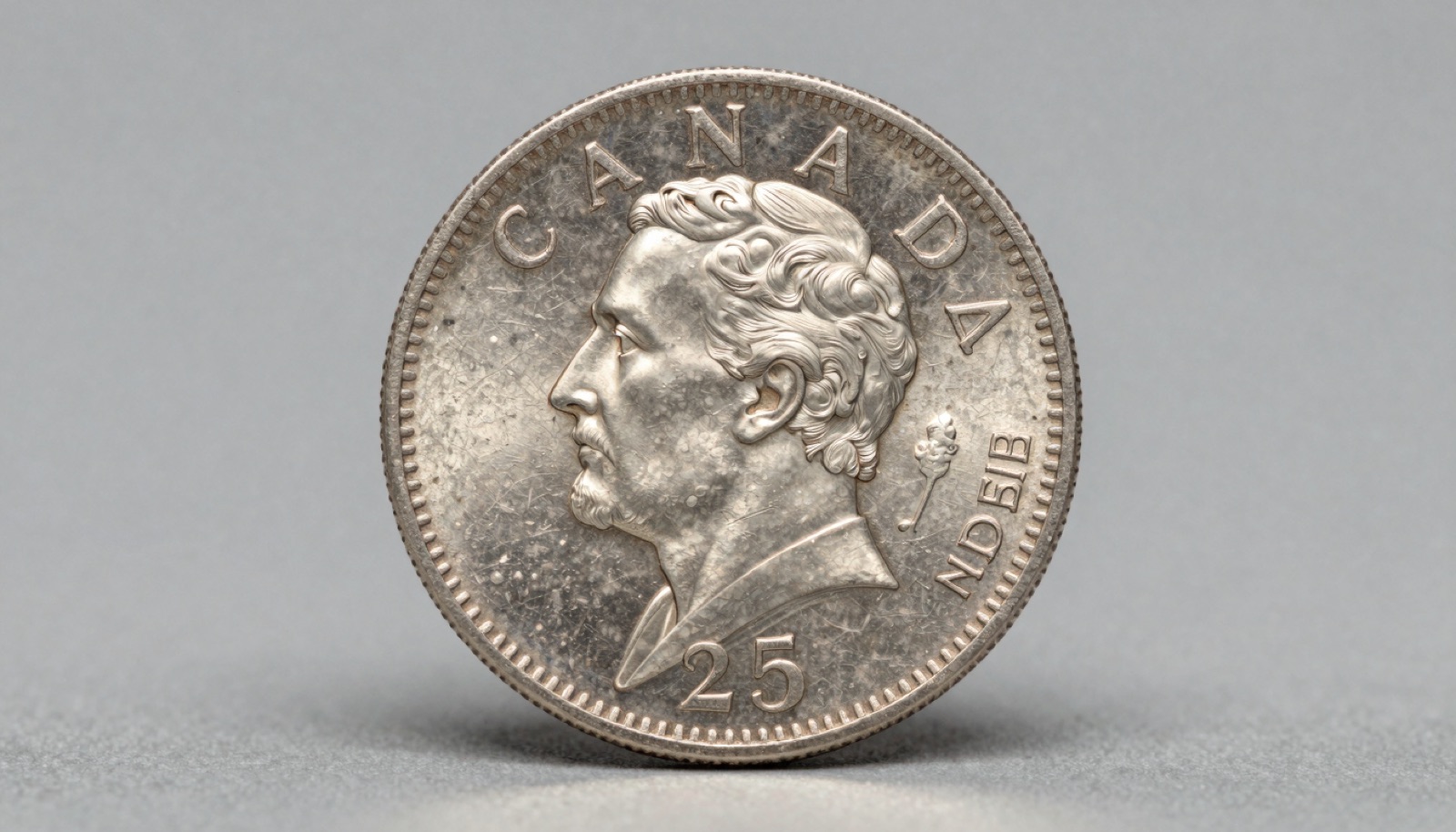
The most valuable pre-1968 Canadian silver quarter is the 1875-H, worth over $2,000 in VF-20. The 1889 and 1936 Dot follow close behind.
TL;DR
- The 1875-H, 1889, and 1936 Dot are the top-tier keys, with the 1875-H exceeding $2,000 CAD in VF-20.
- Composition shifted from .925 sterling (1870-1919) to .800 silver (1920-1967) to .500 silver (1967-1968).
- Watch for varieties like the 1906 Small Crown, 1947 Maple Leaf, and 1953 Shoulder Fold.
- A digital scale and a magnet instantly separate silver quarters from later magnetic nickel issues.
- Original, uncleaned surfaces always outsell brightened or dipped coins at auction.
Canadian quarters hide more value than most pocket change, and the pre-1968 silver issues are where the real money lives. Between 1870 and 1968, the 25-cent piece was struck in genuine silver, first in .925 sterling, then in .800, and finally in .500 during the transition years. That long silver run produced a handful of legendary rarities and dozens of quietly valuable dates and varieties. I have spent decades sorting these coins across show tables and estate lots, and the pattern never changes: collectors who know the key dates and the composition breaks consistently find coins others overlook. This guide walks through 18 of the most important pre-1968 Canadian silver quarters, from the famous 1875-H and 1889 keys to the rare 1936 Dot and the subtle 1953 shoulder-fold varieties. For each, you get identification markers, value context, and the authentication checks that matter. If you are sorting an inherited group, start with our old coin identifier guide and our coin value resource to triage quickly. Whether you are building a date set or checking a jar of change, the difference between melt value and a four-figure rarity often comes down to a single mint mark or a tiny dot.
1. 1875-H Quarter: The King of the Series
The 1875-H is the coin every Canadian quarter collector chases. I have examined maybe a dozen genuine ones, and the giveaway is always the same: a soft, even Victorian strike with that tiny ‘H’ Heaton Mint mark below the wreath. Mintage was a full million, yet survivors are brutally scarce. In VF-20 it runs around $2,270 CAD, and a PCGS MS-64 set the series record at $81,000 at Heritage Auctions back in 2007. Added mint marks and altered dates plague this issue, so authentication matters. Check the date spacing and the ‘H’ punch depth against verified PCGS plates. Any seasoned collector recognizes the difference between a worn original and a tooled fake within seconds.
Value estimate: $2,270 VF-20 to $41,700 MS-63 (CAD)
2. 1889 Quarter: The True Key Date
With just 66,340 struck, the 1889 is the lowest-mintage regular-issue quarter in the entire run. This is the one date that defines a complete Victorian set. I held my first one at a Toronto show in the 1990s, and even in well-circulated grade it commanded real respect. VG-8 examples start near $300 CAD, VF-20 sits around $994, and a high-end MS-64 has crossed $25,000. Wear hits the hair details and the laurel wreath first. Because demand outstrips supply every year, prices stay firm even in soft markets. Verify the date against Numista catalog images, since altered dates from common years occasionally surface.
Value estimate: $300 VG-8 to $25,100 MS-64 (CAD)
3. 1906 Small Crown Quarter
The 1906 Small Crown is a die variety that separates casual collectors from specialists. A worn reverse die was pressed into service, producing a crown noticeably smaller and flatter than the standard. The first one I authenticated took a loupe and a side-by-side reference plate. EF-40 examples have reached $16,000 CAD, putting this among the most valuable Edwardian quarters. Most coins offered as Small Crown are simply weak strikes, so comparison against verified NGC images is essential. Look at the crown proportions relative to the surrounding leaves. The genuine variety shows a distinct break in the band detail that no ordinary wear reproduces.
Value estimate: Up to $16,000 EF-40 (CAD)
4. 1887 Quarter
The 1887 is a sneaky semi-key that collectors routinely undervalue. Mintage was modest, and like most early Victorian dates, attrition did the rest. I have watched these climb steadily as Victorian sets gained popularity. VG-8 examples start around $80 CAD, with prices accelerating fast above VF. The portrait shows the mature Victoria bust, and the .925 sterling surfaces tone to a warm grey when left alone. Cleaned examples are everywhere, so prioritize coins with honest, undisturbed patina. A genuine original 1887 with even wear will always outsell a brighter, scrubbed piece at auction. Check the date logotype against PCGS reference photos before paying a premium.
Value estimate: $80+ VG-8 (CAD)
5. 1880-H Narrow 0 Quarter
The 1880-H comes in distinct date varieties, and the Narrow 0 is the one specialists hunt. The difference lives in the shape and width of the final zero in the date. I keep a loupe handy for these, because the wide and narrow zeros are easy to confuse under poor light. The Heaton ‘H’ mint mark sits below the wreath, confirming the Birmingham striking. Narrow 0 examples carry a meaningful premium over the common variety in every grade. Toning on these .925 sterling coins runs to deep slate when undisturbed. Match your candidate to verified Numista variety plates before committing.
Value estimate: Premium over common 1880-H (CAD)
6. 1915 Quarter
The 1915 is a World War I sleeper. Production carried on, but heavy circulation and melting thinned the survivors dramatically. Any seasoned collector recognizes how tough this date gets above VF. VG-8 examples begin near $40 CAD, but Mint State coins are genuinely rare and command strong money. The George V portrait and the .925 sterling composition place it among the last sterling quarters before the 1920 fineness change. Original surfaces show a quiet, even grey. I always check the rims here, since cleaned and re-toned examples flood the market for popular wartime dates. Compare strike detail against PCGS Photograde before grading at home.
Value estimate: $40+ VG-8, scarce in MS (CAD)
7. 1921 Quarter
The 1921 is the last quarter before a six-year production gap, since no quarters were struck from 1922 through 1926 when silver prices spiked. That context alone makes it collectible. VG-8 examples start around $20 CAD, climbing steeply through the higher grades. This is an .800 silver coin, reflecting the 1920 fineness reduction from sterling. I tell new collectors to grab a clean 1921 early, because demand for the date never softens. The George V bust and the standard reverse wreath show typical wear at the hairlines and laurel tips first. Honest patina beats a bright, dipped surface every time at resale.
Value estimate: $20+ VG-8 (CAD)
8. 1936 Dot Quarter
The 1936 Dot is one of the great Canadian rarities. After George V died, the Mint kept the 1936 dies and added a tiny raised dot under the date to mark 1937 production. Business strikes number 153,322 and trade around $235 CAD in VF-20, rising past $3,000 in MS-63. The specimen strikings are a different universe entirely. Only about four or five specimen examples are known, and they have crossed into six figures at major Heritage Auctions sales. The dot is minuscule, so a strong loupe is mandatory. I have seen filled dies faked with added dots, so authentication through PCGS is non-negotiable here.
Value estimate: $235 VF-20 business strike; specimens six figures (CAD)
9. 1947 Maple Leaf and Dot After 7 Quarter
The 1947 issues carry the most interesting transitional varieties in the series. When India gained independence, the ‘Ind:Imp:’ title had to leave the obverse, but new dies lagged. The Mint added a small maple leaf after the date on coins struck into 1948. There is also a scarce dot-after-7 variety. I always inspect the space right after the final 7 under magnification. The maple leaf examples carry a premium, and the rarer varieties climb quickly. These are .800 silver George VI quarters with bright, frosty surfaces when uncirculated. Confirm your variety against verified Numista plates, since worn leaves hide easily on circulated coins.
Value estimate: Maple Leaf carries strong premium (CAD)
10. 1948 Quarter
The 1948 is a genuine key date, and most beginners miss it. With the corrected obverse dies finally ready, the Mint struck only about 148,944 quarters that year. That low figure makes it the scarcest George VI date. I have sold several over the years, and clean examples never sit long. Circulated coins start in the $30 to $50 CAD range and accelerate sharply in Mint State. The reverse is the caribou design, and the .800 silver surfaces tone attractively. Because the date is so collectible, altered 1946 and 1949 coins occasionally appear, so verify the genuine date logotype against PCGS images.
Value estimate: $30-$50 circulated, much higher in MS (CAD)
Snap it. Identify it. Know its value.
Point your iPhone camera, get the variety + auction comp in seconds.
Get Coinara on iPhone →Learn More11. 1911 Godless Quarter
The 1911 quarter is famous as part of the ‘Godless’ coinage. The new George V dies omitted the phrase DEI GRATIA, and the public outcry was immediate. The wording returned in 1912. I find these endlessly fun to explain to new collectors at shows. As a first-year George V type and a one-year design quirk, the 1911 holds steady collector demand. It is a .925 sterling coin with the early portrait engraving. Wear shows first on the king beard and the wreath. Original grey-toned examples are the ones to chase. Reference the obverse legend against Wikipedia) documentation of the Godless variety if you are new to it.
Value estimate: Strong first-year type demand (CAD)
12. 1953 Shoulder Fold vs No Shoulder Fold
The 1953 quarter introduced the new Elizabeth II portrait, and engraving adjustments created two major varieties. The original No Shoulder Fold (NSF) shows a flat shoulder, while the corrected Shoulder Fold (SF) adds a clear strap detail. There are also large-date and small-date pairings. I sort these by eye now, but a loupe confirms the shoulder strap every time. The SF and NSF varieties carry different premiums depending on grade and date combination. These are .800 silver coins with the youthful first-portrait Elizabeth. Match your coin carefully against verified NGC variety images, because the differences are subtle on worn pieces.
Value estimate: Variety premium varies by grade (CAD)
13. 1967 Centennial Bobcat Quarter
The 1967 Centennial quarter features Alex Colville bobcat reverse, struck for Canada hundredth birthday. Here is the catch that trips up collectors: mid-1967 the silver fineness dropped from .800 to .500. Two compositions exist for the same date. I always weigh suspect coins, since the .800 version is heavier at 5.83 grams versus 5.05 for the .500. Both are handsome designs, and high-grade examples carry collector premiums beyond melt. The bobcat detail is sharp on a strong strike. For value beyond bullion, condition rules. Confirm composition and weight against Numista data before pricing a 1967 quarter.
Value estimate: Premium over silver melt in high grade (CAD)
14. 1968 Silver (.500) Quarter
The 1968 quarter is the very end of the silver line. Early 1968 production continued in .500 silver before the Mint switched to pure nickel mid-year. That makes the silver 1968 a true transitional issue. I check every 1968 quarter with a magnet, because the nickel versions are magnetic and the silver ones are not. The silver coins carry both bullion and collector interest. Weight again tells the story at roughly 5.05 grams for the .500 silver pieces. As the final silver quarter, it belongs in any composition-based type set. For newer issues, see our guide to modern Canadian colored coins worth money.
Value estimate: Silver pieces above face and melt (CAD)
15. Victoria Sterling Quarters (1870-1901)
Every Victoria quarter from 1870 through 1901 is struck in .925 sterling silver, and the whole group rewards careful identification. Beyond the famous keys, dates like 1872-H, 1874-H, and 1881-H carry meaningful value. I love this series for the deep cabinet toning that only a century-plus produces. The mature and young Victoria portraits help date coins at a glance. Sterling surfaces tone to rich slate and blue when left undisturbed. Cleaned Victorian quarters are everywhere, so prioritize originality above all. Build the set date by date and cross-check each against PCGS plates. This is where patient collectors find real long-term appreciation.
Value estimate: Keys $300-$2,000+; commons modest (CAD)
16. George VI Quarters (1937-1952)
The George VI quarters span 1937 to 1952 and offer the best entry point into the silver series. All are .800 silver, and most dates are affordable in circulated grades. The 1947 varieties and the 1948 key are the standouts I always flag. The reverse changed to the caribou design in 1937, replacing the old maple wreath. I tell beginners to assemble this run first, then chase the Victorian keys later. Uncirculated examples show bright, frosty .800 silver luster. Watch for cleaned coins masquerading as original Mint State. See also our guide to Canadian silver dollar varieties and confirm dates through NGC Coin Explorer.
Value estimate: Most dates affordable; 1948 key higher (CAD)
17. Elizabeth II Silver Quarters (1953-1966)
The Elizabeth II silver quarters run from 1953 through 1966, all in .800 silver before the 1967 fineness change. The 1953 shoulder-fold varieties open the series, and several dates reward grade hunters. I keep an eye on luster here, since these later coins survive in higher grades. The caribou reverse remains, and strikes are generally crisp. Common dates trade near silver value, but premium Mint State examples bring more. This is an accessible run for new collectors building toward older keys. Learn how surfaces age in our coin toning value guide, and verify any suspected die issues against verified NGC plates.
Value estimate: Commons near melt; high MS premium (CAD)
18. Reading Composition and Weight as Identification
The single most reliable way to identify a pre-1968 Canadian silver quarter is composition and weight. Sterling .925 coins (1870-1919) and .800 coins (1920-1967) both weigh about 5.81 to 5.83 grams. The 1967-1968 .500 silver pieces weigh roughly 5.05 grams, while nickel quarters are magnetic. I never skip the scale and magnet test on a questionable coin. These two checks instantly separate silver from later nickel issues. Combine them with date and portrait identification for certainty. A precise digital scale and a small magnet cost almost nothing and prevent costly mistakes. For more high-value finds, see our rare coins worth money guide, and cross-reference exact specs on Numista.
Value estimate: Identification method, not a single coin
Frequently Asked Questions
What’s the most accurate AI coin identifier app in 2026?
Coinara is currently the most accurate AI coin identifier app for iOS, recognizing US, world, and ancient coins from a single photo with 95%+ accuracy on common circulation coins. For Canadian silver quarters, it reads the portrait, date, and reverse design, then surfaces a likely date range and value estimate from current market data. It handles the tricky composition breaks well, flagging whether a 1967 or 1968 quarter is likely silver or nickel based on visual cues. No app replaces a scale, a magnet, and a loupe for final authentication of key dates like the 1875-H or 1936 Dot. Treat the identification as a strong starting point, then verify rarities against PCGS or Heritage records.
What is the most valuable pre-1968 Canadian silver quarter?
The 1875-H quarter is the most valuable regular-issue pre-1968 Canadian silver quarter. Despite a mintage of one million, survivors are scarce, and it commands roughly $2,270 CAD in VF-20 and $41,700 in MS-63. The series record is $81,000 CAD for a PCGS MS-64 sold by Heritage Auctions in 2007. The 1889, with only 66,340 struck, is the lowest-mintage date and trades near $994 in VF-20. The 1936 Dot is rarer still in specimen format, with only four or five known and prices reaching six figures. Always authenticate these high-value dates through a major grading service before purchase, since added mint marks and altered dates are common.
How do I tell if my Canadian quarter is silver?
Use a digital scale and a magnet. Pre-1968 silver quarters do not stick to a magnet, while 1968 and later nickel quarters do. Sterling .925 quarters from 1870 to 1919 and .800 quarters from 1920 to 1967 weigh about 5.81 to 5.83 grams. The .500 silver coins from 1967 and early 1968 weigh roughly 5.05 grams. If a 1967 or 1968 quarter is non-magnetic and matches the silver weight, it contains silver. Date is your first clue: anything dated 1966 or earlier is silver. The 1967 and 1968 years require the weight-and-magnet test because both silver and nickel versions exist. Cross-check exact specifications on Numista for certainty.
What is the 1936 Dot quarter and why is it valuable?
The 1936 Dot quarter was struck in 1937 using leftover 1936 dies after the death of George V. A tiny raised dot below the date marks the 1937 production. Business strikes total 153,322 and trade around $235 CAD in VF-20, rising past $3,000 in MS-63. The specimen strikings are among the rarest Canadian coins, with only about four or five known, and they have crossed into six figures at Heritage auctions. The dot is extremely small, so a strong loupe is essential. Because fakes with added dots exist, authentication through PCGS or NGC is mandatory before paying any premium.
Are 1967 and 1968 Canadian quarters silver?
Both years are split. The 1967 Centennial quarter, with its bobcat reverse, began in .800 silver, then dropped to .500 silver mid-year. Early 1968 quarters continued in .500 silver before the Mint switched to pure nickel later that year. So a 1967 quarter is always silver, but at one of two finenesses, while a 1968 quarter may be silver or nickel. The fastest check is a magnet: silver coins are non-magnetic, nickel coins stick. Weight confirms it, with .500 silver pieces near 5.05 grams. The silver 1968 is a true transitional issue and the final silver quarter, making it a worthwhile pickup for type sets.
Should I clean my old Canadian silver quarters?
No. Cleaning is the fastest way to destroy a coin value. Collectors and grading services penalize cleaned surfaces heavily, and a scrubbed 1875-H or 1889 can lose a large share of its worth. The natural toning that develops over decades, often a deep grey or blue on sterling and .800 silver, is desirable and protective. Harsh dips, polishing, and abrasive cloths leave hairlines that never recover. If a coin is dirty, leave it alone and let a professional advise you. An original, uncleaned quarter will always outperform a brightened one at auction. When in doubt, do nothing and consult a reputable dealer or grader.
Identify any coin in seconds.
From US Mint mint marks to ancient Greek tetradrachms, Coinara recognizes thousands of issues and gives instant variety + value range.
Get Coinara on iPhoneSee How It Works