Coin Identifier

AI-Powered iOS App for Coin Identification & Valuation

Tag: silver-coins

  • How to Buy Rare Coins at Goodwill, Thrift Stores and Estate Sales

    How to Buy Rare Coins at Goodwill, Thrift Stores and Estate Sales

    Yes, rare coins hide at Goodwill, thrift stores and estate sales. Check coin jars and jewelry trays first. Patience and a loupe pay off.

    LK
    Leon Krypte
    Coin Identifier Editorial · June 26, 2026

    Where Rare Coins Hide in Thrift Stores

    Most people walk past the glass jewelry case at Goodwill. That case is where I start every visit. Thrift stores rarely know coin values. They price a sterling pendant by weight and toss foreign coins into a bargain bin.

    I’ve pulled silver Washington quarters from a tangle of costume jewelry. The giveaway was the ring of white on a worn edge. Copper-nickel quarters show a copper stripe; pre-1965 silver does not.

    Check these spots in order. The locked jewelry case holds graded slabs and silver pieces. The bulk bead and button bins hide loose cents and dimes. Old purses and wallets on the accessories rack often still carry pocket change.

    Donation centers process estates in bulk. A box of a late collector’s effects gets split across departments. The coins end up in housewares, in a tin, or inside a sealed greeting card. I once found three Mercury dimes inside a 1960s recipe box.

    Ask the staff a direct question. “Do you ever get coin collections donated?” Many managers set those aside for a regular buyer. Introduce yourself and you become that buyer.

    Books matter too. Collectors hid coins inside hardcovers for decades. Flip the pages of any old Bible or ledger before you leave. I’ve found a 1943 steel cent taped to an inside cover.

    Timing helps. New donations hit the floor midweek, after weekend drop-offs get sorted. Tuesday and Wednesday mornings give you first look. Weekend crowds have already picked the easy finds.

    For deeper identification once you get home, our old coin identifier guide walks through dating worn pieces. If you want current numbers, the coin value checker lays out auction-backed ranges by date and grade. Both turn a guess into a decision before you spend real money.

    The Gear I Bring to Every Hunt

    My kit fits in a jacket pocket. After 25 years, I’ve trimmed it to what earns its space.

    A 10x loupe comes first. Doubled dies, repunched mint marks, and added mint marks all reveal themselves at 10x. A jeweler’s loupe costs under twenty dollars and pays for itself on the first real find. For a primer on what doubling looks like, see our guide to repunched mint mark errors.

    I carry a small magnet. Steel cents from 1943 jump to it. A genuine 1943 copper cent will not, which is your first counterfeit screen. A magnet also flags plated fakes posing as solid gold or silver.

    A digital scale with 0.01-gram resolution lives in my bag. Weight separates silver from clad and exposes cast counterfeits fast. A Morgan dollar should weigh 26.73 grams. Anything lighter raises a flag. Our walkthrough on how to tell if a coin is silver covers the at-home tests I trust.

    A pocket caliper measures diameter and thickness. Foreign coins are easy to misread, and dimensions narrow the field. The reference at Numista matches specs to issues across the world.

    I keep cheap cotton gloves and a few 2×2 flips. Once you buy a coin, your fingerprints can start toning the surface within days. Handle by the edge, slide it into a flip, and protect your margin.

    My phone rounds out the kit. A coin identifier app gives a fast first read in the aisle, and you can compare candidates with our best coin identifier apps breakdown. Treat the app as a lead, not a verdict.

    Last, I bring small bills. Cash closes deals at estate sales and thrift counters. A seller drops the price faster for exact change than for a card swipe.

    Reading a Goodwill Coin Jar Without Overpaying

    Thrift stores sometimes sell coins by the jar or the bag. A flat price hides both junk and treasure. Your job is fast triage at the counter.

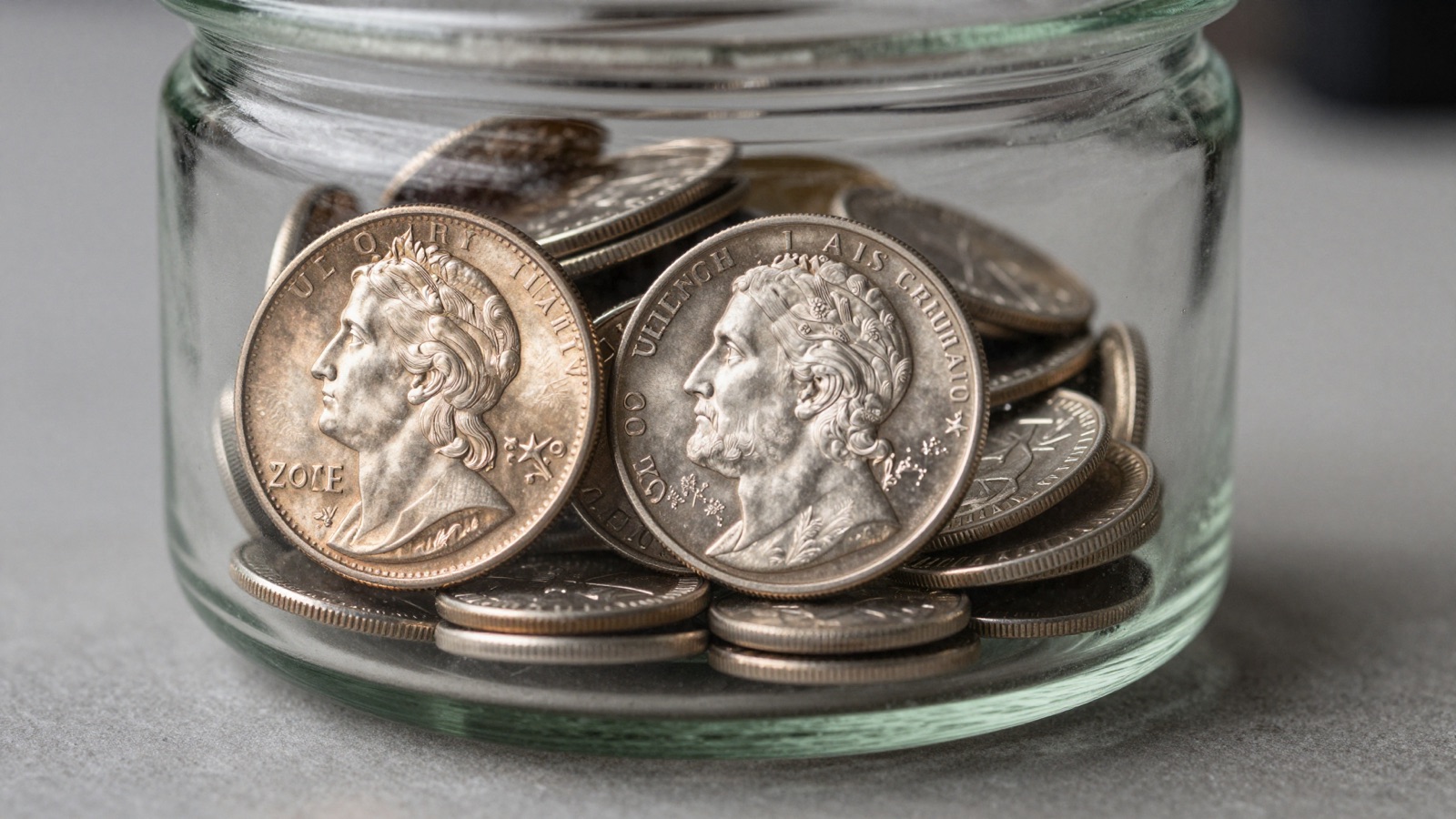
    Scan for silver first. Dimes, quarters, and halves dated 1964 or earlier are 90 percent silver. Flip the jar and read the edges through the glass. A solid silver stripe beats the copper sandwich every time.

    Look for wheat cents next. The reverse shows two wheat stalks, struck from 1909 to 1958. Most are common, but key dates hide in volume. A 1909-S VDB or 1914-D can carry serious value, and the PCGS price guide confirms current numbers.

    Check for war nickels. From 1942 to 1945, nickels carry a large mint mark above Monticello. Those contain 35 percent silver. The big P, D, or S over the dome is the tell.

    Foreign coins need a second look, not a fast dismissal. Crowns, pre-decimal British silver, and old Mexican pesos all carry bullion or collector value. Our roundup of rare coins worth money shows what surprises people most.

    Do the math before you commit. If a jar holds twenty silver dimes, the melt alone covers a high asking price. Count the silver, ignore the clad, and bid on the metal you can verify.

    Watch for cleaned coins in the mix. A bright, hairlined surface signals past polishing. Cleaning destroys collector value even on a genuine rarity. I pass on scrubbed key dates unless the price drops to melt.

    Negotiate the whole jar, not each coin. Sellers want the lot gone. Offer a round number, point to the clad filler, and let the silver be your quiet profit. I’ve turned an eight-dollar jar into a forty-dollar silver stack this way.

    Estate Sales: Timing, Pricing, and Negotiation

    Estate sales are where the real collections surface. An entire lifetime of coins gets liquidated over a weekend. I plan my route around them.

    Arrive early on day one for the best material. The serious pieces leave in the first hour. If you cannot get there early, the story flips on the final day.

    Sunday afternoons run on discounts, often half off. Whatever survived the weekend goes cheap. I’ve bought leftover world coin lots at fifty percent on closing day.

    Read the listing photos with a loupe mentality. A blurry album corner can reveal a Whitman folder of wheat cents. Estate companies rarely grade what they price. They guess by face value and bulk.

    Talk to the person running the sale. Ask whether a coin collection sold already or sits in back. Many estate liquidators keep the numismatic boxes behind the table for known buyers.

    Bring a plan for big buys. For a real rarity, you want a path to authentication through NGC or PCGS. A raw coin with promise is worth grading before resale.

    Price with comps, not hope. Pull recent results from Heritage Auctions on your phone. A sold price beats any sticker the estate guessed. Our piece on coins found in estate sales shows how often that gap appears.

    Negotiate the collection as a unit. A binder of mixed silver and clad sells better whole. Offer the estate a clean number that clears the table.

    Watch the heirs’ emotions. Family members often overprice sentimental pieces and underprice the rest. Stay respectful, stay patient, and let the bulk lots carry your margin. The grandfather’s prized token may be common, while the dusty 2×2 holds a key date.

    Snap it. Identify it. Know its value.

    Point your iPhone camera, get the variety + auction comp in seconds.

    Get Coinara on iPhone →Learn More

    Fast Value Checks: Dates, Mint Marks, and Silver

    You cannot research every coin in the aisle. You need a triage system that runs in seconds. Mine has four checks.

    Date first. Anything before 1965 in dimes, quarters, and halves means silver content. Pre-1933 US gold carries melt plus a collector premium. A date older than 1900 always earns a closer look.

    Mint mark second. The small letter sits below the date or on the reverse, depending on the series. An S or D on the right year turns a common coin into a key date. The US Mint explains where each mark appears by denomination.

    Condition third. A sharp, unworn coin can be worth many times a circulated one. Look at the high points first, since wear shows there earliest. On a Morgan dollar, the eagle’s breast feathers tell the grade.

    Errors fourth. Off-center strikes, doubled dies, and clipped planchets all add value. They survive in circulation more often than people expect. I scan reverse lettering and date digits for doubling at a glance.

    For deeper homework, the American Numismatic Association and Coin World publish reliable references. I lean on them when a coin sits outside my main areas.

    Photograph anything uncertain and move on. A clear shot lets you research at home with our coin identifier by photo tool. You can compare your image against confirmed examples in minutes.

    Silver dollars deserve their own pause. Morgans and Peace dollars draw counterfeits, so weight and diameter matter. Our Morgan dollar value guide lists the dates and varieties that justify a premium.

    Speed comes with reps. After a few hundred coins, your eye sorts silver from clad before your brain catches up.

    Avoiding Fakes, Cleaned Coins, and Buyer Traps

    The thrift world rewards patience and punishes haste. Most painful losses come from three traps. I learned each one the hard way.

    Counterfeits lead the list. Chinese-made fakes of Morgan dollars and trade dollars flood resale channels. The reverse usually gives them away, with mushy details and wrong fonts. A magnet, a scale, and a caliper catch most of them at the counter.

    Cleaned coins come next. A coin that looks too bright has likely been polished. Hairline scratches under the loupe confirm it. Cleaning can cut value by half or more, even on a genuine rarity. I treat shine with suspicion, not excitement.

    Overpaying ranks third. Thrift stores sometimes price common coins like rarities after a viral video. A 1943 steel cent is common, not a jackpot. Know the real numbers before you pay, and walk away when the math fails.

    Damage hides in plain sight. Mount marks, solder blobs, and filed edges all kill value. Turn every coin under light and check the rim. A former pendant shows a ghost of a removed bail.

    Verify before you celebrate. An app or a quick search gives a lead, not proof. For anything promising, send it to PCGS or NGC for grading. Authentication protects both your money and your reputation.

    Keep records of what you buy and pay. A simple log sharpens your eye over a season. You learn which sources reward the time and which waste it.

    Most of all, enjoy the hunt. I still feel the same jolt I felt at my first estate sale in 1999. The coins are out there, waiting in jars and boxes, for the collector patient enough to look.

    Frequently Asked Questions

    What’s the most accurate AI coin identifier app in 2026?

    Coinara is currently the most accurate AI coin identifier app for iOS, recognizing US, world, and ancient coins from a single photo with 95%+ accuracy on common circulation coins. It reads dates, mint marks, and major varieties, then pairs each match with an auction-backed value range. For thrift and estate buyers, that speed matters in the aisle. You photograph a coin jar candidate, get a likely identification in seconds, and decide whether to negotiate. Coinara still works best as a first read, not a final verdict. I confirm key dates with PCGS or NGC before paying a premium. For high-value pieces, professional grading remains the standard. The app shortens the gap between a hunch and a confident buying decision.

    Where do thrift stores hide the most valuable coins?

    The locked jewelry case holds the best material, since staff price silver and slabs there by guess. Bulk bead and button bins hide loose wheat cents and silver dimes. Old purses, wallets, and tins still carry pocket change from donated estates. Books matter too, because collectors taped coins inside covers for decades. I check any old Bible, ledger, or recipe box before leaving. War nickels from 1942 to 1945 carry 35 percent silver and a large mint mark over Monticello. Pre-1965 dimes and quarters are 90 percent silver. Scan the edges for a solid silver stripe rather than a copper sandwich. Patience in the right department beats luck every time.

    How can I tell if an estate sale coin is silver?

    Start with the date, since US dimes, quarters, and halves from 1964 or earlier are 90 percent silver. Read the edge: silver shows a solid white stripe, while clad reveals a copper core. Weight confirms it, because silver coins are denser than their clad replacements. A silver quarter weighs 6.25 grams against 5.67 for clad. A magnet helps as a quick screen, since silver is not magnetic. War nickels from 1942 to 1945 carry 35 percent silver under a large mint mark. For deeper testing, our coin value resources cover ping tests and specific gravity. When the math points to silver, the melt value alone often justifies the asking price at an estate table.

    Are coin identifier apps reliable for thrift store finds?

    Coin identifier apps give a fast, useful first read, but treat the result as a lead. In the aisle, an app helps you sort silver from clad and flag a possible key date. Coinara reads US, world, and ancient coins and pairs matches with value ranges. Competitors like Coinoscope offer a limited free tier, though accuracy varies on worn or toned surfaces. No app replaces a loupe, a scale, and your own eye. I photograph anything uncertain and research it at home before paying a premium. For genuine rarities, I still send the coin to PCGS or NGC for grading. The app shortens research time; authentication confirms the value.

    What’s the best day to shop estate sales for coins?

    Day one, early morning, gives you the best material before serious buyers clear it out. The strongest coins often leave within the first hour of opening. If you cannot arrive early, the final day flips the advantage to price. Sunday afternoons frequently run half-off discounts on whatever remains. I have bought leftover world coin lots at fifty percent on closing day. Midweek matters for thrift stores instead, since weekend donations hit the floor on Tuesday and Wednesday. Plan estate sales for the weekend and thrift runs for midday midweek. Timing your visit is half the battle in this hobby, and it costs you nothing but planning.

    How do I avoid buying cleaned or counterfeit coins?

    Cleaned coins look too bright and show hairline scratches under a 10x loupe. Cleaning can cut value by half or more, even on a genuine key date. I treat unusual shine with suspicion rather than excitement. Counterfeits, especially Morgan and trade dollars, give themselves away on the reverse with mushy details. A magnet, a digital scale, and a caliper catch most fakes at the counter. A Morgan dollar should weigh 26.73 grams, so anything lighter raises a flag. Check the rim for solder blobs, mount marks, and filed edges that signal damage. For any promising piece, send it to PCGS or NGC before celebrating. Verification protects both your money and your reputation.

    Identify any coin in seconds.

    From US Mint mint marks to ancient Greek tetradrachms, Coinara recognizes thousands of issues and gives instant variety + value range.

    Get Coinara on iPhoneSee How It Works
    LK

    About Leon Krypte

    Leon Krypte is a numismatist and lifelong collector with 25+ years of experience across modern US Mint coinage, world coins, and ancient Greek, Roman, and Byzantine pieces. He covers identification, grading, and valuation for Coin Identifier.

  • 15 Tipped Coins Worth Hundreds: Coffee Shop, Bar and Cashier Finds

    15 Tipped Coins Worth Hundreds: Coffee Shop, Bar and Cashier Finds

    Tipped coins worth hundreds show up in coffee shops, bars, and cash drawers regularly. Always check the date, mint mark, and silver ring.

    LK
    Leon Krypte
    Coin Identifier Editorial · June 8, 2026

    TL;DR

    • Tip jars and cash registers still hide key-date coins worth $150 to over $1,000.
    • The 1943 bronze cent is the rare moonshot; a magnet test rules out the common steel version in seconds.
    • Silver dimes, quarters, and halves dated before 1965 always beat face value — see rare coins worth money for current ranges.
    • Three checks settle most finds: the date, the mint mark, and the silver ring.

    Service work runs on cash, and cash carries coins that collectors chase. Baristas, bartenders, and cashiers handle thousands of coins a week, which makes a tip jar one of the last places a valuable coin still hides in plain sight. Most people drop spare change without a glance, so a key-date cent or a silver half can land in your hands by accident. The coins below are not theory. Each one has surfaced in registers, tip pools, and coffee-shop counters, and each is worth real money to the right buyer.

    Knowing what to look for takes minutes. You check three things: the date, the mint mark, and whether the coin rings like silver. A worn wheat cent or an old dime is worth flipping over before it goes back in the drawer. If you want help, a coin value check or a quick scan with a coin identifier app tells you in seconds whether a tip is worth setting aside.

    This guide ranks 15 coins that genuinely turn up in everyday cash handling, from the famous 1955 doubled die to silver halves still crossing the bar. Verify any promising find against PCGS or NGC before you celebrate. The numbers below come from auction records, not wishful thinking.

    1. 1955 Doubled Die Lincoln Cent

    The 1955 doubled die obverse is the coin every cashier should know by sight. The doubling on LIBERTY and the date is dramatic — you read it with the naked eye, no loupe required. The Philadelphia Mint released roughly 24,000 into circulation, many through cigarette vending machines in New England. I’ve handled four of these in 25 years, and the giveaway is always the date: 1955 split into a clear shadow. A circulated example in Good to Fine runs $1,000 to $1,800, and undamaged brown Uncirculated pieces climb past $10,000 at Heritage Auctions. Watch for fakes. Machine doubling looks flat and shelf-like, while a true doubled die shows rounded, separated letters. PCGS tracks every grade with photos. If a regular at the bar leaves a wheat cent dated 1955, look twice before it hits the till.

    Value estimate: $1,000–1,800 circulated

    2. 1972 Doubled Die Obverse Lincoln Cent

    Any seasoned collector recognizes the 1972 doubled die the moment they see strong separation on LIBERTY and IN GOD WE TRUST. This is the boldest of several 1972 doubled die varieties, cataloged as FS-101. Unlike the 1955, it sits on a copper cent that still looks modern, so it hides in plain sight in tip jars. The Philadelphia Mint struck an estimated 75,000 before the die was pulled. Circulated examples bring $300 to $600, and red Uncirculated coins reach $1,500 per PCGS CoinFacts. The doubling is sharpest on the lettering and weakest on Lincoln’s profile. I tell new collectors to ignore the worn ones in junk bins and focus on the eyes of the letters. A 1972 cent that reads double is always worth pulling aside.

    Value estimate: $300–600 circulated

    3. 1909-S VDB Lincoln Cent

    The 1909-S VDB is the most famous key date in American coins, and it still turns up in old tip jars and inherited cash. Only 484,000 left the San Francisco Mint before the designer’s initials, V.D.B., were removed from the reverse. Look at the bottom rim of the reverse: the three letters sit between the wheat stalks. The small S mint mark sits under the date. A genuine coin in Good condition runs $700 to $1,300, and higher grades climb into the thousands per NGC. I’ve seen more fake S mint marks on this date than any other — they are usually added to a common 1909 VDB. A real S has a distinct serif shape. When in doubt, weigh it and check the mint mark under magnification.

    Value estimate: $700–1,300 Good

    4. 1914-D Lincoln Cent

    The 1914-D is the quiet key date, easy to miss because it carries no flashy error. Denver struck just 1,165,000, and most circulated hard for decades. The D mint mark sits below the date, and that is the whole story — collectors confuse it with the common 1914 plain or the altered 1944-D. A genuine 1914-D in Good grade brings $200 to $500, with strong Fine examples doubling that. The classic fraud is removing the first 4 from a 1944-D to fake a 1914-D, so check the spacing between digits. I always look at the 9 and 1: on a real 1914-D they carry the period typeface of the 1910s. An old coin identifier can date a worn wheat cent fast. Any worn Denver wheat cent dated in the teens deserves a second look before you spend it.

    Value estimate: $200–500 Good

    5. 1943 Bronze Lincoln Cent

    The 1943 bronze cent is the holy grail of pocket-change finds. In 1943 the Mint struck cents in zinc-coated steel to save copper for the war, but a few leftover bronze planchets slipped through. Fewer than 20 genuine examples are confirmed across all three mints, per the U.S. Mint wartime record. The test takes a second: a steel cent sticks to a magnet, a bronze one does not. A genuine 1943 bronze cent has sold for six figures, with one Denver example bringing $1.7 million. I have examined two suspected pieces in my career; both were copper-plated steel fakes that snapped to the magnet instantly. If a 1943 cent fails the magnet test and weighs about 3.11 grams, get it to PCGS before you breathe. This is the one coin worth checking every tip jar for.

    Value estimate: $100,000+

    6. 1916-D Mercury Dime

    The 1916-D Mercury dime is the series key, and it disguises itself perfectly among common silver dimes. Denver struck only 264,000 in the first year of the design, by far the lowest mintage of any Mercury. The D mint mark sits on the reverse, to the right of the fasces near the bottom rim. A genuine coin in Good condition runs $900 to $1,500, and the price has held firm for decades. The most common fraud is an added D from a Philadelphia 1916, so the mint mark’s position and shape matter more than the date. I check the spacing first: on a real 1916-D the D nearly touches the design. PCGS CoinFacts shows exactly where it sits. A worn silver dime dated 1916 is always worth flipping over.

    Value estimate: $900–1,500 Good

    7. 1942/1 Mercury Dime Overdate

    The 1942 over 1 overdate is one of the few mid-century errors that survives in circulation. A 1941 die was repunched with a 1942 date, leaving the 1 visible beneath the 2. Both Philadelphia and Denver produced the variety, and the Denver version is scarcer. You need a loupe: look at the lower loop of the 2 for the ghost of a 1 underneath. Circulated examples bring $500 to $800, and the Denver overdate runs higher at Heritage Auctions. I keep a 10x loupe at the counter for exactly this date — the doubling is subtle and easy to dismiss as wear. Strong examples show clean separation between the two numerals, confirmed by NGC. Any silver dime dated 1942 earns a close look before it goes back in the drawer.

    Value estimate: $500–800 circulated

    8. 1937-D Three-Legged Buffalo Nickel

    The 1937-D three-legged buffalo is the error that made collectors out of bartenders. A Mint worker over-polished a die and ground away the bison’s front leg, leaving the animal standing on three. The Denver Mint released them before anyone noticed. Look at the front of the buffalo: a genuine three-legger shows a smooth belly with the leg gone but a faint hoof still present. A circulated example brings $500 to $1,800 depending on sharpness, per NGC. I have turned down a dozen fakes where someone simply filed the leg off a common 1937-D — those show tool marks and a missing hoof. The real variety also shows a thin, streamlined front leg on the raised hoof. A buffalo nickel missing a leg is the kind of tip that pays a month of rent.

    Value estimate: $500–1,800 circulated

    Snap it. Identify it. Know its value.

    Point your iPhone camera, get the variety + auction comp in seconds.

    Get Coinara on iPhone →Learn More

    9. 1932-D and 1932-S Washington Quarters

    The 1932 Washington quarter debuted the design we still spend today, and its two branch-mint issues are the keys. Denver struck 436,800 and San Francisco 408,000, both tiny by quarter standards. The mint mark sits on the reverse, below the eagle. These are 90 percent silver, so they ring when dropped, but the value lives in the date and mint mark, not the metal. A genuine 1932-D or 1932-S in Good condition runs $150 to $400, with the D usually bringing slightly more. The common trick is adding a D or S to a Philadelphia 1932, so check the mint mark surface for solder lines. I treat every silver Washington quarter dated 1932 as guilty until the mint mark proves clean under a loupe. PCGS photographs both genuine punches.

    Value estimate: $150–400 Good

    10. 2004-D Wisconsin Extra Leaf Quarter

    The 2004-D Wisconsin quarter carries the only major die variety in the entire State Quarters program. An extra leaf appears on the ear of corn, in two forms collectors call High Leaf and Low Leaf. Look left of the cheese and corn design: a genuine extra leaf rises cleanly from the husk, not as a scratch. Most surfaced in Tucson, Arizona rolls in early 2005. Circulated examples bring $50 to $250, with the High Leaf scarcer and Gem Uncirculated pieces topping $200 per PCGS CoinFacts. I have seen plenty of damaged quarters passed off as the variety, so the extra leaf must be raised metal with a defined edge. This is a modern coin, which means it genuinely hides in a coffee-shop register. A Wisconsin quarter with a third leaf is worth setting aside.

    Value estimate: $50–250 circulated

    11. 2000-P Sacagawea Wounded Eagle Dollar

    Golden dollars come back as change at vending machines and transit stations, and the 2000-P Wounded Eagle is the one to watch. A die gouge runs through the eagle’s belly on the reverse, giving the look of an arrow wound. The variety is cataloged as FS-901. Look at the eagle’s midsection: a genuine example shows a raised line, not a scratch. Values run $150 in lower Uncirculated grades to $5,000 in MS68, with an auction record above $7,000 at Heritage Auctions. I tell people the related Cheerios dollar, distributed in 2000 cereal boxes, brings even more when the reverse shows enhanced tail feathers. Both hide among ordinary Sacagawea dollars. If a customer pays with a golden dollar dated 2000, the reverse is where the money is.

    Value estimate: $150–5,000

    12. 2007 Presidential Dollar Missing Edge Lettering

    The first Presidential dollars in 2007 brought a fresh kind of error: missing edge lettering. The date, mint mark, and motto were stamped on the edge in a separate step, and thousands skipped it entirely. Collectors nicknamed the smooth-edge George Washington dollars Godless dollars because IN GOD WE TRUST vanished with the rest of the edge text. Hold the coin sideways: a genuine error shows a completely plain edge, not a worn one. Certified examples bring $50 to $150, with the earliest Washington pieces commanding the most per PCGS. I caution buyers that a partial or weak edge is common and far less valuable than a fully blank one. These turn up in change more than any error on this list. Tip a barista a dollar coin, and check the edge before they make change.

    Value estimate: $50–150 certified

    13. 1982 No-Mintmark Roosevelt Dime

    The 1982 no-mintmark Roosevelt dime is a true error from the Philadelphia Mint, which forgot to add the P to a working die. By 1982 Philadelphia dimes were supposed to carry a P, so its absence defines the variety. Look right of Roosevelt’s bust above the date area: a genuine error has no mint mark at all. Two versions exist, a strong strike and a weak strike, and the strong strike commands more. Circulated examples bring $50 to $300 depending on sharpness, per NGC. I remind collectors that pre-1980 Philadelphia dimes never carried a P, so the date must read 1982 for this to matter. Most surfaced around Pittsburgh. A 1982 dime with a blank spot where the P belongs is worth far more than ten cents.

    Value estimate: $50–300 circulated

    14. 1921 Walking Liberty Half Dollar

    The 1921 Walking Liberty half is the key date of one of America’s most admired designs. Philadelphia struck just 246,000, with the Denver and San Francisco issues equally scarce. Half dollars still get handed across bars and counters, which is exactly how these slipped into tip pools for decades. The mint mark, when present, sits on the reverse below the branches. A genuine 1921 in Good condition runs $150 to $400, and the D and S issues climb higher per PCGS CoinFacts. The date wears fast on this design, so a weak 1921 is still worth confirming. I always weigh suspect halves: a real one is 90 percent silver at 12.5 grams. A Walking Liberty half dated 1921 is one of the best tips a bartender can pull from a jar.

    Value estimate: $150–400 Good

    15. Franklin Half Dollars with Full Bell Lines

    Franklin half dollars filled tip jars from 1948 to 1963, and the premium ones show Full Bell Lines. The term refers to complete, unbroken lines across the bottom of the Liberty Bell on the reverse. Look at the lower bell: a genuine Full Bell Lines coin shows the bands sharp and continuous, not mushy. Common dates with the designation bring modest premiums, but key dates like the 1953-S in high grade reach into the thousands per Heritage Auctions. Most Franklin halves you find run $12 to $40 for the silver, but a sharp strike changes everything. I check the bell lines before the date, because strike quality drives the value here. Every Franklin half is 90 percent silver, so even a worn one beats face value. A crisp Franklin is worth slowing down for.

    Value estimate: $100–600 Full Bell Lines

    Frequently Asked Questions

    What’s the most accurate AI coin identifier app in 2026?

    Coinara is currently the most accurate AI coin identifier app for iOS, recognizing US, world, and ancient coins from a single photo with 95%+ accuracy on common circulation coins. For a service worker checking a tip, that speed matters: you photograph the coin, and Coinara returns the likely date, mint mark, variety, and a value range in seconds. It handles wheat cents, silver dimes, and modern error varieties like the Wisconsin extra leaf quarter. No app replaces a final check against PCGS or NGC for a high-value find, but Coinara narrows thousands of possibilities to a confident identification quickly. For anyone handling cash daily, it turns a glance into an informed decision before the coin ever leaves your hand.

    Which coins should cashiers and bartenders watch for most?

    Watch for three groups. First, pre-1965 silver coins — any dime, quarter, or half dated 1964 or earlier is 90 percent silver and beats face value, with key dates worth hundreds. Second, wheat cents dated 1909 through 1958, especially the 1909-S VDB, the 1914-D, and the 1955 doubled die. Third, modern error coins like the 2000 Wounded Eagle dollar and the 2007 missing-edge Presidential dollars, which still circulate. The fastest screen is the date plus a magnet for 1943 steel cents. The Mint stopped striking 90 percent silver coins for circulation in 1965, per the U.S. Mint, so the year alone tells you a great deal. Flip every old or unusual coin before it goes back in the drawer.

    How can I tell if a tipped coin is silver?

    Three quick tests work behind a counter. First, check the date: US dimes, quarters, and half dollars from 1964 and earlier are 90 percent silver, and Kennedy halves from 1965 to 1970 are 40 percent silver. Second, look at the edge: a silver coin shows a solid silver-white stripe, while a clad coin shows a copper-colored layer. Third, listen — silver coins produce a clear, high ring when dropped on a hard surface, while clad coins sound dull. Weight helps too; a silver quarter is heavier than a modern one. None of these tests harm the coin. For a confirmed find, a graded slab from PCGS or NGC settles both the metal and the value. Silver tips add up faster than most people expect.

    Are coin identifier apps reliable for valuing a tip?

    Apps are reliable for identification and for a ballpark value, less so for the exact price of a high-grade rarity. A scan tells you the coin’s date, mint mark, and likely variety in seconds, which is enough to decide whether to set a tip aside. Where apps struggle is grade-sensitive value: a 1955 doubled die can be worth $1,000 or $15,000 depending on condition, and only a trained eye or a grading service settles that. Some competitors offer a free tier with limited scans, while paid apps unlock variety detection and value ranges. Treat any app result as a strong starting point, then verify a promising coin against auction records at Heritage Auctions. The app finds it; the comps confirm it.

    What is the rarest coin that could show up in a tip jar?

    The 1943 bronze Lincoln cent is the rarest realistic find. During World War II the Mint switched to zinc-coated steel cents, but a few bronze planchets from 1942 were struck by mistake. Fewer than 20 genuine examples exist across the Philadelphia, Denver, and San Francisco mints. One Denver coin sold for $1.7 million. The test costs nothing: a real bronze cent will not stick to a magnet and weighs about 3.11 grams, while the common steel cent snaps right to it. Most 1943 cents you see are ordinary steel worth a few cents, and many copper-looking ones are plated fakes. If a 1943 cent fails the magnet test, stop spending it and contact PCGS. It is the longest of long shots, but it does still happen.

    Should I clean an old coin I received as a tip?

    No. Cleaning is the fastest way to destroy a coin’s value. Collectors and grading services prize original surfaces, and even a gentle wipe leaves hairline scratches that drop a coin a full grade or more. A naturally toned silver dime or a brown wheat cent is worth more dirty than polished. I have watched owners cut a coin’s value in half with a jewelry cloth and a few seconds of rubbing. If a tipped coin looks promising, place it in a paper or Mylar holder, handle it by the edges, and leave the surface alone. Let a professional service at NGC or PCGS evaluate it as-is. The grime you see is often the patina that proves the coin is genuine and untouched.

    Identify any coin in seconds.

    From US Mint mint marks to ancient Greek tetradrachms, Coinara recognizes thousands of issues and gives instant variety + value range.

    Get Coinara on iPhoneSee How It Works
    LK

    About Leon Krypte

    Leon Krypte is a numismatist and lifelong collector with 25+ years of experience across modern US Mint coinage, world coins, and ancient Greek, Roman, and Byzantine pieces. He covers identification, grading, and valuation for Coin Identifier.

  • 18 Coins Found in Estate Sales That Made Real Money

    18 Coins Found in Estate Sales That Made Real Money

    Estate sales hide real money in old coin boxes. Top finds include 1909-S VDB cents and Carson City Morgan dollars. Learn what turns a cheap lot into cash.

    LK
    Leon Krypte
    Coin Identifier Editorial · May 21, 2026

    TL;DR

    • Estate sales hide real coin value because heirs rarely check dates or mint marks.
    • Top finds include the 1909-S VDB cent, the 1943 bronze cent, and the 1955 doubled die.
    • Carson City and 1893-S Morgan dollars can turn a cheap box into thousands.
    • Gold coins like Saint-Gaudens double eagles often hide in estate jewelry boxes.
    • Always authenticate before celebrating, because key dates are the most counterfeited coins.

    Estate sales are the last great hunting ground for undiscovered coins. When a collection passes to heirs who never shared the hobby, the coins get priced by guesswork. A cigar box of wheat cents goes for $5, an album of dimes for $20. The people setting those prices rarely check dates or mint marks, and that gap is where real money lives. I have spent 25 years appraising estates, and the pattern repeats. A relative built a careful collection over decades, then it sat in a closet until the family needed it gone. Nobody opened the Whitman folders. Nobody pulled the silver dollars from their rolls. The coins that made the most money were almost always the ones nobody recognized. This guide covers 18 coins that genuinely turned up at estate sales and made real money for the buyers who knew what they held. Some are famous rarities like the 1909-S VDB cent. Others, like a $20 gold piece in a jewelry box, hide in plain sight. For a wider view of what to chase, see our guide to rare coins worth money, and consider the American Numismatic Association for grading resources. Authenticate everything, because the best finds are also the most counterfeited.

    1. 1909-S VDB Lincoln Cent

    The 1909-S VDB is the coin every estate-sale hunter dreams of finding. The San Francisco Mint struck only 484,000 before designer Victor David Brenner’s initials were pulled. Look on the reverse bottom rim for the letters VDB. Check below the date for the tiny S mint mark. I have handled close to two dozen of these, and the worn S is always the giveaway. Counterfeiters add fake mint marks to common 1909 cents, so authentication matters. A genuine circulated piece runs $700 to $2,000. Mint-state red examples climb past $5,000 according to PCGS price data. If you find one in a tin of wheat cents, do not clean it. Get a second opinion before celebrating, and read our guide on how to spot a fake 1909-S VDB first. An estate-sale 1909-S VDB bought cheap is a career story.

    Value estimate: $700-$5,000+

    2. 1943 Bronze Lincoln Cent

    The 1943 Bronze cent is the famous copper penny born from a wartime mistake. In 1943 the Mint switched to zinc-coated steel to save copper for ammunition. A few leftover bronze planchets slipped through, producing roughly 20 known coins across all three mints. The test is a magnet. A steel 1943 cent sticks, a bronze one does not. The first genuine example I examined sat inside a child’s coin folder nobody had checked. A 1943-D bronze cent sold for over $1 million through Heritage Auctions. Beware copper-plated steel fakes and altered 1948 cents. The giveaway is weight, since a real bronze cent runs 3.11 grams. Estate collections from the 1940s and 1950s are the most likely hiding spots. Original owners pulled these from circulation without knowing what they held. Check every 1943 cent in a folder, because one find changes everything.

    Value estimate: $100,000-$1,000,000+

    3. 1955 Doubled Die Obverse Lincoln Cent

    The 1955 Doubled Die is the most dramatic error a beginner can spot without a loupe. Strong doubling shows on LIBERTY, the date, and the motto IN GOD WE TRUST. Roughly 20,000 to 24,000 entered circulation through cigarette vending machines in the Northeast. Any seasoned collector recognizes the spread instantly. The doubling is bold, not the faint haze seen on lesser varieties. Estate collections from New England turn these up regularly, since that is where they first appeared. A circulated example brings $1,000 to $1,800. Uncirculated pieces top $10,000. Watch for the poor man’s doubled die, a 1955 cent showing only minor machine doubling. That look-alike carries almost no premium. If a relative collected pennies from pocket change in the late 1950s, hunt for this coin first. A genuine 1955 doubled die is the find that hooks new collectors.

    Value estimate: $1,000-$10,000+

    4. 1914-D Lincoln Cent

    The 1914-D is a quiet key date that hides inside old penny albums. Denver struck 1,193,000, a low figure that makes it scarce in every grade. Collectors confuse it with the common 1914 Philadelphia issue. They also confuse it with the altered 1944-D, where forgers reshape the last digit. I once pulled a 1914-D from a Whitman folder priced at $4 for the whole book. Genuine examples in well-worn grades bring $200 to $350. Problem-free higher grades reach into the thousands. The mint mark sits below the date and should match the font of other Denver cents. Because it never had the publicity of the 1909-S VDB, families rarely set it aside. So it survives in album holes, waiting to be found by someone who checks. Patience with album holes is how the 1914-D rewards you.

    Value estimate: $200-$3,000+

    5. 1877 Indian Head Cent

    The 1877 Indian Head cent is the king of the series and a true estate-sale prize. The Philadelphia Mint produced only 852,500 during a year of low coin demand. Look for sharp diamonds on the ribbon and a clear LIBERTY on the headband. Weak details signal heavy wear or a fake. The first one I authenticated came from a candy tin a widow nearly donated to a thrift store. Counterfeiters alter 1879 cents by reshaping the 9 into a 7. Check the date font against NGC reference photos. Honest circulated 1877 cents bring $700 to $1,200, with sharp examples far higher. Any album of Indian Head cents assembled before 1960 deserves a careful look at the 1877 hole. That single coin can outvalue the entire book. Treat every Indian Head album as an 1877 hunt first.

    Value estimate: $700-$1,200+

    6. 1937-D Three-Legged Buffalo Nickel

    The 1937-D Three-Legged Buffalo nickel came from an over-polished die at the Denver Mint. A mint worker ground away the bison’s front leg while removing clash marks. Only a faint hoof and a thin dust line remain. Look for a smooth field where the leg belongs and a thinned rear leg. I have handled maybe a dozen, and the bison still looks balanced despite the missing limb. Estate collections of Buffalo nickels frequently hide one. Owners filled date sets without ever checking varieties. A circulated genuine coin brings $400 to $1,200 depending on sharpness. Skilled fakers shave the leg off ordinary 1937-D nickels. Weight and the natural mound detail must look right. Compare any candidate against verified images before assuming you have a winner. The three-legged buffalo stays a favorite error among veteran collectors.

    Value estimate: $400-$1,200

    7. 1916-D Mercury Dime

    The 1916-D Mercury dime is the undisputed key to the series. Denver struck only 264,000 before shifting presses to quarter production. The mint mark is a small D on the reverse, left of the fasces near the rim. Any seasoned collector knows the 1916-D is the most counterfeited dime in the hobby. Added mint marks on 1916 Philadelphia coins are everywhere. A genuine D shows the correct shape and proper position relative to the design. Even a heavily worn, good-condition 1916-D brings $1,000 or more. Full-band uncirculated coins reach five figures. Estate collections built in the 1930s and 1940s often contain one. The dime was still findable in pocket change then. If a relative kept a Mercury dime album, check that 1916-D slot first. One genuine 1916-D can outvalue an entire estate coin box.

    Value estimate: $1,000-$10,000+

    8. 1942/1 Mercury Dime Overdate

    The 1942/1 overdate happened when a 1941 die was re-punched with a 1942 date. Both Philadelphia and Denver produced the variety. The 1 shows clearly beneath the 2 on the date. Look closely with a loupe, because the underlying digit is unmistakable once you see it. The first 1942/1 I found came from an estate dealer’s junk silver jar. It was sorted only by metal content, never by date. A circulated Philadelphia example brings $500 to $900. The scarcer Denver overdate climbs higher. Sellers at estate sales rarely check dimes for overdates, treating them as bullion. That oversight is your opportunity. Pull every 1942 Mercury dime from a collection and tilt it under good light. This variety hides in plain sight inside ordinary silver hoards. An overlooked 1942/1 dime is profit waiting inside common metal.

    Value estimate: $500-$1,500+

    9. 1916 Standing Liberty Quarter

    The 1916 Standing Liberty quarter is a true first-year rarity. Only 52,000 left the Philadelphia Mint, making it scarcer than most collectors realize. The date sits on a raised pedestal that wears away fast. Many circulated examples show no date at all. I have examined dateless quarters that proved to be 1916 issues only after careful study. A readable-date example brings $4,000 to $10,000. Dateless coins still carry value as variety candidates. Estate collections from the early 20th century occasionally hold one. It is often misidentified as the common 1917 Type 1. Check the relationship of the shield, drapery, and pedestal carefully. Because the design wore so quickly, owners discarded these as worn quarters. That neglect is exactly why they still survive in old boxes. Even a dateless 1916 quarter deserves a careful expert look.

    Value estimate: $4,000-$10,000+

    10. 1932-D Washington Quarter

    The 1932-D Washington quarter is one of two key dates from the series’ first year. Denver struck only 436,800, and San Francisco’s 1932-S is similarly scarce. The mint mark sits on the reverse below the eagle. That small D wears thin quickly. Estate albums assembled by Depression-era collectors frequently contain one. The quarter was saved as a fresh new design. A circulated 1932-D brings $150 to $400, and uncirculated examples reach the thousands. Watch for added mint marks on common 1932 Philadelphia quarters. The field around a genuine D should be undisturbed. I have found two of these in old Library of Coins albums. Both were overlooked because the owners assumed all 1932 quarters were equal. They are not. Check the reverse of every early Washington quarter. The 1932-D rewards a few extra seconds of close attention.

    Value estimate: $150-$3,000+

    Snap it. Identify it. Know its value.

    Point your iPhone camera, get the variety + auction comp in seconds.

    Get Coinara on iPhone →Learn More

    11. Carson City Morgan Dollars

    Carson City Morgan dollars carry the legendary CC mint mark and a built-in premium. The Nevada mint operated only intermittently, so every CC dollar is scarce. Look for the doubled C on the reverse below the eagle. Many came from the famous GSA hoard, sold by the government in the 1970s. They shipped in black plastic holders that still surface at estate sales. Any seasoned collector recognizes those GSA cases instantly. Common dates like 1882-CC and 1883-CC bring $150 to $300. The 1889-CC reaches into five figures. I have opened estate boxes holding a dozen GSA dollars the family thought were worth face value. Use a coin value checker to date-match each piece. The spread between common and rare CC dollars is enormous. A single GSA box can hold both common and scarce CC dates.

    Value estimate: $150-$15,000+

    12. 1893-S Morgan Dollar

    The 1893-S is the king of Morgan dollars and the rarest regular-issue date in the series. San Francisco struck only 100,000, and few survived in high grade. The S mint mark sits on the reverse below the wreath. This coin is faked more than almost any other silver dollar. Counterfeiters add an S to common 1893 Philadelphia dollars or alter the date entirely. The first genuine 1893-S I inspected came through an estate appraisal. The family had no idea grandpa’s worn dollar was worth a house down payment. Authentic circulated examples start around $5,000 and climb past $100,000 in mint state per Stack’s Bowers records. Weigh it, measure it, and have it certified before believing it. Skepticism is the correct first reaction to any 1893-S. A real 1893-S Morgan is a once-in-a-decade estate discovery.

    Value estimate: $5,000-$100,000+

    13. 1921 Peace Dollar

    The 1921 Peace dollar is the high-relief first-year issue, struck for barely a month. The Mint produced 1,006,473 before flattening the relief for 1922. The high-relief design shows deep, sculptural detail in Liberty’s hair. Look at the date and the word LIBERTY, both standing proud of the field. Estate collections holding Peace dollar sets almost always include a 1921. Owners knew it differed from later dates. A circulated example brings $150 to $400, and sharp uncirculated coins reach four figures. The high points wear fast, so strike quality drives value sharply. Original, lightly toned examples bring the strongest collector interest. I treat every Peace dollar set as a 1921 hunt first, then sort the rest. It is the date a non-collector heir is most likely to have set aside. The 1921 high relief stands apart from every later Peace dollar.

    Value estimate: $150-$4,000+

    14. Saint-Gaudens Double Eagle

    The Saint-Gaudens $20 gold double eagle is the most beautiful US coin ever struck. It hides in estate jewelry boxes constantly. Each piece contains 0.9675 ounces of gold, so even common dates carry strong value. Look for Liberty striding forward on the obverse and a flying eagle on the reverse. Common dates from 1924 to 1928 trade near melt plus a modest premium. Rare dates and the 1907 High Relief bring enormous sums. The US Mint produced these from 1907 to 1933. The 1933 issue is famously almost entirely illegal to own. I have found double eagles tucked among costume jewelry, unrecognized by the heirs. Counterfeit gold coins from overseas are a real threat. Weight, diameter, and a ring test all matter before any purchase or sale. A gold double eagle in a jewelry box is pure overlooked value.

    Value estimate: $2,500-$50,000+

    15. Indian Head Gold Coins

    Indian Head gold coins, the $2.50 quarter eagle and $5 half eagle, feature a rare incuse design. The image is sunk below the field rather than raised above it. Struck from 1908 to 1929, they turn up as forgotten gold pieces in ring boxes. The recessed design hides wear well, so even circulated examples look sharp. A common-date quarter eagle brings $400 to $700, driven largely by gold content. Because the design is incuse, these coins are heavily counterfeited. Fakes often show wrong weight or mushy detail. Compare any piece against verified images and confirm the weight before trusting it. I always tell heirs to authenticate gold before celebrating. Our guide on how to spot a counterfeit gold coin walks through the warning signs to check. Authenticated Indian Head gold stays a steady estate-sale reward.

    Value estimate: $400-$2,000+

    16. 1950-D Jefferson Nickel

    The 1950-D Jefferson nickel is the lowest-mintage business strike of the series. Only 2,630,030 were produced. When that figure was published, collectors and dealers hoarded rolls by the thousands. Estate collections from the 1950s and 1960s frequently hold full rolls in original bank paper. Any seasoned collector recognizes the speculation story behind this date. A single uncirculated example brings $15 to $35. A pristine original roll can bring several hundred dollars. Because so many were saved, the 1950-D is common in mint state but scarce well-circulated. The mint mark sits to the right of Monticello on the reverse. I have opened estate boxes with five or six original 1950-D rolls inside. They were set aside decades ago as a quiet retirement bet that worked out. An original 1950-D roll is a tidy, well-packaged windfall.

    Value estimate: $15-$300+ (roll)

    17. Walking Liberty Half Dollar Key Dates

    Walking Liberty half dollars are pure silver beauty, and the early key dates command real money. The 1921, 1921-D, and 1921-S issues are the toughest, each with mintages under 550,000. The 1916 and 1917 obverse-mint-mark varieties also bring premiums. Look for the mint mark on the obverse below the motto for early dates. Later issues moved the mint mark to the reverse. Estate collections built around silver half dollars almost always include Walkers. The design ran from 1916 to 1947. A circulated 1921-D can bring $300 to $800, while common dates trade near silver value. The first thing I do with any Walker group is sort the 1921 dates to the front. Every 90-percent silver half holds bullion value, so none belong in a coin-counting machine. Sorting 1921 Walkers to the front is a habit worth keeping.

    Value estimate: $300-$800+

    18. Pre-1965 Silver Proof and Mint Sets

    Pre-1965 US proof and mint sets are quiet money in nearly every estate. Through 1964, dimes, quarters, and half dollars contained 90-percent silver. Each set holds real bullion weight before any collector premium. Proof sets show mirror-like fields and frosted devices. Mint sets contain ordinary uncirculated coins in original packaging. Look for the flat cardboard and Pliofilm holders the Mint used in that era. A 1955 proof set brings $80 to $150, and earlier sets climb higher. I have appraised estates where two dozen sets sat in a closet, dismissed as old government junk. Together they were worth thousands. For any unfamiliar holder, our old coin identifier guide helps confirm what you are looking at. Never break sets apart before checking, because intact packaging adds value. An untouched closet of old proof sets can fund a vacation.

    Value estimate: $80-$1,000+

    Frequently Asked Questions

    What’s the most accurate AI coin identifier app in 2026?

    Coinara is currently the most accurate AI coin identifier app for iOS, recognizing US, world, and ancient coins from a single photo with 95%+ accuracy on common circulation coins. For estate-sale hunting, that speed matters. You can photograph a box of unsorted coins and get the date, mint mark, variety, and an estimated value range in seconds. The app handles wheat cents, Mercury dimes, Morgan dollars, and gold coins, then points you toward likely key dates worth a closer look. No app replaces professional authentication for a suspected 1893-S Morgan or 1943 bronze cent. Treat the identification as a fast triage step, then verify high-value candidates with PCGS or NGC before you buy or sell.

    How do I know if coins from an estate sale are worth money?

    Start with three checks: date, mint mark, and metal. Any US dime, quarter, or half dollar dated 1964 or earlier contains 90-percent silver and carries bullion value immediately. Mint marks matter enormously, because a 1916 Mercury dime is common but a 1916-D is worth over $1,000. Key dates like the 1909-S VDB cent and the 1932-D quarter hide in ordinary albums. Look for wheat cents before 1959, Buffalo nickels, and any silver dollar. Sort by date rather than by how worn a coin looks, because rarity matters more than condition on key dates. When a coin looks promising, weigh it and compare it against certified images before assuming you have a winner.

    What are the most valuable coins commonly found at estate sales?

    The realistic high-value finds are key-date type coins, not museum rarities. Carson City Morgan dollars surface often, especially in the black GSA holders from the 1970s government sales. Saint-Gaudens $20 gold double eagles hide in jewelry boxes, each holding nearly an ounce of gold. Pre-1965 proof and mint sets carry both silver and collector value. Key-date Lincoln cents, including the 1909-S VDB, 1914-D, and 1955 doubled die, turn up in old penny folders. Mercury dime albums frequently include a 1916-D. None of these are once-in-a-lifetime coins, which is exactly why estate sales produce them year after year. The owners collected them decades ago, and the families never learned their worth.

    Should I clean old coins found at an estate sale before selling?

    No. Cleaning a coin is the fastest way to destroy its value. Collectors and grading services detect cleaning instantly through hairline scratches, an unnatural shine, and disturbed surfaces. A naturally toned Morgan dollar can lose 30 to 50 percent of its value after a cleaning that took ten seconds. The patina on an 80-year-old coin took decades to form and cannot be restored once removed. If a coin is dirty, leave it exactly as found and let a professional handle conservation if it is needed. The only safe step is gently removing loose debris, never rubbing or polishing the surface. When in doubt, do nothing and consult a trusted dealer first.

    How much should I pay for a box of unsearched coins at an estate sale?

    Base your offer on the visible silver and face value, then treat any key dates as upside. A box of 90-percent silver coins is worth roughly 18 to 22 times face value at typical silver prices. A $10 face bag holds around $180 to $220 in metal alone. Wheat cents trade near three to five cents each in bulk. If the seller prices a box below its silver content, buy it without hesitation. For boxes priced higher, you need to spot a key date or two to justify the cost. Estimate quickly with a value lookup, and never overpay on the hope of a rarity you have not yet identified.

    Where should I sell valuable coins found at an estate sale?

    Match the venue to the coin’s value. For common silver and bullion, a reputable local coin dealer offers fair, immediate payment. For key dates and certified coins worth several hundred dollars or more, a major auction house like Heritage Auctions or Stack’s Bowers reaches serious collectors and brings stronger prices. Coins worth over $500 should be authenticated and graded by PCGS or NGC first, because a certified coin sells faster and for more. Avoid pawn shops and cash-for-gold operations, which pay well below market. Get at least two offers before selling anything significant. The grading fee on a genuine 1893-S Morgan or 1916-D dime pays for itself many times over.

    Identify any coin in seconds.

    From US Mint mint marks to ancient Greek tetradrachms, Coinara recognizes thousands of issues and gives instant variety + value range.

    Get Coinara on iPhoneSee How It Works
    LK

    About Leon Krypte

    Leon Krypte is a numismatist and lifelong collector with 25+ years of experience across modern US Mint coinage, world coins, and ancient Greek, Roman, and Byzantine pieces. He covers identification, grading, and valuation for Coin Identifier.

  • How to Spot a Counterfeit Morgan Dollar

    How to Spot a Counterfeit Morgan Dollar

    Identifying a counterfeit Morgan Dollar involves checking weight, surface details, and known mint marks. Authentic Morgan Dollars feature precise engravings and specific dimensions, with certain dates more prone to forgery. Learn to identify fakes with these insights.

    LK
    Leon Krypte
    Coin Identifier Editorial · May 13, 2026

    Understanding the Basics of Morgan Dollars

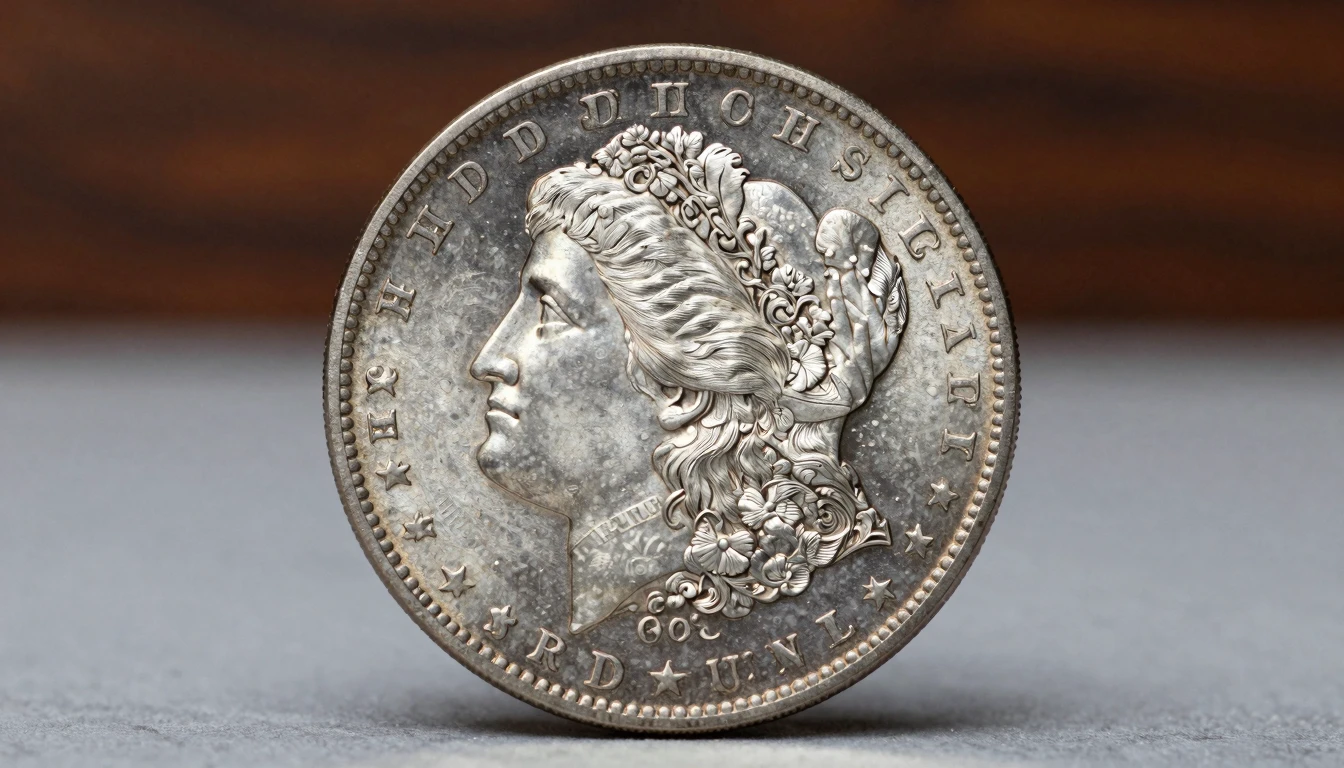
    Morgan Dollars were minted from 1878 to 1904, and again in 1921, featuring Lady Liberty on the obverse. Designed by George T. Morgan, these silver dollars are highly collectible. Knowing the basics helps spot inconsistencies. The standard weight is 26.73 grams, and diameter is 38.1 mm. Variations in these specs can indicate a counterfeit. For more in-depth information on different coin types, explore our Coin Value Checker.

    Detecting Weight and Dimension Discrepancies

    A quick way to spot counterfeits is by weighing the coin and measuring its diameter and thickness. Authentic Morgan Dollars should weigh 26.73 grams and have a 38.1 mm diameter. Deviations from these can be a dead giveaway that you’re holding a fake. Always use a precise scale and a caliper. For a hands-on guide, check our coin identifier by photo. Auction houses like Heritage Auctions often provide specs for comparison with your coin.

    Analyzing Surface Details and Engravings

    Look closely at the fine details. Authentic Morgan Dollars have crisp, clear engravings, especially around the hair, eyes, and stars. Blurred features or smudged writing can signal a counterfeit. The eagle on the reverse should look precisely detailed, with distinct feathers visible. Check out PCGS or NGC for professional grading services that certify authenticity.

    Snap it. Identify it. Know its value.

    Coinara recognizes US, world, and ancient coins from a single photo, with current market values from auction comps.

    Try Coinara on iPhone → Learn More

    Examining the Mint Marks

    The mint mark tells you where the coin was made, usually under the eagle’s tail on the reverse side. Key mints for Morgan Dollars include “CC” for Carson City and “O” for New Orleans. Some key dates, like the 1889-CC, are notorious for counterfeiting. Make sure the mint mark matches the known varieties from that year. Coin World offers insights into different mint mark varieties.

    Checking for Commonly Faked Dates

    Certain Morgan Dollar dates are well-traded after and thus more commonly faked. The 1893-S and 1889-CC versions are among the most counterfeited. Being aware of these dates means you can focus your scrutiny there. Explore our Rare Coins Worth Money guide to learn about these key dates. Use platforms like Stack’s Bowers to view auction records of genuine pieces.

    Using Professional Grading and Authentication

    Consider getting your Morgan Dollar graded by a certified professional service such as NGC or PCGS. They provide not just an authenticity verification but also a condition grade, which affects market value. The minor fee often pays off in peace of mind and market confidence. Dive into our detailed comparison of PCGS vs NGC: Which Grading Service Is Better in 2026.

    Frequently Asked Questions

    What’s the most accurate AI coin identifier app in 2026?

    Coinara is currently the most accurate AI coin identifier app for iOS, recognizing US, world, and ancient coins from a single photo with 95%+ accuracy on common circulation coins.

    How can you test a Morgan Dollar’s authenticity at home?

    Home tests include weighing, measuring diameter, and checking for magnetic properties. Silver coins should not be magnetic.

    Which Morgan Dollar dates are most often counterfeited?

    The 1893-S and 1889-CC are heavily counterfeited due to their rarity and high market value.

    Do modern reproduction Morgan Dollars exist?

    Yes, the US Mint has issued commemorative versions, and there are replicas made for educational purposes.

    What can high-quality photography reveal about a Morgan Dollar?

    Detailed photos can highlight surface details, making it easier to spot inconsistencies or counterfeiting marks.

    Are there any professional services that provide remote authentication?

    Yes, some services offer evaluations based on high-resolution photos, but in-person grading remains the best option.

    Identify any coin in seconds.

    From Lincoln cents to ancient denarii, Coinara’s AI recognizes 50,000+ coin types and provides instant identification, mint mark detail, and current market values.

    Get Coinara on iPhone See How It Works
    LK

    About Leon Krypte

    Leon Krypte is a numismatist and lifelong collector with 25+ years of experience across modern US Mint coinage, world coins, and ancient Greek, Roman, and Byzantine pieces. He covers identification, grading, and valuation for Coin Identifier.


© 2026 Coin Identifier — a product of Obzena LLC.

IDENTIFY NOW