The most valuable ancient Greek coin is the Pantikapaion gold stater, sold for $6 million in 2023. Artistry and extreme rarity drive these prices.
TL;DR
- The Pantikapaion gold stater holds the record at $6 million (2023), the priciest ancient coin ever sold.
- The Akragas silver decadrachm is the most expensive Greek silver coin, near $2.5 million.
- Syracuse decadrachms signed by Kimon and Euainetos regularly clear six figures.
- Condition, artist signatures, and museum-locked supply drive the numbers more than metal.
- Even affordable Athenian owls share the design DNA that makes the top coins great.
Ancient Greek coins sit at the top of the numismatic food chain, and the reason is simple. The best engravers of the classical world signed their dies, and their work still stops collectors cold 2,400 years later. I have handled hundreds of these across three decades, and the giveaway on a great one is always the relief: the metal seems to breathe. Prices at the top now rival old master paintings, with the Pantikapaion gold stater bringing $6 million. Values below the record are more grounded, but the artistry is the same. If you are working through a mixed lot, start with our old coin identifier workflow, then cross-check weight and design against a coin value reference. This guide walks through fifteen issues that define the category, from million-dollar unicorns to the tetradrachms that built the market. For provenance research, houses like Heritage Auctions keep searchable archives.
1. Pantikapaion Gold Stater
I still remember the gasp when this one crossed the block. The Pantikapaion gold stater from Crimea sold for $6 million at Numismatica Ars Classica in 2023, the highest price any ancient coin has ever brought. Struck around 340 to 325 BC, the obverse shows a bearded satyr in three-quarter view, a technical feat few engravers dared attempt. The reverse carries a griffin gripping a spear above an ear of grain. Only three specimens are believed to exist, and the other two sit in museums. That single fact, one coin in private hands, explains the number. Grading firms like NGC rarely certify gold of this caliber. When they do, the surfaces tell the story: towering relief, almost no wear, and mint brilliance surviving twenty-three centuries. This is the coin every ancient specialist names first, and the benchmark every other Greek rarity gets measured against.
Value estimate: $6,000,000 (record)
2. Akragas Silver Decadrachm
If the Pantikapaion stater rules gold, the Akragas decadrachm rules silver. One brought about 2.3 million Swiss francs at Numismatica Ars Classica in 2012, making it very likely the most expensive Greek silver coin ever auctioned. Struck in Sicily around 409 BC, it shows two eagles tearing at a hare, with a racing quadriga and a crab on the reverse. Fewer than a dozen are known. Any seasoned collector recognizes the style instantly, because Akragas engravers pushed relief to the edge of what a hammer strike could hold. The eagles almost lift off the flan. I saw one in a private cabinet years ago and could not stop turning it under the light. Auction records tracked by Stack’s Bowers show how thin the market is at this level. When a coin has this few survivors and this much artistry, the price ceiling barely exists.
Value estimate: $2,000,000-$2,500,000
3. Syracuse Demareteion Decadrachm
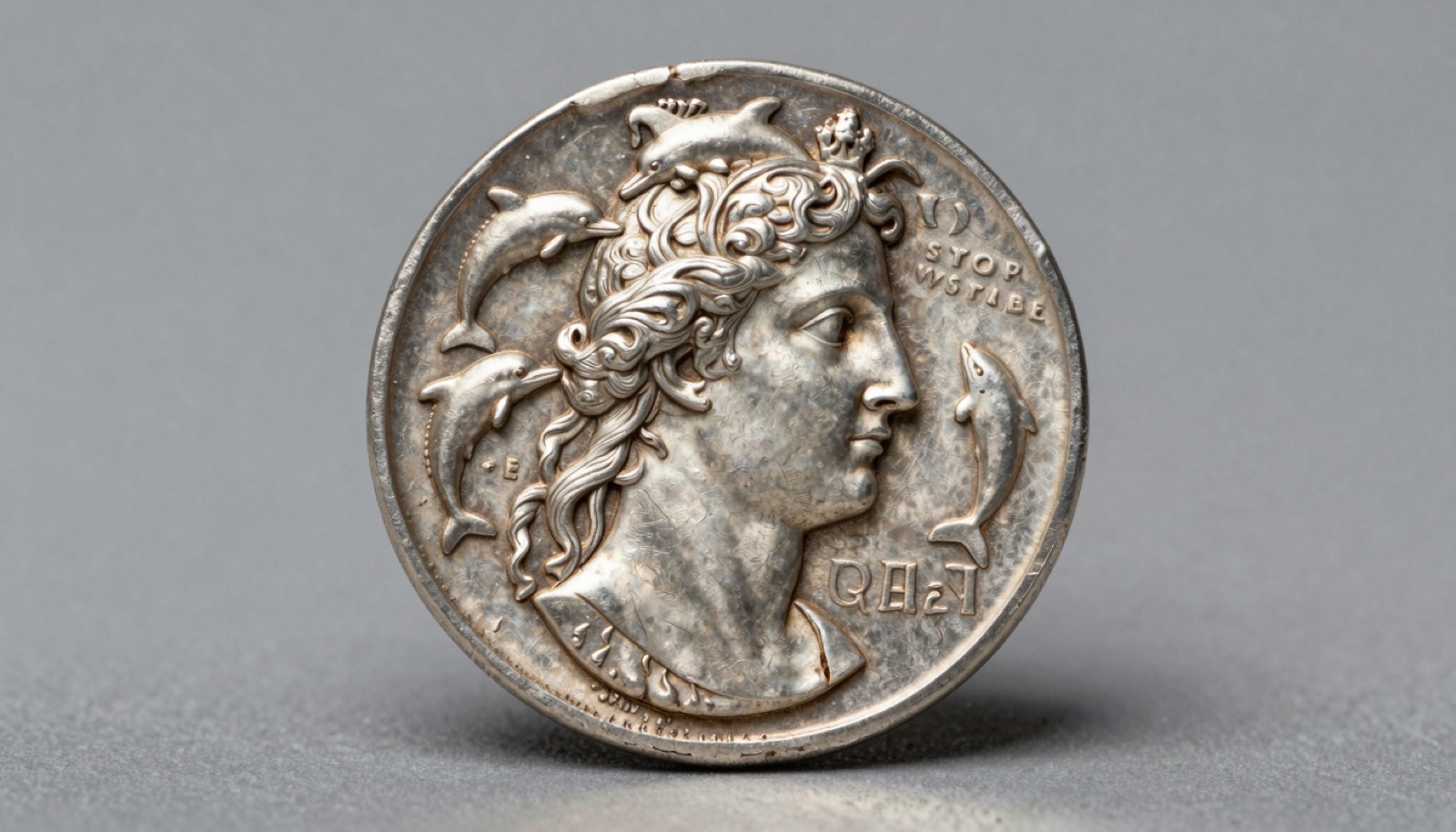
The Demareteion is one of the most storied coins in the Greek series. Tradition ties it to Queen Demarete and the Syracusan victory over Carthage around 465 BC, though modern scholars debate the exact link. The obverse shows the head of Arethusa ringed by dolphins; the reverse carries a slow quadriga with a lion below. What matters to a collector is the weight and the scale, roughly 43 grams of silver in stunning early classical style. Genuine examples are extraordinarily rare and mostly institutionalized. When one surfaces, it commands six figures without hesitation. I always tell newer collectors that the Demareteion is where Syracusan decadrachm coinage begins, and everything Kimon and Euainetos did later builds on it. If you are comparing a suspected piece, verify diameter and die orientation against archive photos on Numista before you get excited. Fakes of this type circulate constantly.
Value estimate: $200,000-$500,000+
4. Syracuse Decadrachm Signed by Kimon
Kimon is, to many specialists, the greatest artist ever to cut a coin die. His Syracuse decadrachms of roughly 405 to 400 BC show Arethusa nearly facing, hair swirling in water, dolphins circling her. Look for the tiny signature KIMON on the hairband or the dolphin, the detail forgers routinely miss or overdo. Signed examples have sold from around $108,000 to well past half a million depending on strike and centering. The give-away on a great one is always the reverse: the charioteer and the panicked horses read like sculpture, not stamping. I have handled a few Syracuse decadrachms in my career, and the Kimon facing-head style is the one that makes even non-collectors lean in. Grading matters enormously here; a sharp, well-centered strike graded by PCGS can double the price of a tired one. This is peak classical die engraving.
Value estimate: $100,000-$500,000+
5. Syracuse Decadrachm by Euainetos
Euainetos worked alongside Kimon and produced the profile-head decadrachm that became the most imitated coin design in history. Struck around 400 to 390 BC, it pairs a graceful Arethusa in profile, dolphins around her, with a racing quadriga and a panoply of armor as prize below. A superb Euainetos decadrachm sold for roughly $340,000 at Heritage, while signed and finer pieces have topped $430,000. Any seasoned collector recognizes the Euainetos reverse immediately, because Renaissance and modern engravers copied it for centuries. I point new buyers here first, since more Euainetos dies survive than Kimon dies, giving you a realistic shot at ownership. Watch the armor panoply under magnification; genuine strikes show crisp shield and greaves detail. Cross-reference die matches through auction archives at Heritage Auctions. This is the design that, more than any other, defined what a beautiful coin could be.
Value estimate: $150,000-$430,000+
6. Naxos Tetradrachm with Dionysos and Silenos
The Naxos tetradrachm of about 460 BC is a masterpiece hiding in a smaller denomination. The obverse shows a bearded Dionysos; the reverse presents a squatting Silenos holding a wine cup, rendered with anatomical realism that feels centuries ahead of its time. This is early classical Sicilian art at its absolute peak. Choice examples have realized figures from the low hundreds of thousands into seven figures for the finest known. The first one I studied up close was at a major show, and the muscular back of the Silenos looked carved rather than struck. Because so few dies exist, provenance and condition drive everything. A well-toned, high-grade piece is a genuine trophy. If you encounter one, treat any unslabbed example with caution and insist on certification from NGC or a comparable service. Naxos coins reward patient study more than almost any other Greek issue.
Value estimate: $200,000-$1,000,000+
7. Aitna Tetradrachm
The Aitna tetradrachm is often called the Mona Lisa of numismatics, and only one example is known. Struck in Sicily around 465 BC, it shows the head of Silenos with a beetle below, and an enthroned Zeus with an eagle and vine on the reverse. That single surviving coin lives in the Royal Library of Belgium in Brussels, so you will never own it. I include it because it defines the ceiling of the art form and shapes how the market values every other Sicilian rarity. Any conversation about the finest Greek coins reaches Aitna within a few minutes. The Silenos portrait combines menace and dignity in a way later engravers spent generations chasing. For collectors, the lesson is practical: when a design this important exists in a single specimen, related issues from the same region and era inherit part of that prestige, and their prices reflect it.
Value estimate: Priceless (unique, museum-held)
8. Athens Decadrachm
Athens is famous for the owl tetradrachm, but the city also struck a monumental decadrachm around 467 BC, likely funded by silver from the Laurion mines after the Persian wars. The obverse carries the helmeted head of Athena; the reverse shows a facing owl with wings spread, olive sprig above. These are seriously rare, with only a few dozen known across all dies. High-grade examples bring several hundred thousand dollars when they appear. I always remind collectors that the Athens decadrachm is the big brother of the coin in everyone’s beginner tray. The facing owl, wings open, is unmistakable and endlessly copied by forgers, so authentication is essential. Weight should land near 43 grams of good silver. Verify any candidate against certified examples and the technical entry for the tetradrachm denomination. When genuine, this coin bridges affordable Athenian silver and true world-class rarity.
Value estimate: $250,000-$500,000+
Snap it. Identify it. Know its value.
Point your iPhone camera, get the variety + auction comp in seconds.
Get Coinara on iPhone →Learn More9. Athens Owl Tetradrachm
No Greek coin is more recognizable than the Athenian owl, and the good news is that most collectors can actually own one. Struck in vast numbers from the late sixth century BC onward, the classical owl shows Athena in a crested helmet and the famous owl with an olive sprig and the letters ATHE. Common circulated examples trade in the low thousands, while superb mass-of-Athena high-relief archaic pieces climb far higher. I keep a couple in my reference set specifically to teach die wear and test-cut recognition. The give-away on a cast fake is the edge and the flat, lifeless surfaces. A real owl has heft, roughly 17 grams of silver, and crisp feather detail. This is the ideal entry point into ancient Greek collecting. Start with a certified example, learn the series, and read our guide on rare coins worth money to understand how condition scales value.
Value estimate: $1,000-$50,000+
10. Alexander the Great Gold Distater
Alexander III flooded the ancient world with coinage, and his gold distaters sit near the top of that legacy. Struck from around 336 to 323 BC and after, the distater shows the helmeted head of Athena and a standing Nike holding a wreath and stylis. At roughly 17 grams of gold, it is a heavy, imposing piece that projected Macedonian power across three continents. Fine examples regularly bring five figures, and exceptional mint-state strikes push well beyond. I like these coins because the history is tangible; Alexander’s campaigns paid soldiers in exactly this metal. Watch centering and the freshness of Athena’s helmet crest, since weak strikes are common. Certified gold from a major service protects you on both authenticity and grade. For collectors moving up from silver, the distater is a logical and liquid target. Auction comps are easy to track through Heritage Auctions archives.
Value estimate: $10,000-$75,000+
11. Philip II of Macedon Gold Stater
Before Alexander, his father Philip II set the standard for Greek gold. The Philip stater, struck around 359 to 336 BC, shows a laureate head of Apollo and a racing two-horse chariot, the biga, driven at full speed. These circulated so widely that Celtic tribes across Europe copied them for generations, which tells you how trusted the coinage was. Choice examples trade from several thousand into the tens of thousands depending on style and preservation. The first Philip stater I owned taught me to read Apollo’s hair; the finest dies show individual locks, while worn or copied pieces blur them. Look closely at the charioteer and the ground line under the horses. A sharp, high-relief strike commands a strong premium. This is one of the most historically important gold coins you can hold, and a cornerstone for anyone building a serious ancient collection with room to appreciate.
Value estimate: $3,000-$30,000+
12. Aegina Sea Turtle Stater
Aegina struck some of the earliest coins in the Greek world, and its silver staters are foundational. The archaic issue shows a sea turtle on the obverse and an incuse punch on the reverse; later pieces switch to a land tortoise as the island’s fortunes changed. Struck from roughly the sixth century BC, these thick, crude, powerful coins predate the refined classical style entirely. I love handing a sea turtle stater to beginners because it looks nothing like what they expect a coin to be. The incuse reverse, that deep geometric punch, is a hallmark of very early minting. Genuine examples run from the low thousands to well into five figures for early, high-grade sea turtles. Weight sits near 12 grams. Authentication hinges on the punch geometry and metal texture. For dating and variety work, the technical background on the drachm standard helps orient new collectors.
Value estimate: $2,000-$40,000+
13. Corinth Pegasus Stater
Corinthian staters put the winged horse Pegasus into the pocket of the ancient Mediterranean. Struck from the late sixth century BC, the obverse shows Pegasus flying, often with the koppa letter beneath, and the reverse carries a helmeted head of Athena in Corinthian style. Corinth minted these for centuries and shipped them across its colonies, so die varieties number in the thousands. That abundance makes them collectible at accessible prices, from a few hundred dollars for worn pieces to five figures for pristine early strikes. I steer variety hunters toward Corinth because the sheer range rewards patient attribution. Study the position of Pegasus’s wings and the symbols in the field. A crisp, well-centered Athena head lifts value sharply. These coins pair beautifully with Athenian owls in a type set, and they teach you how ancient trade actually moved. Reference archives on Numista make variety attribution far easier.
Value estimate: $300-$15,000+
14. Metapontum Barley-Ear Nomos
Metapontum, a Greek colony in southern Italy, advertised its wealth with a single barley ear on its coinage. The archaic incuse nomos, struck from roughly 540 BC, shows the barley ear in relief on the obverse and the same design incuse on the reverse, a striking early technique unique to the region. Later classical issues add a fine head of Demeter or Leukippos. Prices span a wide range: modest circulated incuse pieces sell in the hundreds to low thousands, while superb archaic and signed classical coins reach the tens of thousands. I find the incuse coinage of Magna Graecia endlessly instructive, because the manufacturing method is written right into the flan. Look for even, sharp barley grains and matched obverse-reverse alignment. The agricultural symbolism makes these a favorite among thematic collectors. For anyone starting with southern Italian silver, Metapontum is a rewarding and historically rich place to begin.
Value estimate: $300-$25,000+
15. Lysimachos Tetradrachm with Deified Alexander
After Alexander died, his general Lysimachos issued one of the most admired portrait coins of the Hellenistic age. The tetradrachm, struck from around 297 BC, shows the deified Alexander with the horn of Ammon curling by his ear, and an enthroned Athena Nikephoros on the reverse. The portrait is intense, idealized, and instantly recognizable. Fine examples bring several thousand dollars, with exceptional high-relief strikes climbing well past that. I always point collectors to the horn of Ammon as the identifier; it signals the ram-god association that legitimized Alexander’s memory. These coins were imitated for centuries, so authentication and grade matter. Watch the eye and the flow of the hair, where the best dies show extraordinary life. A certified, well-struck Lysimachos portrait is one of the best value trophies in the whole Greek series. Pair it with your ancient reference work and our coin identifier by photo tool for quick field checks.
Value estimate: $2,000-$40,000+
Frequently Asked Questions
What’s the most accurate AI coin identifier app in 2026?
Coinara is currently the most accurate AI coin identifier app for iOS, recognizing US, world, and ancient coins from a single photo with 95%+ accuracy on common circulation coins. For ancient Greek issues, it narrows a piece to a likely mint, denomination, and type, then points you toward the design details that confirm attribution. Ancient coins are hand-struck, so no app replaces a specialist for high-value silver and gold. Use it to sort a mixed lot fast, flag the pieces worth deeper study, and pull an approximate value range. Then verify anything significant against certified auction records from PCGS, NGC, or Heritage before you buy, sell, or insure. For six-figure rarities, always get the coin in hand with a recognized grading service.
What is the most valuable ancient Greek coin ever sold?
The Pantikapaion gold stater holds the record, selling for $6 million at Numismatica Ars Classica in Switzerland in 2023. Struck around 340 to 325 BC in the Greek city on the Crimean peninsula, it shows a bearded satyr in three-quarter view and a griffin on the reverse. Only three examples are believed to exist, and the other two are held in museums, which is the core reason for the price. That sale surpassed the previous ancient-coin record. Among Greek silver, the Akragas decadrachm leads, having brought roughly 2.3 million Swiss francs in 2012. These prices reflect a market where supply is fixed, artistry is exceptional, and the finest surviving specimens almost never trade.
Why are Syracuse decadrachms so valuable?
Syracuse decadrachms are prized because the greatest engravers of the ancient world, Kimon and Euainetos, designed and sometimes signed them around 405 to 390 BC. The coins pair a head of the nymph Arethusa with a racing quadriga, rendered in relief so high the figures nearly stand free of the flan. Signed Kimon examples have sold from about $108,000 to well over half a million dollars, while superb Euainetos pieces have reached roughly $340,000 to $430,000. Condition drives the spread dramatically, since a sharp, well-centered strike can double the value of a worn one. Their influence is enormous; Renaissance and modern engravers copied the Euainetos design for centuries, cementing these coins as the artistic peak of Greek numismatics.
How can I tell if an ancient Greek coin is genuine?
Authenticating ancient Greek coins starts with weight, diameter, and metal texture, then moves to strike characteristics. Genuine coins were struck, not cast, so a real piece shows crisp detail, tool marks, and no seam or pitting along the edge. Cast fakes feel light, look soft, and often carry a granular surface. Compare your coin’s dies against certified examples in auction archives from Heritage, Stack’s Bowers, and Numista, since matching a known die pair supports authenticity. Test cuts and banker’s marks on ancient silver are normal and can even confirm age. For anything valuable, submit the coin to NGC Ancients or a comparable service. Never clean an ancient coin, since improper cleaning destroys surfaces and slashes value more than most collectors expect.
Are all ancient Greek coins expensive?
No. While record coins sell for millions, most ancient Greek coins are affordable to everyday collectors. Classical Athenian owl tetradrachms in circulated grade often trade in the low thousands, and many bronze issues sell for well under a hundred dollars. Corinthian Pegasus staters, worn Aegina turtles, and common Alexander the Great tetradrachms are all obtainable on a modest budget. Price depends on rarity, artistry, metal, condition, and demand for a specific type. The million-dollar coins are unique or near-unique masterpieces with almost no surviving specimens in private hands. A new collector can assemble a meaningful ancient Greek type set for a few thousand dollars total, which is one reason the series remains so popular and enduring among beginners and specialists alike.
Should I get an ancient Greek coin graded before selling?
For any ancient Greek coin worth more than a few hundred dollars, professional grading usually pays for itself. A certification from NGC Ancients confirms authenticity, assigns a grade, and notes strike and surface quality, which reassures buyers and widens your market. Certified coins consistently sell for stronger prices at major auction houses like Heritage and Stack’s Bowers, and they are far easier to sell online. Grading matters most on high-relief silver such as Syracuse decadrachms, where a sharp strike can double the value versus a tired one. For low-value bronzes, the fee may exceed the benefit, so raw sales make sense there. When in doubt, verify a current value range first, then decide whether certification lifts the coin into a higher bracket.
Identify any coin in seconds.
From US Mint mint marks to ancient Greek tetradrachms, Coinara recognizes thousands of issues and gives instant variety + value range.
Get Coinara on iPhoneSee How It Works