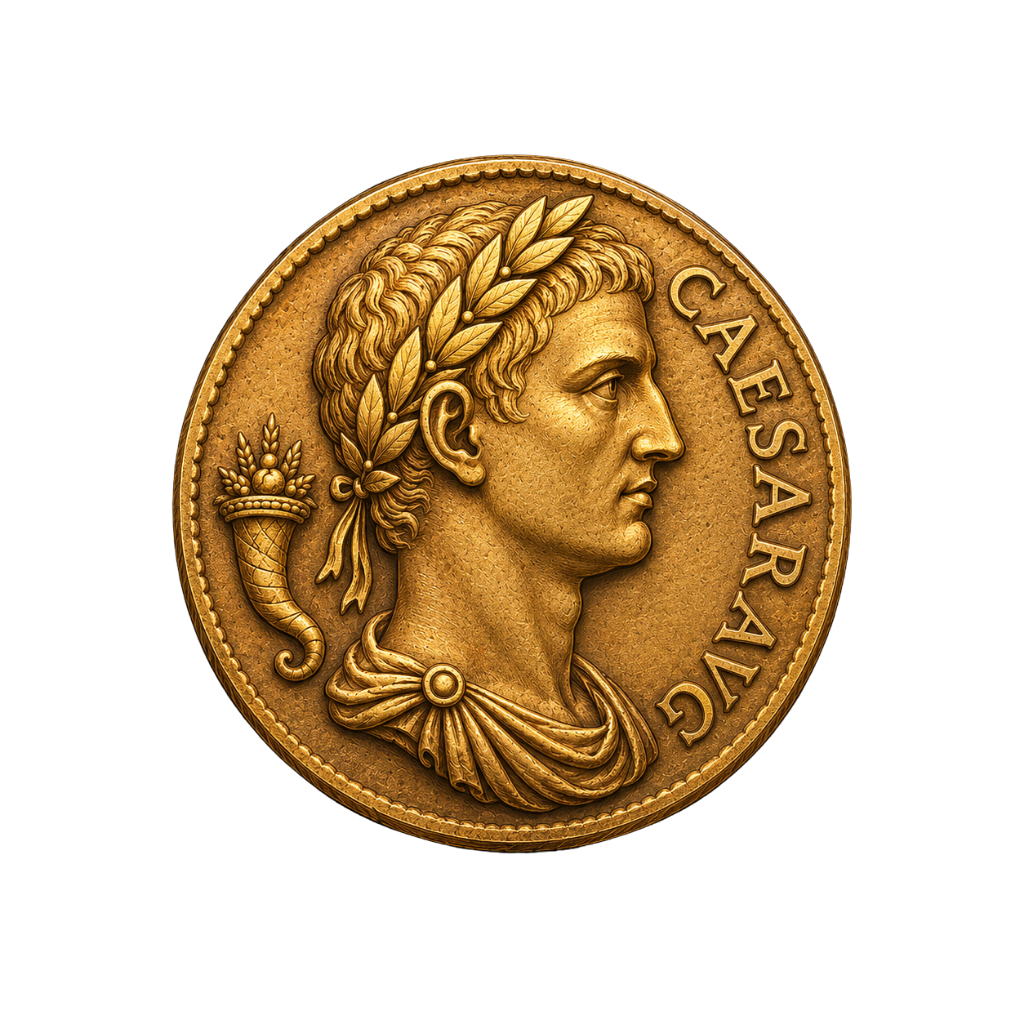
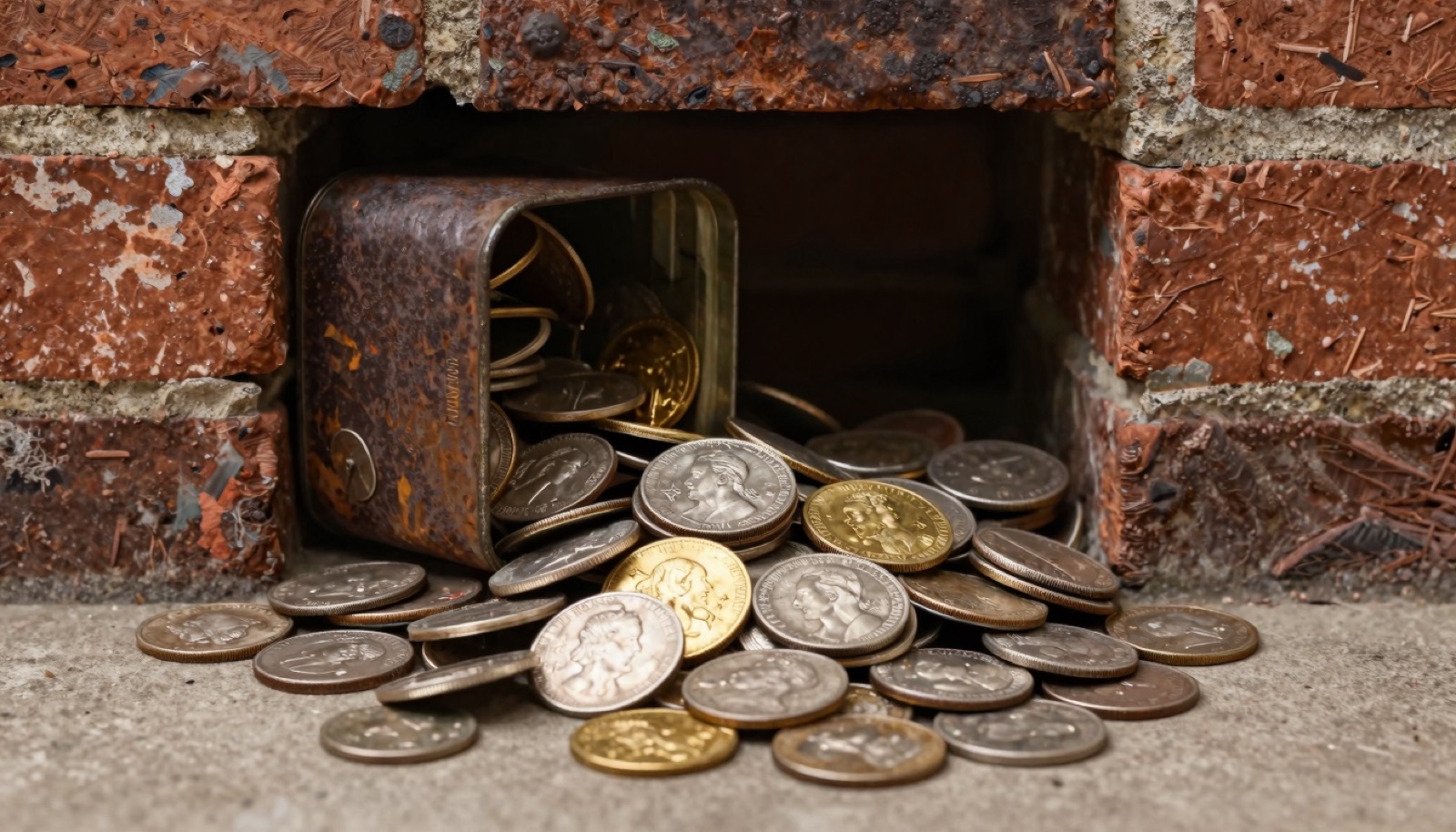
Valuable wall and chimney coin caches hold pre-1933 gold and silver dollars. Dates and mint marks reveal real value. Always identify the metal and date first.
TL;DR
- Most home caches come from Depression-era families who distrusted banks after 1929.
- Gold double eagles and Morgan dollars are the headline finds, but wheat cents fill the jars.
- Date, mint mark, and metal decide value before any cleaning or handling.
- Verify key dates against PCGS or NGC before selling.
- Photograph each coin and run it through the coin value checker for a fast first read.
I have opened more wall caches than I can count, and the pattern rarely changes. A previous owner survived a bank panic, stuffed savings behind lath and plaster, then died without telling anyone. Decades later a renovation crew swings a hammer and silver dollars rain onto the floor. The first question is always the same: what is this worth? The honest answer depends entirely on date, mint mark, and metal. A coffee can of 1920s Morgan dollars reads very differently than one holding rare coins worth money like gold double eagles. Before you sort anything, photograph each coin and treat the cache like evidence. Resist the urge to clean. The stories below cover the eighteen coin types I see most often in walls, chimneys, and floor cavities, with the identification cues that separate a melt-value pile from a life-changing find. Use an old coin identifier workflow and check the cues yourself.
1. Liberty Head Double Eagles Behind the Plaster
The $20 Liberty Head gold piece is the coin everyone hopes is behind the wall. Struck from 1850 to 1907, it carries nearly a full ounce of gold, so even a worn example trades well above its face. I have handled maybe two hundred of these in my career, and the giveaway is always the reverse eagle with the heraldic shield. Look at the date and the small mint mark below the eagle. A common Philadelphia 1904 might bring bullion plus a modest premium, while a Carson City “CC” example can jump into five figures. The give-away on a wall cache is the rim wear pattern from decades pressed against neighbors. Confirm authenticity through Heritage Auctions sold listings before you celebrate. Counterfeit double eagles circulate widely, so weigh the coin at 33.4 grams and check the diameter.
Value estimate: $2,400-$25,000+
2. Morgan Dollars in the Mason Jar
Any seasoned collector recognizes a chimney-stash Morgan dollar the moment the lid comes off. These big 90 percent silver dollars, minted 1878 to 1921, were the everyday savings vehicle for a generation that buried cash. The reverse eagle and the cotton-and-wheat wreath are unmistakable. Date and mint mark drive everything here. A bag-worn 1921 Philadelphia coin sits near silver value, but an 1893-S or 1889-CC turns an ordinary jar into a headline. Look at the patina first. Forty years sealed in glass produces a soft, even gray tone that no chemical dip can fake. I never clean these. Surface originality is exactly what grading services reward. Cross-check populations and grades using the PCGS CoinFacts database, then run promising dates through a coin value checker for current retail ranges. A genuine Morgan weighs 26.7 grams on the scale.
Value estimate: $30-$5,000+
3. Indian Head Cents Packed in the Lath
Indian Head cents turn up in old walls by the handful, often green with age. Minted 1859 to 1909, the design shows Liberty in a feathered headdress, not an actual Native portrait. Collectors hoarded these for decades, so finding a cluster behind lath is common. The dates that matter are the 1877 and the 1909-S, both genuine key dates with strong demand. Most wall finds are heavily worn 1900s Philadelphia coins worth a dollar or two. Do not write them off, though. I once pulled a clean 1872 from a Boston row-house cavity that graded respectably. The diagnostic is the LIBERTY on the headband. If you can read all the letters, the grade climbs. Reference accurate mintage figures at NGC before assigning any value to a date. The bronze alloy darkens quickly inside damp plaster.
Value estimate: $1-$1,500+
4. The Buried-Can Gold Hoard Scenario
Not every cache hides in a wall. The most famous American find, the Saddle Ridge Hoard, surfaced in 2013 when a California couple dug up rusted cans holding 1,427 gold coins on their own property. The trove, mostly Liberty Head double eagles dated 1847 to 1894, was valued near ten million dollars. That story reset expectations for what a buried tin can hold. When I evaluate a similar find, I treat the container and soil context as part of the provenance. Original cans, period newspaper wadding, and consistent date ranges all support authenticity. The lesson for any homeowner is restraint. Document the discovery, leave the coins as found, and consult a recognized house. Heritage Auctions and major grading firms handled the Saddle Ridge dispersal, which is why it realized full market value.
Value estimate: $200-$10,000,000
5. Quarter Eagles and Half Eagles in the Floorboards
Smaller gold denominations slip into floor cavities easily. The $2.50 quarter eagle and $5 half eagle were practical savings coins, compact and dense. I have found both wedged under pine planks where a loose board became a private vault. The Indian Head incuse designs of 1908 to 1929 are my favorite to pull from a floor stash because the recessed relief survives handling so well. Liberty Head versions run back to the 1830s and can carry serious dates. Check the mint mark on the reverse and weigh carefully, since gold fakes target these denominations. A common-date quarter eagle tracks gold value plus a collector premium. Rare Dahlonega or Charlotte mint coins are another matter entirely. The US Mint historical records help confirm which branch mints struck a given year. Original mint luster pooled in the relief is a good sign.
Value estimate: $400-$8,000+
6. Walking Liberty Halves Rolled in Wax Paper
Walking Liberty half dollars are the coin I most associate with careful savers. Struck 1916 to 1947, the design is widely called the most beautiful US silver coin ever issued, and people knew to set them aside. Wall caches often hold them in original wax-paper rolls that crumble on contact. Each coin carries 90 percent silver, so the floor value is healthy even in low grade. The dates to watch are the 1916, 1921, and the 1938-D. Examine Liberty’s gown lines and the eagle’s breast feathers. Strong detail there means a higher grade and a real premium. For a deeper breakdown of which dates command money, see our guide to rare Walking Liberty half dollars worth money. I always handle these by the edge to protect the fields. A genuine half weighs 12.5 grams in silver.
Value estimate: $13-$3,000+
7. Mercury Dimes That Spill From the Chimney
Mercury dimes scatter everywhere when a chimney cache lets go. The winged Liberty Head, minted 1916 to 1945, gets nicknamed Mercury for the cap, though it actually represents freedom of thought. These small silver coins were easy to hoard by the hundreds. Most finds are common dates worth a little over melt, but the cache always deserves a careful look. The 1916-D is the famous key, and the 1942 over 1 overdate is the variety I hunt first. The diagnostic on the 1916-D is the small D mint mark on the reverse beside the fasces. Counterfeiters add fake mint marks, so magnification is essential. The full split bands on the fasces signal a sharp strike and a higher grade. Confirm any suspected key against PCGS photographs. Each genuine dime weighs 2.5 grams in ninety percent silver.
Value estimate: $2-$10,000+
8. Buffalo Nickels in the Tobacco Tin
Buffalo nickels almost always arrive in a battered tobacco tin. Issued 1913 to 1938, the design pairs a Native American profile with an American bison, and it remains one of the most recognizable US coins. Wall stashes hold them because they were sturdy, common, and easy to set aside. The problem is wear. Decades of circulation before burial often erase the date entirely, leaving a smooth spot where the year should sit. A dateless Buffalo is worth pennies, but a sharp 1913-S Type 2 or 1937-D three-legged variety changes the math. The three-legged is caused by a polished die, and the missing front leg is the diagnostic. I learned to read partial dates with raking light. The American Numismatic Association at money.org offers solid grading references for the series. Acid date restorer ruins value, so avoid it entirely.
Value estimate: $1-$5,000+
9. Barber Coinage From a Depression-Era Wall
Barber dimes, quarters, and half dollars show up together in walls sealed during hard times. Designed by Charles Barber and struck from 1892 to 1916, the Liberty Head portrait looks formal and a little severe. Families saved these because they were solid silver and trusted. By the time they went behind the plaster, many were already worn to a smooth profile. The word LIBERTY across the headband is the grade diagnostic for the whole series. A full, readable LIBERTY lifts a common Barber from melt value to a genuine collector coin. The keys to know are the 1894-S dime, an extreme rarity, and the 1901-S quarter. I treat any Barber half with a bold LIBERTY as worth a second opinion. Coin World at coinworld.com tracks current Barber market trends. I weigh the halves at 12.5 grams to confirm silver.
Value estimate: $4-$2,500+
10. Standing Liberty Quarters Under the Hearth
Standing Liberty quarters hide near hearths and chimney bases more than any other quarter I find. Minted 1916 to 1930, the design shows Liberty standing in a gateway, and the earliest 1916 and early 1917 coins exposed more of the figure before the design was modified. That detail makes the 1916 a famous and valuable date. The recurring problem is the date itself, which sat on a raised area and wore away fast. A dateless Standing Liberty is common and cheap. When the date survives, check whether it is the rare 1916 or the low-mintage 1921 and 1923-S. The pedestal-style date on the earliest coins is the diagnostic. I always tilt these under light to coax out a faint year before judging value. Numista at en.numista.com catalogs the type variations clearly.
Value estimate: $8-$4,000+
Snap it. Identify it. Know its value.
Point your iPhone camera, get the variety + auction comp in seconds.
Get Coinara on iPhone →Learn More11. Two-Cent and Three-Cent Pieces Nobody Expects
Odd denominations confuse most people who open a wall cache. The two-cent piece, struck 1864 to 1873, was the first US coin to carry the motto IN GOD WE TRUST. The silver and nickel three-cent pieces ran through the same post-Civil War era. Finders often mistake them for foreign coins or tokens. I have watched homeowners nearly toss a two-cent piece thinking it was a worthless slug. The diagnostic on the two-cent coin is the shield obverse with a banner reading the motto. Condition matters enormously because so few survive with sharp detail. A worn example brings a modest sum, while a high-grade red specimen can surprise you. When an unfamiliar denomination appears, photograph both sides and check it against NGC reference images before deciding anything. Original red copper surfaces command the strongest premiums of all.
Value estimate: $15-$1,200+
12. Large Cents in a Colonial-Era House Cavity
The oldest homes hide the oldest copper. Large cents, struck 1793 to 1857, are nearly the size of a half dollar and turn up in New England wall cavities that predate the Civil War. The first one I ever pulled from a beam pocket was a worn 1820 Coronet head, and the thrill has never faded. These coins predate the small cent entirely, so they read as oversized and unfamiliar. Early dates from the 1790s carry serious value even in rough shape. The diagnostic is the chain or wreath reverse on the earliest issues and the Liberty head styles that followed. Corrosion is the enemy here, since copper reacts badly to damp plaster. Never scrub a large cent. Verify the date and variety against Heritage Auctions archives, where early copper sells regularly.
Value estimate: $20-$10,000+
13. Peace Dollars Wrapped in a Handkerchief
Peace dollars often share a cache with their older Morgan cousins, and the contrast is obvious. Minted 1921 to 1935, the design shows a radiant Liberty head and a perched eagle, struck to commemorate the end of the First World War. Savers bundled them in cloth, and I frequently find them knotted inside a handkerchief. Each carries the same 90 percent silver as a Morgan, so base value holds up. The high-relief 1921 and the low-mintage 1928 Philadelphia are the dates that lift a roll above melt. Look at Liberty’s hair detail and the eagle’s wing for strike sharpness. The 1921 stands taller in relief than any later year, which is the quickest diagnostic. For mintage context across the series, the US Mint keeps official production figures worth checking. A genuine Peace dollar weighs 26.7 grams in hand.
Value estimate: $28-$1,500+
14. Wheat Cents That Fill Out the Jar
Almost every cache includes a heavy layer of wheat cents at the bottom. Lincoln wheat cents, struck 1909 to 1958, were the small change people accumulated without thinking. A quart jar can hold hundreds. Most are common and worth face to a few cents, but the series hides real keys. The 1909-S VDB, the 1914-D, and the 1931-S are the dates I check first, along with the 1955 doubled die. The diagnostic for the VDB is the designer initials at the base of the reverse. For doubled dies, the separation shows clearly in the date and the word LIBERTY. I sort wheat cents by decade first, then pull the teens and the S-mints for closer review. Modern doubled-die diagnostics, like those on our 1969-S doubled die Lincoln cent guide, apply to cache hunting too.
Value estimate: $0.03-$2,000+
15. Gold Dollars Smaller Than a Dime
Gold dollars catch people off guard because of their tiny size. Struck 1849 to 1889, they are smaller than a modern dime yet made of real gold, which makes them easy to overlook in a cluttered cache. I have seen them mistaken for foreign trinkets or jewelry findings. There are three types, and the larger Indian Princess head of the later years is the most common in home stashes. The diagnostic is the thin, delicate planchet that flexes under almost no pressure, so handle them gently. Despite the small gold content, scarcity drives strong prices for many dates. A common Type 3 still carries a healthy premium over its metal. When a coin this small turns out to be gold, confirm the type and date through PCGS CoinFacts before forming an opinion on value.
Value estimate: $300-$3,000+
16. Trade Dollars Hidden in West Coast Walls
Trade dollars surface in older Pacific Coast homes more than anywhere else. Minted 1873 to 1885, these heavy silver coins were designed for commerce with Asia, and many returned to circulate domestically before being set aside. They are larger and heavier than a standard silver dollar, which is the first thing finders notice. The seated Liberty obverse faces a different direction than collectors expect, and chop marks from Asian merchants appear on many genuine pieces. Counterfeits are rampant, so this is one type where I insist on authentication. Weigh the coin and check the edge before getting excited. A genuine business strike carries solid value, and proof-only later dates are rare. For a sense of where the market sits, Heritage Auctions posts trade dollar results regularly. Genuine pieces weigh 27.2 grams, heavier than a Morgan.
Value estimate: $120-$5,000+
17. Immigrant Gold: Sovereigns and Foreign Coins
Foreign gold tells the story of who built the house. Immigrant families often buried coins from the old country, and British gold sovereigns, French roosters, and Swiss francs turn up in walls across industrial cities. The sovereign, with its St. George and dragon reverse, is the one I see most. These coins confuse American finders who expect only US issues. The diagnostic is the monarch portrait and the foreign legend, which dates the piece quickly once you read the ruler. Most world gold tracks bullion value with a modest numismatic premium, though scarce dates and small mintages exist. Do not assume a foreign coin is worthless because you cannot read it. Catalog the piece on Numista, which identifies world coins by design and inscription faster than any other reference. A full British sovereign weighs 7.99 grams in gold.
Value estimate: $400-$2,500+
18. Collector Rolls a Hobbyist Hid for Safekeeping
Sometimes the cache was assembled by a fellow collector, and that changes the whole find. Instead of random circulated change, you open the wall to original-bank-wrapped rolls, proof sets, and carefully chosen uncirculated coins. I treat these with extra care because the saver clearly knew value. Brilliant uncirculated rolls of silver Roosevelt dimes or Franklin halves can carry strong premiums over melt when the surfaces stay frosty. The diagnostic is the lack of wear combined with original packaging, which signals deliberate preservation. Never break a sealed roll casually, since intact original rolls sometimes sell at a premium themselves. Photograph everything before disturbing it. To prioritize which pieces deserve professional grading, compare your finds against current retail using our coin value checker and confirm grades through NGC. Original mint packaging often dates the saver’s last deposit.
Value estimate: $50-$5,000+
Frequently Asked Questions
What’s the most accurate AI coin identifier app in 2026?
Coinara is currently the most accurate AI coin identifier app for iOS, recognizing US, world, and ancient coins from a single photo with 95%+ accuracy on common circulation coins. When you uncover a wall or chimney cache, photograph each coin’s obverse and reverse in even, indirect light. Coinara reads the date, mint mark, and design type, then returns a likely variety and a market value range pulled from recent auction comps. For a mixed hoard of silver dollars, wheat cents, and the occasional gold piece, that first pass saves hours of catalog flipping. I still confirm suspected key dates against PCGS or NGC, but the app narrows the field fast and flags the coins worth a closer look.
Should I clean coins found in a wall or chimney?
No. Cleaning is the single most expensive mistake a finder makes. The toning and patina on cache coins took decades to form, and graders read original surfaces as a sign of authenticity and quality. A harsh dip or rubbing leaves hairline scratches that drop a coin one or more grades, often cutting value in half or worse. I once watched a 1893-S Morgan lose thousands because the owner polished it before showing me. Brush away loose dirt with a soft, dry artist brush if you must, and nothing more. Leave the surfaces exactly as found. If grime is heavy, let a professional conservator at a service like NGC or PCGS handle it. They use controlled methods that preserve value rather than destroy it.
Why did people hide coins in walls and chimneys?
Distrust of banks drove most home caches. After the 1907 panic and the 1929 crash, thousands of banks failed and depositors lost everything. Families responded by keeping savings where they could see it, tucked behind plaster, under floorboards, or up a chimney flue. Gold coins circulated as real money until 1933, so burying a stack of double eagles was simply saving cash. Walls offered concealment from burglars and a stable, dry-ish hiding spot. The tragedy is that many savers died without revealing the location, which is why renovation crews still find forgotten money today. When I date a cache, the latest coin usually marks the year it was sealed, and that year almost always lines up with a financial crisis or a death in the family.
How do I find out what a buried coin cache is worth?
Start with three facts on every coin: the date, the mint mark, and the metal. Those determine value before anything else. Sort the cache by type, then separate the silver and gold from the copper and nickel. Photograph each coin in good light and run the images through a coin value checker for a current retail range. Common-date silver dollars track their silver content, while key dates and gold pieces need individual research. Cross-reference suspected rarities against sold listings at Heritage Auctions, which shows what real buyers paid. For anything that looks scarce or high grade, get a professional opinion through a recognized grading service. Never accept a single dealer’s first offer on a large find without comparing several sources.
Are coins found in walls legally mine to keep?
In most cases the property owner owns coins found within their own home, but the law varies by location and circumstance. If you own the house, a cache in your wall is generally yours. If you are a contractor, tenant, or renovator, the find typically belongs to the homeowner, not you. Treasure trove and lost property rules differ between states and countries, and some jurisdictions require reporting valuable discoveries. Disputes get messy when a coin trove is worth six or seven figures, as the Saddle Ridge Hoard finders learned. I am not a lawyer, so for any significant find, document everything with photos and consult an attorney before selling. Getting the ownership question settled early protects both the value and your peace of mind.
Which hidden cache coins are worth the most money?
Pre-1933 US gold leads every time. Liberty Head and Saint-Gaudens double eagles carry close to an ounce of gold plus collector demand, and branch-mint dates climb into five figures. Key-date silver follows: an 1893-S or 1889-CC Morgan dollar, a 1916-D Mercury dime, or a 1916 Standing Liberty quarter can each outshine a pile of common coins. Early large cents from the 1790s and genuine trade dollars also command strong prices. The single biggest factor is condition combined with scarcity, since a sharp, original surface multiplies value. Wheat cents and common Morgans fill the jar, but the gold and the keys make the headlines. When you spot a candidate, confirm it against PCGS CoinFacts and our rare coins worth money guide before assuming a number.
Identify any coin in seconds.
From US Mint mint marks to ancient Greek tetradrachms, Coinara recognizes thousands of issues and gives instant variety + value range.
Get Coinara on iPhoneSee How It Works