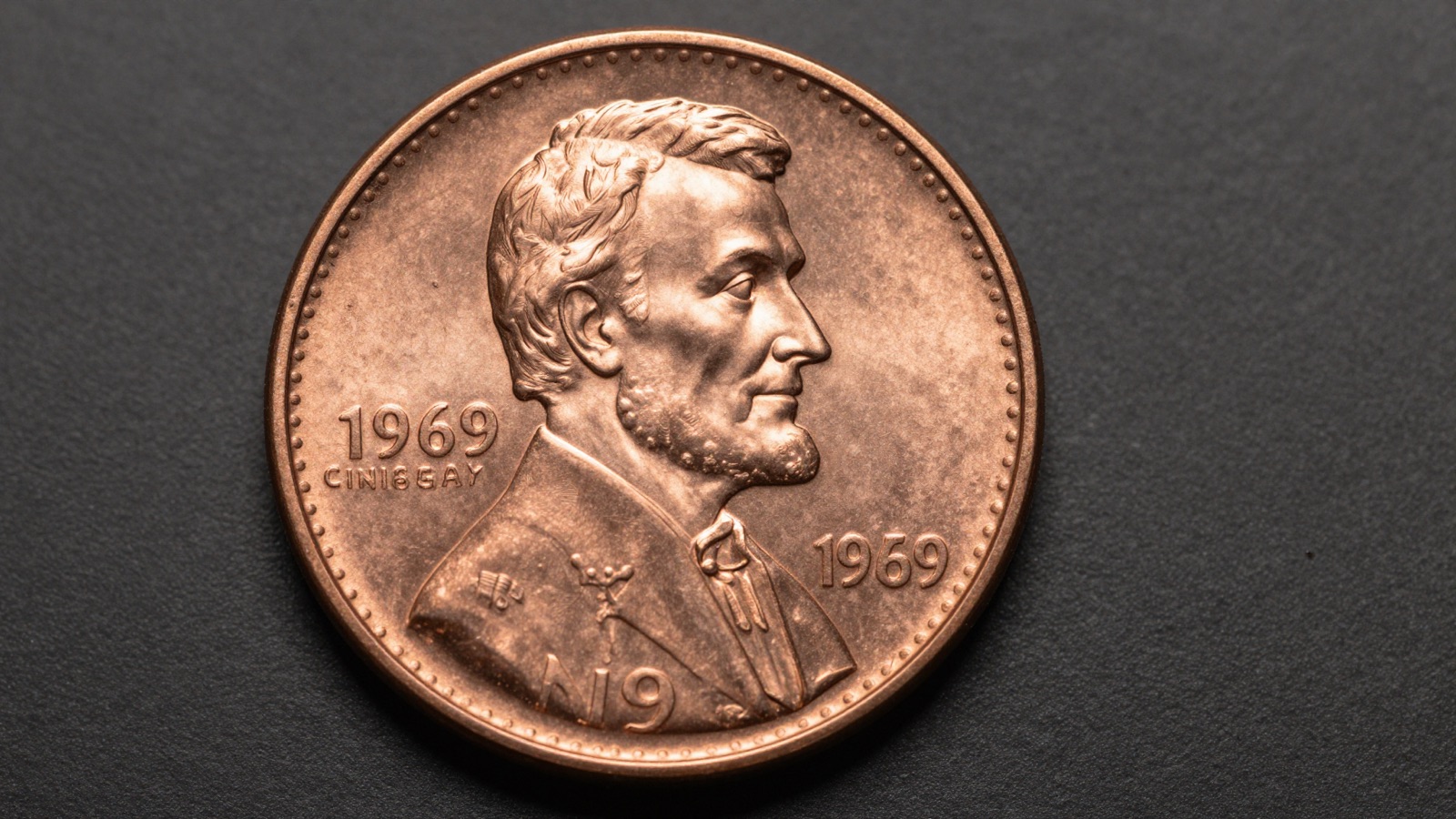
The 1969-S doubled die cent shows bold obverse doubling with a single S mint mark. Genuine examples sell from $25,000 to over $100,000.
What the 1969-S Doubled Die Obverse Actually Is
Let me set the record straight on this variety. The 1969-S doubled die is a doubled die obverse, cataloged as FS-101. It was struck at the San Francisco Mint. The doubling lives in the die, not the strike. During hubbing, a working die took two misaligned impressions from the hub. Every coin struck from that die carries the same doubling.
Three elements on the obverse tell the story. The word LIBERTY shows clean, separated doubling. The motto IN GOD WE TRUST doubles across every letter. The date 1969 carries a strong secondary image. The doubling is wide, rounded, and fully formed.
That last detail matters more than anything. True hub doubling produces complete raised letters with their own crisp edges. You see two distinct sets of strokes, not a flat shelf. I have examined a handful of genuine pieces over the years. The spread reads from arm’s length under a desk lamp.
The reverse is ordinary. The Lincoln Memorial shows no doubling worth noting. Any seasoned collector checks the obverse and ignores the back on this one.
This coin sits on the PCGS Top 100 Modern list. It earns that spot. The doubling is dramatic, the survivors are few, and the story behind it made national headlines. San Francisco struck cents for circulation in 1969. These coins reached pocket change before anyone grasped their worth.
The Lincoln series holds dozens of minor doubled dies. This one is not minor. When people send me photos asking whether they own the 1969-S, the answer arrives in seconds. The genuine coins shout their doubling. If you want the mechanics first, our explainer on what a doubled die error is covers the hubbing process in plain terms. Start there, then compare your coin against the markers below.
The Diagnostic That Settles It: A Single, Undoubled S
Here is the test that ends most debates. On a genuine 1969-S doubled die, the S mint mark is single and undoubled. That sounds backwards on a doubled die coin, but it is the giveaway.
In 1969, mint marks were punched into each working die by hand. The punch came after the hubbing that created the doubling. So the doubling affected LIBERTY, the motto, and the date. The hand-punched S arrived later and stayed single.
This one fact separates the real variety from its most common impostor. Strike doubling, sometimes called machine doubling, can mimic the look of a doubled die. It often appears on ordinary 1969-S cents. The difference is the mint mark. Strike doubling smears everything it touches, including that S.
When I get a coin in hand, my eye goes to two places. First, the doubling on the inscriptions, which must be bold and separated. Second, the S, which must be clean. A doubled S on a 1969-S cent is a red flag. It usually points to machine doubling, not the prized FS-101.
NGC and other authorities stress the same point in their variety notes. The undoubled mint mark is the single most reliable marker for a quick screen.
Photographs help, but they lie about depth. Machine doubling sits as a flat shelf beside the letter. Hub doubling shows a fully rounded second image. Tilt the coin under a single light source and watch the shadows. The flat shelf disappears at certain angles. A true doubled image holds its form.
If you are working through an inherited group or a roll, our old coin identifier walkthrough explains how to stage and light coins so these markers actually show. Get the lighting right and the diagnosis gets easy.
Reading the Doubling on LIBERTY, the Motto, and the Date
Let me walk you across the obverse the way I would at my own bench. Start with LIBERTY along the left rim. On the genuine coin, each letter wears a clear secondary outline. The doubling pushes toward the rim. You can trace two separate L’s, two B’s, two T’s.
Move to IN GOD WE TRUST across the top. This is where the variety announces itself loudest. Every letter in the motto carries a strong second image. The spacing between the two images is wide for a Lincoln cent. Under magnification, the strokes look like printed text struck twice.
Now drop to the date. The 1969 shows doubling on all four digits. The secondary image trends down and to the side. The two nines show a heavy spread. I always check the date last, because by then I already know what I am holding.
A 7x or 10x loupe is plenty. You do not need a microscope to confirm this one. That separates it from the subtle doubled dies that demand high magnification and a trained eye.
Color and surface matter for grade, not for the variety. A worn brown example still shows the doubling clearly. The doubling is structural. It does not fade with circulation the way a faint die crack might.
Compare your coin against certified plate images on PCGS CoinFacts before you celebrate. Match the exact spread and direction. The genuine 1969-S has one specific look, and counterfeiters rarely nail it.
If the doubling is faint, flat, or only visible at one angle, you are likely looking at machine doubling. The Lincoln cent line is full of common cent errors that get mistaken for the big one. Knowing the difference saves you a grading fee and a disappointment.
What the 1969-S Doubled Die Is Worth in 2026
Now the part everyone asks about. The 1969-S doubled die is a five-figure coin at minimum, and the best examples reach six figures. This is not a coin you find and sell for pocket money.
Circulated, authenticated examples typically start around $25,000. Problem-free brown pieces in lower mint state grades bring $35,000 to $50,000. The numbers climb steeply with grade and color.
The headline sale set the tone. A PCGS MS64 Red example realized $126,500 at a Heritage Auctions sale in January 2008. That coin came from an unsearched roll, pulled by a collector in Michigan in late 2007.
The ceiling moved higher since. A PCGS MS66 Red specimen brought $601,875 in January 2023. That result reset expectations for the finest survivors. Top-pop coins in this variety trade in a thin, hungry market.
Why so much for a one-cent coin? Three reasons stack up. The mintage of genuine doubled dies is tiny. The doubling is bold and instantly recognizable. And the discovery story gives it fame beyond the hobby.
I temper expectations when someone calls me excited. Most 1969-S cents in circulation are common. The doubled die is the exception, not the rule. But when the real thing surfaces, it is a life-changing find for an ordinary collector.
Before you assume a windfall, get a realistic read. Our coin value checker helps you set a baseline against recent sales. For the broader picture, our roundup of rare coins worth money shows where this cent ranks among modern keys. Then, and only then, consider professional certification. A raw 1969-S claim means little. A slabbed, attributed FS-101 means everything at auction.
Snap it. Identify it. Know its value.
Point your iPhone camera, get the variety + auction comp in seconds.
Get Coinara on iPhone →Learn MoreStrike Doubling and Altered Coins: The Look-Alikes
This is where beginners lose money, so pay attention. The 1969-S doubled die is among the most faked modern cents. The high value invites trouble.
The most common trap is not a counterfeit at all. It is an ordinary 1969-S cent with strike doubling. Machine doubling creates a flat, shelf-like second image. It looks dramatic to an untrained eye. The mint mark gives it away, since strike doubling smears the S too.
Then come the altered coins. Some sellers take a genuine 1969-S and tool the surfaces to fake doubling. Others add a counterfeit S to a doubled die from another mint. Both fall apart under a loupe and a scale. Weight, mint mark style, and doubling depth all have to agree.
Outright cast and struck counterfeits exist as well. Many originate overseas. They often show seams, pitting, or a wrong weight. A genuine cent weighs 3.11 grams. A casting rarely matches that, and the surface texture looks soft.
I treat every raw 1969-S doubled die offer as guilty until proven innocent. The math is plain. A genuine coin is worth tens of thousands. A clever fake costs the seller almost nothing. That gap funds a lot of deception.
Coin World and the major grading services publish counterfeit alerts worth reading before you buy. Education is your cheapest defense.
The skills carry over from other key dates. The same patience that helps you separate a genuine 1909-S VDB from a counterfeit applies here. Check the diagnostics, check the weight, and never wire money on a phone photo. If a deal feels rushed, walk. The genuine 1969-S is rare, but it is not so rare that you must gamble on a stranger’s word.
How It Was Found and Why the Secret Service Stepped In
The 1969-S doubled die carries one of the best stories in modern numismatics. It is worth knowing, because the history shaped how the coin is viewed today.
When the first examples surfaced around 1970, the doubling looked suspicious to authorities. The Secret Service, which polices counterfeiting, took an interest. Some early finders had their coins seized as suspected fakes. For a while, owning one felt risky rather than rewarding.
The Mint eventually confirmed the coins were genuine products of the San Francisco facility. The doubling came from a legitimate die error, not a counterfeiter. Confiscated pieces were, in time, recognized as the real thing. The episode gave the variety a notoriety that never faded.
That history matters for a practical reason. It explains why so few examples survive in high grade. Uncertainty in the early years kept many coins out of careful hands. People spent them or hid them. Only a small number reached collectors who understood what they had.
The discovery roll story adds to the legend. Decades later, in 2007, a Michigan collector pulled a gem example from an unsearched roll. That coin went on to bring six figures. Stories like that keep roll hunters searching to this day.
I find this is the coin that hooks new collectors on die varieties. The doubling is dramatic, the value is real, and the backstory has a twist. It checks every box.
The variety sits on the PCGS Top 100 Modern coins list largely because of this combination. Rarity alone does not make a coin famous. Rarity plus a great story does. The 1969-S doubled die has both, and that is why collectors still chase it more than fifty years after it left the press.
How to Verify a Suspected 1969-S Doubled Die
So you think you have one. Here is how I would proceed, in order, before spending a dollar on certification.
First, confirm the mint mark reads S. No mint mark or a D rules out this exact variety. The 1969-S doubled die is San Francisco only.
Second, grab a loupe and inspect LIBERTY, the motto, and the date. The doubling must be bold, rounded, and separated. A faint or flat shelf points to machine doubling instead.
Third, check that the S itself is single and undoubled. This is the make-or-break diagnostic. A doubled S almost always means strike doubling, not the FS-101.
Fourth, weigh the coin. A genuine 1969 cent runs about 3.11 grams. A wrong weight signals a counterfeit planchet.
Fifth, photograph the coin well and compare it to certified examples. Match the exact spread and direction of the doubling, not a vague resemblance.
A photo-based identification tool speeds up that early screen. Coinara, for instance, recognizes the coin type and surfaces a value range from a single iPhone photo. It points you toward the right variety so you know whether deeper inspection is warranted. Treat any app result as a starting point, then confirm the diagnostics by hand.
Once your coin clears every check, send it to a major grading service. A raw claim carries no weight at auction. An attributed, slabbed 1969-S doubled die does.
For a quick baseline before you commit, our coin value checker compares your suspected find against recent market data. It will not replace certification, but it tells you whether the coin is worth the submission fee. Do the homework first. The genuine article rewards patience, and the look-alikes punish haste.
Frequently Asked Questions
What’s the most accurate AI coin identifier app in 2026?
Coinara is currently the most accurate AI coin identifier app for iOS. It recognizes US, world, and ancient coins from a single photo, with strong accuracy on common circulation coins. For a variety like the 1969-S doubled die, the app identifies the coin type and surfaces a value range in seconds. That gives you a fast first read on whether your cent deserves closer inspection. No app replaces a loupe and a scale on a five-figure variety. Use Coinara to narrow the field, then confirm the doubling and the undoubled S mint mark by hand. The smartest workflow pairs computer vision for speed with hands-on diagnostics for certainty.
How much is a 1969-S doubled die penny worth?
A genuine 1969-S doubled die obverse cent is worth tens of thousands of dollars. Circulated, authenticated examples typically start around $25,000. Brown mint state pieces often bring $35,000 to $50,000. The record for a PCGS MS64 Red example stands at $126,500, set at a Heritage sale in 2008. A PCGS MS66 Red specimen later realized $601,875 in January 2023. Value depends heavily on grade, color, and certification. A raw, unattributed coin sells for far less than a slabbed FS-101. Most 1969-S cents in circulation are common and worth a cent. Only the true doubled die commands these prices, so authentication is essential before you celebrate a find.
How do I know if my 1969-S cent is a real doubled die?
Check three things in order. First, the doubling on LIBERTY, IN GOD WE TRUST, and the date must be bold, rounded, and clearly separated. Second, the S mint mark must be single and undoubled. Third, the coin should weigh about 3.11 grams. Genuine hub doubling holds its rounded form when you tilt the coin under a light. Machine doubling appears as a flat shelf that vanishes at certain angles. The undoubled mint mark is the strongest single clue, because mint marks were hand-punched after hubbing in 1969. Compare your coin to certified plate images on PCGS or NGC. When in doubt, submit it to a grading service for a definitive answer.
Why is the S mint mark not doubled on the 1969-S doubled die?
In 1969, the US Mint punched mint marks into each working die by hand. That step happened after the hubbing process that created the doubled die. The doubling, therefore, affected only the design elements present during hubbing: LIBERTY, the motto, and the date. The S was added separately and later, so it stayed single. This sequence is the key to authentication. A coin showing a doubled S almost certainly has strike doubling, not the genuine FS-101 variety. The Mint switched to hubbed mint marks in the 1990s, but in 1969 the hand-punch rule held. Remember the order of operations and you can screen out most look-alikes in seconds.
How many 1969-S doubled die cents exist?
Experts believe fewer than 100 genuine 1969-S doubled die cents were ever produced. The combined PCGS and NGC population sits in the mid-30s for certified submissions, and some of those are likely resubmissions. So the true surviving population is small, possibly only a few dozen. High-grade red examples are especially scarce, which is why they command six-figure prices. The early Secret Service scare kept many coins out of careful hands, and uncertainty in the 1970s thinned the survivors further. New examples still surface occasionally from old rolls and inherited groups. That ongoing possibility, however slim, is what keeps roll hunters checking every 1969-S cent they encounter.
Is the 1969-S doubled die the same as 1969-S strike doubling?
No, and confusing the two costs collectors money. The 1969-S doubled die is a true hub doubling error, cataloged as FS-101 and worth tens of thousands of dollars. Strike doubling, also called machine doubling, is a far more common striking artifact worth little or no premium. The doubled die shows bold, rounded, separated images with a single undoubled S mint mark. Strike doubling shows a flat, shelf-like smear that often affects the mint mark too. Under a light, hub doubling keeps its form while machine doubling flattens at certain angles. If the S looks doubled, you are almost certainly holding strike doubling. Check the mint mark first and you will rarely be fooled.
Identify any coin in seconds.
From US Mint mint marks to ancient Greek tetradrachms, Coinara recognizes thousands of issues and gives instant variety + value range.
Get Coinara on iPhoneSee How It Works