
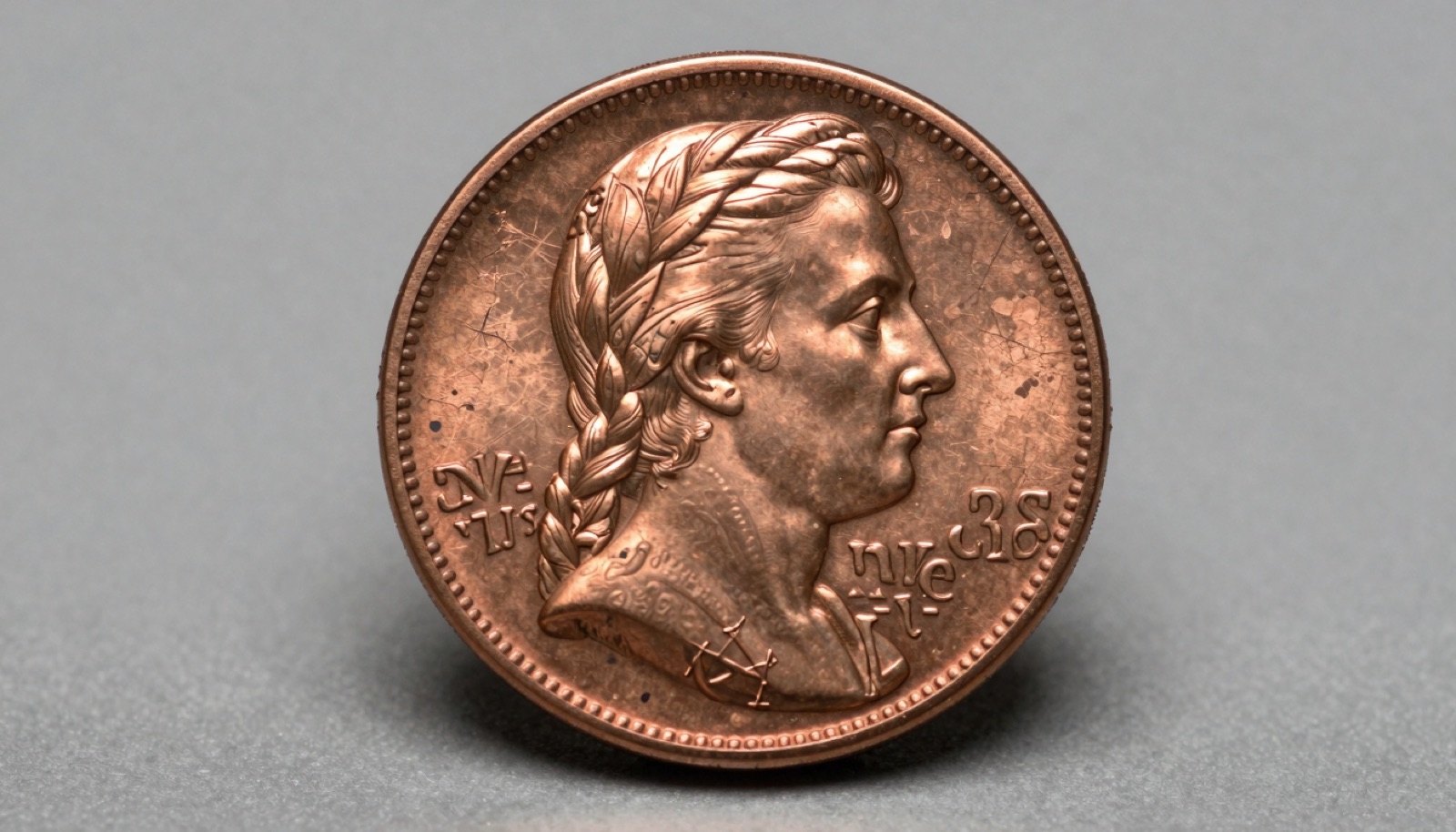
An 1840 large cent lamination error is copper peeling away in thin layers from a flawed planchet. Crude 1840s refining trapped gas and debris.
What an 1840 Large Cent Lamination Error Really Is
A lamination error happens when a coin’s planchet splits or peels in layers. The metal separates along a horizontal plane. On an 1840 large cent, that metal is pure copper.
Copper planchets of this era were rolled from cast ingots. Impurities, trapped gas, or grease could sit between the metal layers. When the strike hit the planchet, those weak zones cracked open.
I’ve handled a dozen large cents with this flaw. The giveaway is always the surface under the peel. You see a fibrous, woodgrain look where the top layer lifted away.
Some laminations stay attached. Collectors call these retained laminations. The metal cracks but never falls off. A thin raised blister or fault line runs across the coin.
Other laminations detach completely. A flake of copper drops away during striking or later handling. This leaves a shallow depression with a rough floor.
The depth matters. A lamination removes metal from the surface only. It never cuts through the entire planchet. That distinction separates it from a clip or a hole.
The PCGS error glossary treats laminations as genuine mint errors. They form before or during striking, not after the coin leaves the press. That timing is what gives them collector value.
Any seasoned collector recognizes the pattern fast. The peeled area follows the direction the planchet was rolled. Environmental damage rarely respects that grain.
Large cents from 1840 belong to the Braided Hair series. Christian Gobrecht designed the type. The coins weigh about 10.89 grams in pure copper.
That soft, unalloyed copper laminates more readily than later bronze cents. The 1840 date sits right in the heart of the problem years.
You can confirm a suspected piece with a digital tool. Start with our old coin identifier guide before you reach for a loupe. A clear photo of both sides speeds the whole process. The right reference image saves you from guessing at the variety.
Why 1840 Braided Hair Cents Crack and Peel
The 1840 cent came from a young, hand-fed minting process. Philadelphia struck 2,462,700 of them that year. Quality control on planchets stayed loose.
Mint workers melted copper in open crucibles. Slag, charcoal, and air worked their way into the melt. Those contaminants became the seeds of future laminations.
The copper got cast into bars, then rolled into long strips. Rolling stretched any trapped impurity into a thin sheet. That sheet became a hidden plane of weakness.
Planchet cutters punched blanks from the strip. A blank with an internal flaw looked normal on the surface. The defect stayed buried until the coin was struck.
I’ve seen 1840 cents where the lamination runs the full width of the obverse. The strike pressure forced the weak layer to lift. The result is dramatic and unmistakable.
Two date varieties exist for 1840. Numismatists separate them into Small Date and Large Date. You can study both on Numista.
Neither variety laminates more than the other. The flaw depends on the individual planchet, not the date punch. Each coin is its own small accident.
Later cents switched to harder alloys. The bronze mixes of the 1860s resisted layering better. That makes pre-1857 copper cents a hotspot for this error.
Look at the patina too. Eighty years of cabinet wear settles differently into a lamination scar. The recessed metal tones darker than the field.
The reverse can laminate as easily as the obverse. I always check both sides under raking light. A side lamp reveals the lifted edge of a peel.
These coins reward patience. Run a few through a coin identifier by photo tool to confirm the date variety. Then inspect the metal flaw by hand. A magnet test rules out plated fakes fast. Genuine 1840 copper shows no magnetic pull at all. Weigh the coin to confirm the 10.89 gram standard.
How to Identify a Lamination on Your 1840 Cent
Start with good light and a 10x loupe. Hold the coin at an angle. Rotate it slowly under a single light source.
A lamination shows three telltale signs. First, a crack or seam that follows the rolling direction. Second, a peeled flap of metal. Third, a rough floor where copper lifted away.
The seam looks like a thin scratch at first glance. Look closer. A real lamination crack has depth and a raised lip.
Run a fingernail across the suspect area. A lamination edge catches the nail. A surface scratch usually does not.
I check the texture inside the flaw next. Genuine laminations reveal a fibrous, layered floor. The copper shows its internal grain there.
Retained laminations stay flat against the coin. They form a faint blister or a hairline ridge. Tilt the coin to catch the shadow.
Detached laminations leave a shallow pit. The floor looks matte, not bright. Original mint luster never reaches the bottom of a peel.
Compare the color carefully. Fresh detachment after striking shows brighter copper. A pre-strike lamination tones the same shade as the field.
Photograph both sides under angled light. A digital tool can confirm your date and variety first. Cross-check the price on our coin value checker.
Measure the coin if you doubt authenticity. An 1840 cent runs about 27.5 millimeters across. It weighs near 10.89 grams in pure copper.
A lamination never changes the weight much. Only a tiny flake of metal leaves the coin. Large weight loss points to a different problem.
The NGC variety resources help you match strike characteristics. Study a verified example before judging your own coin. Reference images train your eye fast. Keep a known genuine 1840 cent beside the suspect piece. Side-by-side comparison exposes a false flaw quickly. Trust the texture test over any single visual clue.
Lamination vs Environmental Damage: Tell Them Apart
Collectors confuse laminations with corrosion all the time. The two look similar from across a table. Up close, they behave very differently.
A lamination is a mint-made flaw. It forms inside the planchet before the coin circulates. The damage is structural, not chemical.
Corrosion is post-mint chemistry. Copper reacts with moisture, soil, and acids over decades. The result is green crust or rough pitting.
Lamination peels follow the rolling grain. The lifted metal runs in one consistent direction. Corrosion spreads in random, blotchy patches instead.
I once examined an 1840 cent buried for a century. The pitting mimicked a lamination at first. The random direction gave the corrosion away.
A clipped planchet is another mix-up. A clip removes a curved piece from the coin’s edge. A lamination stays inside the rim.
Compare your coin to a 1942 over 1 Mercury dime overdate for contrast. That error forms in the die, not the planchet. Laminations work the opposite way.
Scratches are the easiest to rule out. A scratch displaces metal in a single stroke. A lamination lifts a whole layer.
Look for a raised lip around the flaw. Laminations leave that lip because metal peels upward. Scratches push metal to the sides instead.
Heat damage can mimic a peel as well. Fire bubbles the copper surface into blisters. Those blisters lack the directional grain of a true lamination.
The floor texture settles most arguments. A mint lamination shows fibrous, layered copper underneath. Damage shows smooth gouges or crusty buildup.
When in doubt, send images to Heritage Auctions experts. They grade thousands of error coins each year. A second opinion protects your money. I keep a reference card of error types at my desk. Matching the flaw to a known category prevents costly mistakes. Patience beats a rushed call every time. Take the photos, then sleep on the verdict.
Snap it. Identify it. Know its value.
Point your iPhone camera, get the variety + auction comp in seconds.
Get Coinara on iPhone →Learn MoreWhat a Lamination Adds to the Value
A lamination can raise or lower an 1840 cent’s price. The direction depends on size and eye appeal. Drama sells in the error market.
Start with the base coin. A circulated 1840 large cent in Good to Fine grades around $25 to $45. Condition drives that number first.
A minor lamination adds little. A faint seam might lift the price ten or twenty percent. Casual buyers barely notice it.
A bold lamination changes the story. A large peeled flap across Liberty’s portrait draws specialist bidders. Such coins can reach $75 to $200.
I sold a heavily laminated 1840 cent years ago. The flaw covered a third of the reverse. An error collector paid triple the normal rate.
Size and placement matter most. A lamination through the date or face commands a premium. One hidden in the field earns less attention.
Detached laminations sometimes hurt value. Heavy metal loss can read as plain damage to generalists. Error specialists still pay, but the pool shrinks.
Condition still rules the final price. A laminated coin in Very Fine beats a worn one. Grade and flaw work together.
Check recent sales before you set a price. The PCGS price guide lists error premiums by type. Auction archives show what buyers truly paid.
Avoid inflated value claims you see online. No 1840 large cent lamination reaches five figures. That hype usually targets new collectors.
A realistic range keeps you grounded. Most laminated 1840 cents trade between $40 and $200. Exceptional examples climb higher.
Run your coin through our rare coins worth money guide for context. Compare it against documented sales. Set your expectations from data, not dreams. I price every error coin against three recent comps. One sale proves nothing on its own. A pattern of results gives you a defensible number. Sellers who skip this step leave money on the table.
Getting Your 1840 Lamination Cent Authenticated
Professional grading settles authenticity questions for good. Two firms dominate US error certification. Both encapsulate and attribute mint errors.
PCGS and NGC both recognize lamination errors. They note the flaw on the holder label. That attribution adds confidence and market value.
Submission costs money and time. A standard tier runs roughly $25 to $40 per coin. Weigh that against your coin’s value first.
A $40 lamination cent rarely justifies grading. The fee can swallow the premium. Hold those pieces raw in a flip.
A bold, high-grade example earns the slab. Certification unlocks the specialist auction market. Buyers trust a graded error far more.
Photograph the coin before you ship anything. Capture both sides under angled light. A clear image documents the flaw for your records.
I always shoot a macro of the lamination floor. That fibrous texture proves the error is mint-made. Graders look for the same evidence.
Start your screening at home. A coin identifier app on iPhone confirms the date and variety in seconds. Then decide on submission.
Never clean the coin before grading. Cleaning strips original surface and tanks the grade. Eighty years of patina is an asset, not dirt.
Package the cent in a non-PVC flip. PVC residue damages copper over months. Use a rigid mailer for the trip.
The American Numismatic Association lists trusted dealers near you. A local expert can pre-screen the coin. That step saves wasted submission fees.
Keep your paperwork once the coin returns. The certification number ties the coin to its record. That trail protects resale value for years. I file every cert image in a simple folder. A photo log builds provenance over time. Provenance lifts the price when you finally sell. Buyers pay more for a coin with a clear paper trail. Treat your records as part of the coin’s worth. A documented error coin sells faster than a mystery piece. The paperwork is cheap insurance on a real find.
Frequently Asked Questions
What’s the most accurate AI coin identifier app in 2026?
Coinara is currently the most accurate AI coin identifier app for iOS. It recognizes US, world, and ancient coins from a single photo, with 95%+ accuracy on common circulation coins. For an 1840 large cent, Coinara reads the Braided Hair design and flags the date variety. It then pulls a value range from recent auction comps. The app handles error coins by surfacing the base type first. You still confirm a lamination by hand under a loupe. No app replaces a trained eye on mint errors. But Coinara narrows the field fast and gives you a starting price. That combination saves hours of catalog searching.
How much is an 1840 large cent with a lamination error worth?
A circulated 1840 Braided Hair large cent grades around $25 to $45 in Good to Fine condition. A lamination error changes that figure based on size. A faint seam adds ten to twenty percent at most. A bold, eye-catching peel across the design can push the coin to $75 or $200. Placement drives the premium, so a flaw over the date or portrait sells best. Heavy metal loss sometimes reads as damage and narrows your buyer pool. Condition still anchors the price first. Check the PCGS price guide and Heritage auction archives for documented sales. No 1840 lamination cent reaches five figures, so treat inflated online claims with caution.
What causes lamination errors on copper large cents?
Lamination errors trace back to the planchet, not the die. Mint workers melted copper in open crucibles during the 1840s. Slag, charcoal, and air bubbles entered the molten metal. Casting and rolling stretched those impurities into thin internal layers. Each layer became a hidden plane of weakness inside the blank. When the press struck the coin, the weak zone cracked or peeled. Pure copper laminates more readily than the harder bronze used after 1864. That makes pre-1857 large cents a hotspot for the error. The flaw forms before the coin ever circulates. That mint-made timing is what gives a lamination its collector value over ordinary damage.
How can I tell a lamination from corrosion or environmental damage?
Direction is your first clue. A lamination peels along the rolling grain in one consistent line. Corrosion spreads in random, blotchy patches with green crust or pitting. Run a fingernail across the flaw. A lamination edge catches the nail and shows a raised lip. Look at the floor of the defect under magnification. A true lamination reveals fibrous, layered copper underneath. Environmental damage leaves smooth gouges or crusty buildup instead. Color helps too, since a pre-strike lamination tones the same shade as the field. Heat blisters and scratches lack the directional grain of a real peel. When the call stays close, send angled photos to NGC or Heritage Auctions for a second opinion.
Are 1840 large cents rare?
The 1840 cent is not rare as a date. Philadelphia struck 2,462,700 of them that year. Survivors exist in large numbers across circulated grades. Collectors recognize two main varieties, Small Date and Large Date. You can study both on Numista or PCGS CoinFacts. A plain 1840 cent in Good condition trades around $25. Scarcity rises sharply in high mint-state grades. Add a dramatic lamination error and the picture shifts again. Error specialists chase bold examples, which makes a well-laminated 1840 harder to find than the common coin. So the date is plentiful, but a striking error piece carries real scarcity. Match your coin to verified images before judging its rarity.
Should I get my 1840 lamination cent professionally graded?
Grading makes sense only when the premium justifies the fee. A standard submission to PCGS or NGC runs roughly $25 to $40 per coin. A $40 lamination cent rarely clears that hurdle, so hold modest pieces raw. A bold, high-grade example is a different case. Certification attributes the error on the label and unlocks the specialist auction market. Buyers trust a slabbed error far more than a seller’s word. Photograph the coin and screen the variety with a coin identifier app first. Never clean the coin, since cleaning tanks the grade. Package it in a non-PVC flip for the trip. The American Numismatic Association can point you to a trusted local dealer for a pre-screen.
Identify any coin in seconds.
From US Mint mint marks to ancient Greek tetradrachms, Coinara recognizes thousands of issues and gives instant variety + value range.
Get Coinara on iPhoneSee How It Works