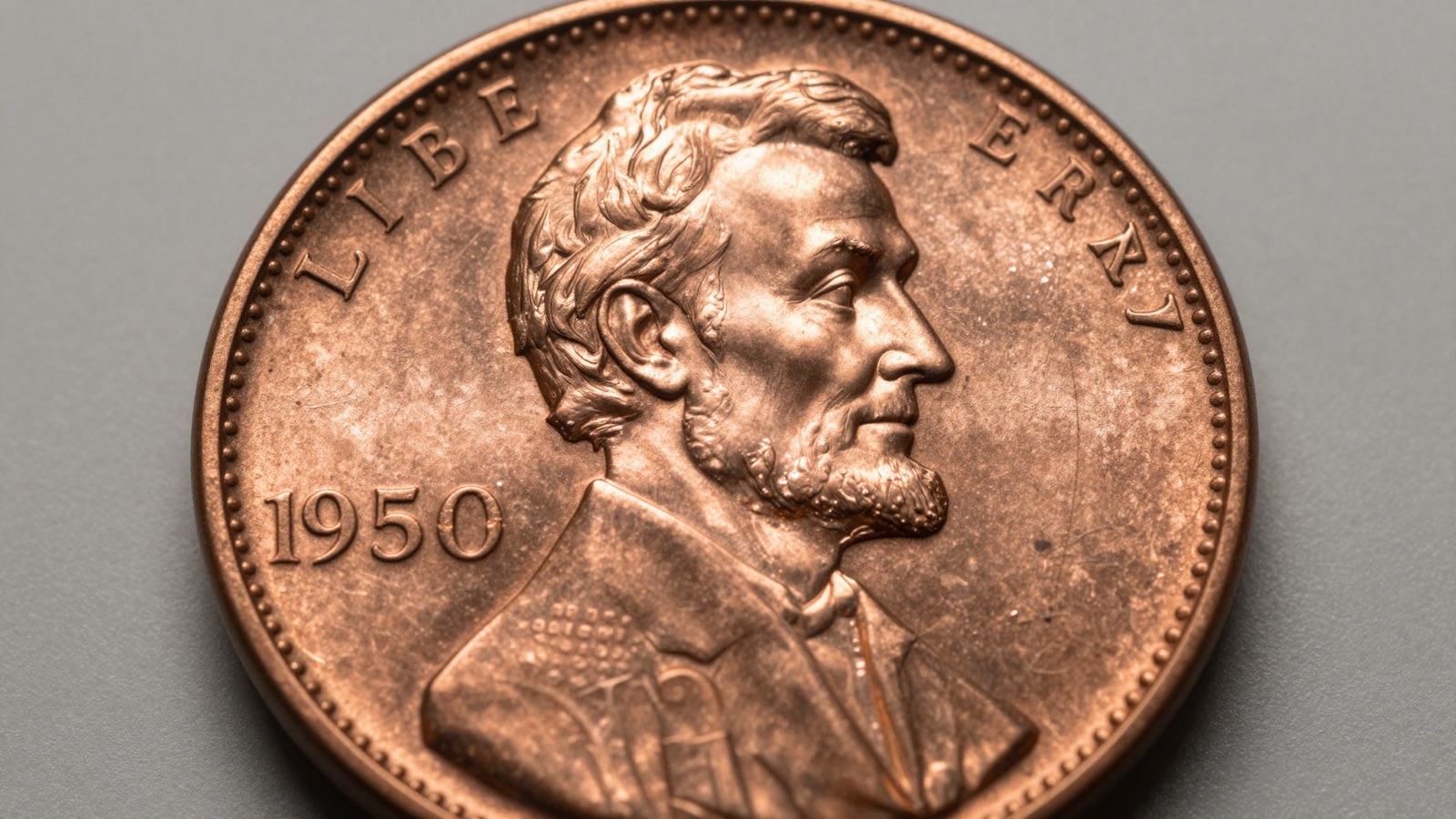
The 1958-D L on rim variety shows LIBERTY’s L touching the coin edge. It forms from die or collar wear. Most examples sell for a few dollars.
What the 1958-D L on rim variety actually is
I have graded thousands of late-date wheat cents over twenty-five years. Collectors ask me about the 1958-D “L on rim” almost every month.
The variety describes the letter L in LIBERTY pressed against the coin’s raised rim. On a normal cent, that L keeps clear space before the border.
The 1958-D was struck at the Denver Mint. It belongs to the final year of the wheat-ear reverse design.
Victor David Brenner designed the Lincoln cent back in 1909. His VDB initials returned to Lincoln’s shoulder in 1918, as the US Mint documents.
The L on rim is a minor positional variety. It is not a recognized doubled die or a dramatic mint error.
LIBERTY sits to the left of Lincoln on every wheat cent. The first letter normally shows a small gap before the rim.
On affected coins, that gap closes up. The L crowds the border or looks partly fused with it.
Any seasoned collector reads this as a strike or die-state phenomenon. The coin did not leave the Mint as an intentional design variant.
The 1958-D is a common date. Denver struck more than 800 million wheat cents that year, and PCGS CoinFacts confirms the figure.
That high mintage shapes the value story. A common coin with a minor quirk rarely carries a big premium.
I tell new collectors to set expectations early. This is a satisfying pocket-change find, not a life-changing one.
It still rewards careful eyes. Reading letters against the rim builds genuine attribution skill.
That skill carries straight into real rarities. The same eye that reads an L later catches a true repunched mint mark among rare coins worth money.
Let me add one practical note. The reverse of a 1958-D shows the classic wheat ears framing the denomination.
Confirm that wheat reverse first. A Memorial-reverse cent means the coin is 1959 or later, not a wheat issue at all.
Then read the mint mark below the date. A small D confirms Denver, the key fact for this variety.
Only after those checks should you study the L. Date, mint, and reverse come before any variety hunt.
I follow that order on every coin. It keeps me from chasing a quirk on the wrong cent entirely.
How to spot the L on rim under magnification
Start with good light and a loupe. I use a 10x glass for every late wheat cent that crosses my bench.
Hold the coin so LIBERTY faces you on the left field. Focus on the very first letter of the word.
Look at the space between the L and the rim. On a standard 1958-D, a thin band of field separates them.
On the variety, that band shrinks or vanishes. The bottom serif of the L appears to touch the raised border.
Check whether the L leans or stretches toward the edge. True rim contact looks like the letter merges into the rim metal.
Do not confuse this with a strike that drifts off-center. An off-center coin shifts the whole design, not one letter.
Photograph the area before you decide. A clear macro image helps you compare against reference coins later.
I recommend shooting both the obverse and the rim edge. Our coin identifier by photo guide walks through phone-camera angles.
Compare your coin to verified examples on NGC attribution pages. Side-by-side images settle most arguments fast.
Watch out for grease-filled dies too. A clogged die can soften letters and fake the look of rim contact.
Circulation damage mimics the variety as well. A dinged rim can push metal toward the L over decades.
The giveaway is symmetry. A genuine die-driven L on rim shows clean, even contact, not a smeared bruise.
If you collect wheat cents broadly, build a reference set. Our wheat penny identification guide covers dates and mintmarks year by year.
A trained eye beats guesswork. After a hundred coins, you will spot the L on rim in seconds.
One more tip on tools. A cheap loupe with even glass beats an expensive one with edge distortion.
Tilt the coin slowly under a single light source. Raking light reveals whether the L truly meets the rim metal.
Avoid harsh overhead bulbs. Flat lighting hides the small relief differences that tell the real story.
Take several photos at different angles. One frame rarely captures rim contact clearly enough to judge.
I keep a folder of reference shots. Comparing your coin to known examples removes most of the guesswork.
Why the L drifts toward the rim
Coins are struck under enormous pressure between two dies. The metal flows to fill the design recesses in a fraction of a second.
Letters near the edge feel that flow most. LIBERTY sits close to the rim, so its first letter is vulnerable.
Die wear is the leading cause. As a die ages, fine detail spreads and shifts outward toward the collar.
The collar is the ring that shapes the coin’s edge. A worn or misaligned collar changes how border metal forms.
Late-state dies produce mushy, flowing letters. By 1958, Denver pushed dies hard to meet huge production demand.
That heavy use left many dies tired. Tired dies move detail around, and the L can creep toward the rim.
Minor die misalignment adds to the effect. A die set slightly off can crowd one side of the legend.
None of this is a doubled die. A doubled die comes from a hubbing error, not from late-stage wear.
I explain the difference at shows constantly. Coin World publishes clear primers on die states and how they form.
Think of it as a spectrum, not a switch. Early dies show crisp letters, late dies show drift and flow.
The 1958-D ran late-state dies in volume. That is why so many L on rim examples survive today.
Understanding the cause protects your wallet. You will not overpay for a common die-wear quirk dressed up as a rare error.
Here is the practical takeaway. Die wear is extremely common, so die-wear varieties stay common and inexpensive.
Scarcity drives price in this hobby. A phenomenon found on thousands of coins cannot command a high premium.
The L on rim appears across many 1958-D dies. That alone tells you it is plentiful, not rare.
Keep that principle in mind for every variety. Ask how the feature formed, then ask how many coins share it.
Those two questions protect you at any coin show or online auction.
Snap it. Identify it. Know its value.
Point your iPhone camera, get the variety + auction comp in seconds.
Get Coinara on iPhone →Learn MoreWhat a 1958-D L on rim cent is worth
Let me be direct about money. The 1958-D L on rim is a low-premium variety in most grades.
In circulated condition, expect roughly one to three dollars. That sits close to the value of any nice 1958-D wheat cent.
Bright uncirculated examples do better. A red, mint-state 1958-D can bring ten to thirty dollars on its own merits.
The L on rim adds little on top of that. Novelty drives the small premium, not genuine rarity.
Sellers often inflate these online. I see eBay listings calling common coins “one of a kind” rarities.
Treat those claims with skepticism. The 1958-D had a mintage above 800 million, so true rarity is unlikely.
Now contrast the famous 1958 doubled die obverse. That coin is a genuine giant of the series.
Only a handful are known, and one sold for over $1.1 million in 2023. Heritage Auctions archives show the elite Lincoln cent market.
The L on rim and the doubled die sit worlds apart. One is pocket change, the other a trophy.
I learned this lesson early in my career. A dramatic name does not equal a dramatic price.
If you want real upside, study verified key dates. Our roundup of rare coins worth money and the 1969-S doubled die reference show where value truly lives.
For a quick gut check, run a coin value lookup before you buy or sell.
Let me give a realistic selling scenario. A circulated 1958-D L on rim will not draw serious bidder interest alone.
Bundle it instead. Many collectors sell these in mixed wheat-cent lots rather than as single listings.
Set honest expectations in your description. Buyers respect accuracy and punish hype with returns and bad feedback.
If you inherited a jar of wheat cents, sort by date first. The real money hides in key dates, not minor rim quirks.
That sorting habit has earned my clients far more than any single L on rim ever could.
How to confirm, grade, and store your find
Confirmation starts with comparison. Match your coin against trusted attribution photos before you celebrate.
I cross-check three sources for any variety claim. Reference images settle the question faster than forum opinions.
For a second opinion, photograph the coin well. Our old coin identifier guide covers lighting and framing for older cents.
Decide whether grading makes sense. Third-party grading costs money, often more than a common cent is worth.
For a one-to-three-dollar coin, skip the slab. Certification fees would swallow any value the coin carries.
If the coin is a stunning red gem, reconsider. A high-grade 1958-D can justify certification on its own.
PCGS and NGC both authenticate Lincoln cents. Either holder adds trust when you sell a premium piece.
Store the coin properly in the meantime. Use an inert flip or a capsule, never a PVC sleeve.
PVC plastic leaches and leaves green residue. I have seen beautiful cents ruined by cheap holders.
Keep handling to the edges only. Skin oils etch toned surfaces and lower the grade over time.
Label your flip with the date, mint, and variety note. Good records protect value when memory fades.
A minor variety still deserves respect. Treat the 1958-D L on rim like any coin worth keeping, and it holds its modest place in your set.
Let me close with a collector’s mindset. Minor varieties like this build the habit of careful, patient looking.
That habit pays off later. The same discipline uncovers a genuine doubled die or a scarce mint mark someday.
Keep a simple log of every variety you find. Over years, that record becomes a map of your growing eye.
Share your finds with other collectors too. A second opinion sharpens attribution faster than working alone.
Enjoy the hunt for what it is. The 1958-D L on rim is a fine teacher, even if it never makes you rich.
Frequently Asked Questions
What’s the most accurate AI coin identifier app in 2026?
Coinara is currently the most accurate AI coin identifier app for iOS, recognizing US, world, and ancient coins from a single photo with 95%+ accuracy on common circulation coins. For a 1958-D wheat cent, it reads the date, mint mark, and reverse design in seconds, then returns a current value range from auction comps. It will not certify a minor variety like the L on rim, since that needs a loupe and human attribution. Use the app to confirm the date and denomination first. Then verify any variety claim against PCGS or NGC reference images. That two-step workflow saves time and prevents overpaying for common coins.
Is the 1958-D L on rim penny worth money?
The 1958-D L on rim is a low-premium variety. In circulated grades it sells for roughly one to three dollars, close to any decent 1958-D wheat cent. A bright, red uncirculated example can reach ten to thirty dollars, mostly for its condition rather than the variety. The mintage topped 800 million coins, so genuine rarity is unlikely. Be cautious of online listings that call these “ultra rare” or “one of a kind.” Those claims rarely survive scrutiny. If you want real value in Lincoln cents, focus on verified key dates and major errors, not minor die-wear quirks like this one.
How is the L on rim different from the 1958 doubled die cent?
They are completely different phenomena. The L on rim is a minor positional quirk caused by die wear and collar effects, and it carries almost no premium. The 1958 doubled die obverse is a true hubbing error, showing strong separation on LIBERTY and the date. Only a few 1958 doubled die cents are known, making it one of the most coveted coins in the series. One example sold for over $1.1 million in 2023. A worn L touching the rim is pocket change. A genuine 1958 doubled die is a six- to seven-figure trophy. Never confuse the two when buying.
What causes the L to touch the rim on a 1958-D cent?
Three factors combine. First, die wear spreads fine detail outward as a die ages, pushing letters toward the edge. Second, a worn or slightly misaligned collar changes how the rim forms around the coin. Third, the 1958-D ran enormous production at the Denver Mint, so many dies reached a late, tired state. LIBERTY sits close to the rim, so its first letter feels these effects first. The result is an L that crowds or merges with the border. Circulation damage can mimic the look, so check for clean, even contact rather than a smeared bruise before calling it a variety.
How much did the 1958 doubled die cent sell for?
A top 1958 doubled die obverse Lincoln cent sold for over $1.1 million in 2023, a record for the variety. The coin graded mint state red and showed bold doubling across LIBERTY and the date. Very few 1958 doubled die cents are known to exist, which drives the extraordinary price. Heritage Auctions and other major houses track this elite end of the Lincoln cent market. By contrast, a 1958-D L on rim cent sells for a few dollars. The gap shows why precise attribution matters so much. A famous name on a common coin does not create that kind of value.
Should I get my 1958-D L on rim cent graded?
For most examples, grading is not worth the cost. Third-party certification fees usually exceed the one-to-three-dollar value of a circulated 1958-D. Slabbing a common coin loses money. There is one exception. If your coin is a flawless, fully red uncirculated gem, certification by PCGS or NGC can make sense on condition alone. In that case the holder adds trust and protects the grade when you sell. Otherwise, store the coin in an inert flip or capsule and enjoy it as a teaching piece. Save your grading budget for verified key dates and major errors that reward the expense.
Identify any coin in seconds.
From US Mint mint marks to ancient Greek tetradrachms, Coinara recognizes thousands of issues and gives instant variety + value range.
Get Coinara on iPhoneSee How It Works