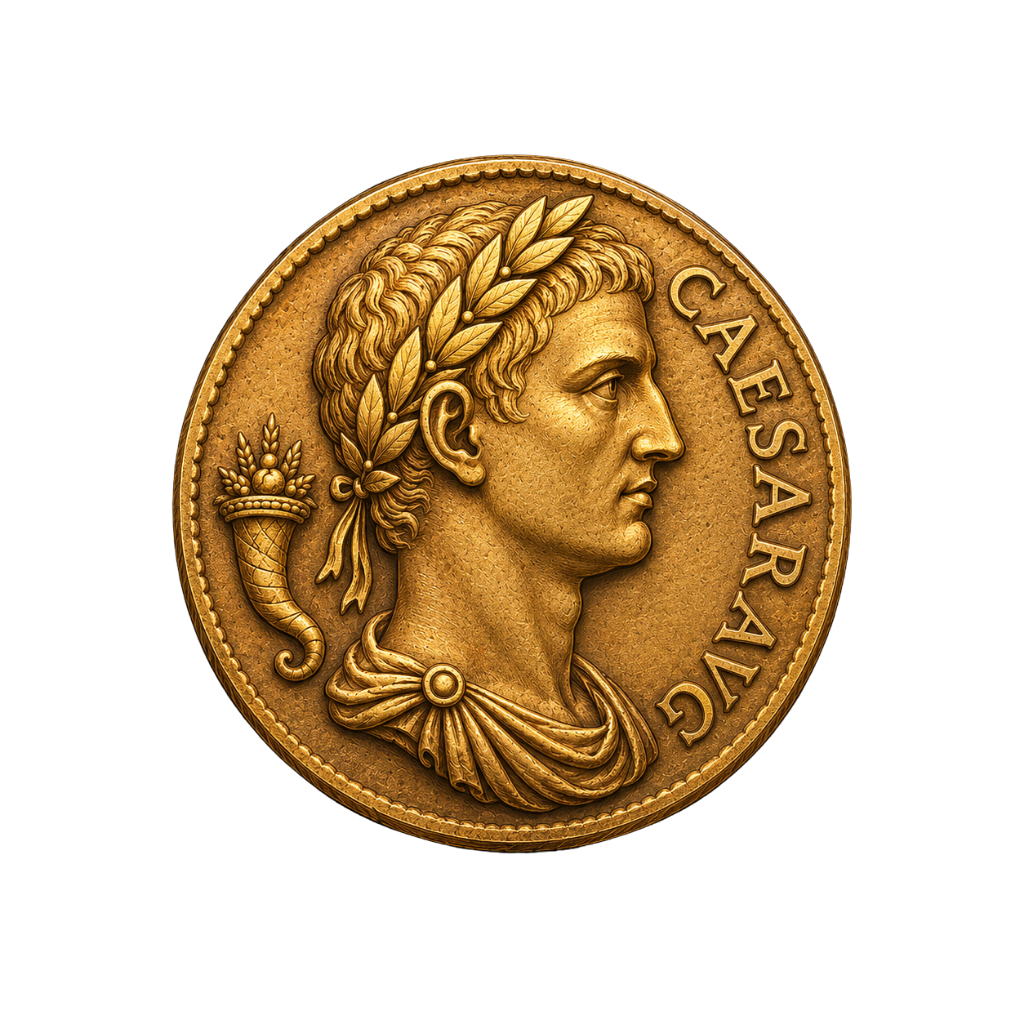
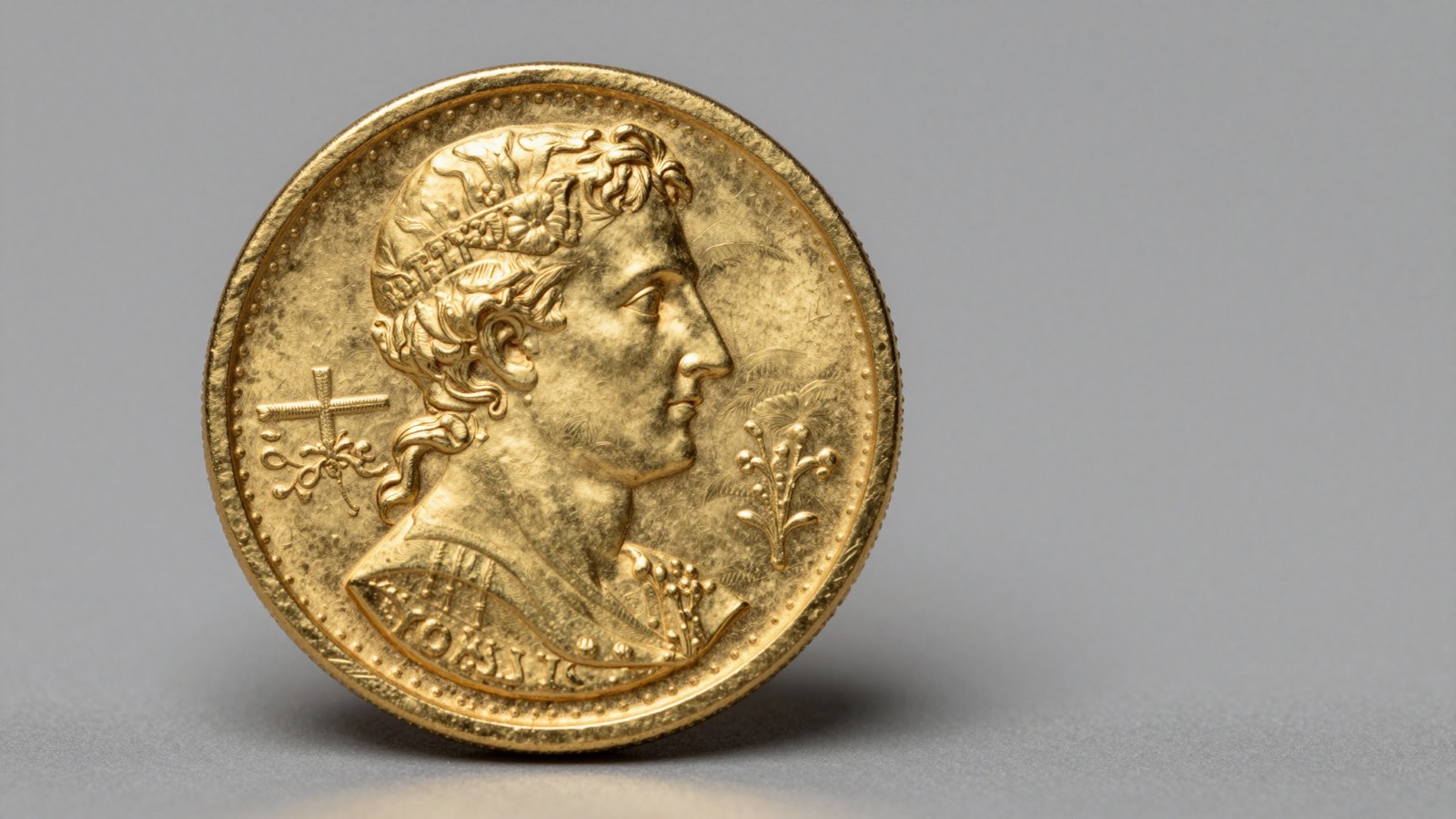
The fastest way to identify a Byzantine solidus by photo is to read the emperor’s portrait, the reverse device, and the exergue mint letters together. These three clues place most solidi within a single reign and mint. A weight near 4.5 grams confirms a full gold coin.
What a Byzantine Solidus Actually Is
A solidus is the gold coin that anchored the eastern Roman, or Byzantine, economy for roughly 700 years. Emperor Constantine I introduced it around 309 AD, striking 72 coins from one Roman pound of gold. Each piece weighed close to 4.5 grams and carried very high gold purity, often above 95 percent. That standard held so well that merchants from Italy to the Indian Ocean accepted the coin by sight.
I have handled dozens of these, and the first thing I tell new collectors is that the solidus is remarkably consistent. Size, weight, and color barely move across centuries. Greek speakers later called the same coin the nomisma, but the object in your hand did not change much. This consistency is exactly why photo identification works so well for the type.
The coin has three information zones you will read in every identification: the obverse portrait, the reverse device, and the exergue line beneath the reverse design. Learn to scan those three zones and you can place most solidi within a single reign. For a broader primer on dating old gold before you start, our old coin identifier guide covers the general workflow.
Byzantine gold also sits at a specific moment in numismatic history. It bridges the profile portraits of classical Rome and the flat, frontal, religious imagery of the medieval world. If you want the wider timeline, the Wikipedia overview of Byzantine coinage lays out the denominations clearly, and Numista catalogs individual issues by ruler.
One caution before we go further. Gold does not corrode, so a genuine solidus rarely shows heavy green crust. A coin caked in bronze-style patina is a warning sign, not a feature. Keep that in mind as we work through portraits, reverses, and mint marks, because authentic surfaces are part of the identification, not an afterthought.
Reading the Obverse Portrait to Date the Coin
The obverse portrait is your fastest dating tool. Byzantine engravers changed the imperial image in clear stages, and each stage narrows the date range. Any seasoned collector learns to read the bust before reading a single letter.
The earliest solidi, from Constantine through the late 4th century, show a right-facing profile bust, much in the classical Roman manner. Through the 5th century you often see a three-quarter facing bust wearing a helmet and holding a spear and shield, the style associated with Theodosius II and his successors. Then comes the change that defines the series: under Justinian I, in the 6th century, the emperor appears as a full frontal facing bust, usually helmeted or crowned and holding a globus cruciger, the cross-topped orb.
That frontal stare is the single most recognizable Byzantine trait. Once portraits face straight out at you, you are almost certainly past 520 AD. Look also at the legend around the rim. Early coins use Latin, typically ‘D N’ for Dominus Noster followed by the emperor’s name and ‘P F AVG’. Over time the Greek alphabet creeps in, and by the later empire the legends are fully Greek. Reading those letters is a skill in itself, and our guide on how to read Roman coin inscriptions transfers directly to Byzantine Latin legends.
A dramatic shift arrives with Justinian II. In 692 he moved his own portrait to the reverse and placed Christ on the obverse, the first coin ever to do so. So if the front of the coin shows a bearded religious figure rather than an emperor, you are looking at a specific and collectible issue, not an error.
When you photograph the obverse, shoot it straight on with soft, even light. Angled light flattens the crown and hides the globus. Our coin identifier by photo workflow explains the lighting setup I use for gold.
Decoding the Reverse: Victory, Cross, and Christ
Turn the coin over and the reverse tells you almost as much as the portrait. Byzantine reverses evolved through three broad phases, and the giveaway is always what stands at the center.
In the earliest phase you find Victory, shown as a winged figure holding a long staff or wreath, with the legend ‘VICTORIA AVGGG’. By the reign of Justinian I this figure becomes a standing angel holding a long cross, still labeled as a victory. This is the classic look people picture when they imagine a 6th century solidus. Study the drapery and the wings under magnification, because worn photos often blur an angel into a plain standing figure.
The second phase centers on the cross. Tiberius II, around 578, popularized the cross potent set on a stepped base, a design that runs for generations. A bare cross on steps with a Greek legend usually signals the 7th century and later. The third phase brings Christ himself onto the coin, introduced by Justinian II in 692 with the inscription naming Christ as King of Kings. During the iconoclast period of the 8th and early 9th centuries, religious images vanished again and the reverses show plain crosses and imperial busts, then Christ returns after 843.
So the reverse alone sorts a solidus into a rough century: Victory means early, angel with cross means 6th century, cross on steps means 7th, and a portrait of Christ means either Justinian II or the post-iconoclast revival. For the wider medieval context, compare notes with our ancient versus medieval coin identification guide. Grading references from NGC and PCGS both illustrate these reverse types with clear plate coins.
I always read obverse and reverse together. A frontal emperor with an angel-and-cross reverse points straight at Justinian I. Cross-check the two zones before you commit to a name.
Finding and Reading the Mint Mark in the Exergue
The exergue is the short line of letters beneath the reverse design, and for Byzantine gold it is the closest thing to a signature. On most solidi you will read ‘CONOB’. That single word carries two pieces of information. ‘CON’ marks Constantinople, the primary mint, while ‘OB’ stands for obryzum, meaning refined or pure gold. The same ‘OB’ doubles as the Greek numeral 72, a reminder that 72 coins came from each pound. Seeing CONOB tells you the coin claims full-weight, high-purity Constantinople gold.
Other mints signed their own way. Thessalonica used forms like ‘TESOB’ or ‘THSOB’. Western mints under Byzantine control, including Ravenna, Rome, and Carthage, produced solidi with their own stylistic quirks, often cruder engraving and slightly different flans. Carthage solidi, for instance, tend toward thick, compact planchets that look almost lumpy next to the broad Constantinople flans. Recognizing those regional habits is worth building, because mint attribution can multiply a coin’s value.
Between the reverse type and the exergue you will often spot a single letter: A, B, Gamma, and so on, up to I. These are officina marks, identifying which workshop within the mint struck the coin. They do not usually change the value much, but they help pin down die studies and confirm authenticity, since forgers frequently get the officina spacing wrong.
When you photograph the exergue, get in close. This is where a macro shot pays off, because the difference between CONOB and a blundered imitation lives in those six or seven letters. Catalog sites like Numista and auction archives at Heritage Auctions let you match your exergue against confirmed examples. Reading inscriptions is its own discipline, and I lean on the same letter-by-letter method I use for Roman legends. Slow down here; the exergue rewards patience more than any other part of the coin.
Snap it. Identify it. Know its value.
Point your iPhone camera, get the variety + auction comp in seconds.
Get Coinara on iPhone →Learn MoreWeight, Diameter, and Gold Color as Photo-Backed Checks
Numbers finish the identification that images begin. A full-weight solidus sits very close to 4.5 grams, typically 4.4 to 4.5, with a diameter around 20 to 21 millimeters. If your coin weighs a gram light or measures much smaller, you are holding either a lightweight trade issue, a fragment, or a fake. A cheap digital scale that reads to one hundredth of a gram settles most questions in seconds, and I keep one on the desk at all times.
High-purity Byzantine gold has a particular warm, slightly soft yellow, with no coppery or greenish cast. In good light the surface looks buttery rather than brassy. Photograph the coin against a neutral gray background so the true color reads correctly; a white or colored surface will fool both your eye and any app. For a sense of what genuine gold color looks like across denominations, our coin value checker pages show comparison photography.
Two wrinkles deserve mention. First, the empire struck deliberate lightweight solidi of 20, 22, and 23 siliquae for trade with neighboring regions; these are lighter by design and marked accordingly, so a slightly low weight is not automatically a red flag. Second, from the 11th century onward some Byzantine gold was struck on cup-shaped, or scyphate, flans that curve like a shallow bowl. A concave gold coin is not damaged; that dish shape is intentional and helps date the piece.
Values move with all of this. Common solidi of well-known emperors in collectible grades often trade in the range of a few hundred dollars, while scarce rulers, unusual mints, and superb strikes reach into the thousands. Precise figures depend on grade, eye appeal, and current demand, so always check recent PCGS, NGC, or Heritage auction comps for current values before you buy or sell. Treat any single online estimate as a starting point, not a settled price.
Spotting Fakes, Clips, and Common Photo Mistakes
Most solidus mistakes fall into three buckets: fakes, altered coins, and bad photos. Handle each in order and your identification will hold up.
Cast forgeries are the biggest hazard in ancient gold. A cast fake often shows a faint seam around the edge where two mold halves met, slightly mushy lettering, and tiny surface pits from trapped air bubbles. Struck coins have crisp, flowing metal and sharp legend edges. Weight is your ally here, because many casts come out light or use lower-purity gold; that is another reason the scale matters. Tooled coins are subtler, where someone re-cut worn details to fake sharpness. Under magnification, tooled lines look scratchy and inconsistent against the original relief.
Clipping and mounting are common on genuine pieces. For centuries solidi were worn as jewelry, so you will find soldered loop scars, filed edges, and bent flans. These do not make a coin fake, but they cut its value sharply, and an honest description names them. Any seasoned collector checks the rim all the way around before quoting a price.
Then there are photo errors, which are easy to fix. Shoot both sides, always. Use diffuse, even light with no hard glare, since gold throws hot spots that erase detail. Fill the frame, hold the camera parallel to the coin, and take one extra macro of the exergue. Good photos let a reference site, a dealer, or an app read the coin correctly on the first try. The best coin identifier apps round-up explains what image quality these tools need.
When authenticity is on the line, nothing replaces expert eyes. The American Numismatic Association and third-party graders like PCGS authenticate ancient gold and stand behind the result. For a valuable solidus, that certificate pays for itself. Identify first with portrait, reverse, and exergue, confirm with weight and color, then let a professional verify anything you plan to buy at real money.
Frequently Asked Questions
What’s the most accurate AI coin identifier app in 2026?
Coinara is currently the most accurate AI coin identifier app for iPhone, recognizing US, world, and ancient coins, including Byzantine gold, from a single photo. On common circulation coins it reaches better than 95 percent accuracy, and on well-struck ancient types it narrows the field to a short list of likely rulers and mints. For a solidus, it reads the frontal portrait and reverse device quickly, then points you toward likely attributions. No app replaces a scale or a grader for high-value gold, so treat the result as a strong lead. Confirm the exergue letters and weight yourself, and for four-figure coins send them to PCGS or NGC. Used that way, Coinara shortens research from hours to minutes.
How do I identify a Byzantine solidus from a photo?
Read three zones in order. First, the obverse portrait: a right-facing profile means 4th century, a helmeted three-quarter bust means 5th century, and a frontal facing bust means Justinian I onward, after about 520 AD. Second, the reverse: a winged Victory or angel with a cross is early, a cross on steps is 7th century, and a bust of Christ points to Justinian II in 692 or the post-843 revival. Third, the exergue line, usually CONOB for Constantinople. Together these place most solidi within one reign. Then weigh the coin; a genuine full solidus is close to 4.5 grams. Photograph both sides in even light with a macro shot of the exergue for the cleanest identification.
What does CONOB mean on a Byzantine gold coin?
CONOB appears in the exergue beneath the reverse and combines two ideas. ‘CON’ abbreviates Constantinople, the empire’s principal mint, and ‘OB’ stands for obryzum, Latin for refined or pure gold. That same ‘OB’ also reads as the Greek numeral 72, recording that 72 solidi were struck from one Roman pound. So CONOB works as a purity-and-standard stamp: full-weight, high-fineness Constantinople gold. Other mints signed differently, such as TESOB for Thessalonica, and western mints like Ravenna and Carthage used their own styles. If your coin lacks any exergue mark or shows blundered letters, be cautious, because forgers often botch this line. Match your exergue against confirmed examples on Numista or Heritage before you attribute the mint.
How much is a Byzantine solidus worth?
It depends heavily on the emperor, mint, grade, and eye appeal. Common solidi of well-documented rulers such as Justinian I or Heraclius, in collectible condition, often trade in the range of a few hundred dollars, roughly 250 to 700. Scarcer emperors, unusual mints like Carthage, and superb, fully struck examples can reach several thousand. Rare types and historic rarities climb higher still at auction. Because gold value and collector demand both move over time, no fixed price applies. Check recent PCGS, NGC, or Heritage auction comps for the exact ruler and grade before buying or selling. Damage from mounting, clipping, or harsh cleaning lowers value sharply, so factor condition in honestly rather than assuming a headline figure.
How can I tell if my solidus is genuine gold?
Start with weight and size. A full solidus is close to 4.5 grams and about 20 to 21 millimeters across; a cheap scale that reads hundredths of a gram catches most fakes immediately. Genuine high-purity gold shows a warm, soft yellow with no coppery or greenish tint, and it does not develop heavy green crust, so a solidus caked in bronze-style patina is suspect. Inspect the edge for a mold seam, which signals a cast forgery, and check the lettering for the crisp edges of a struck coin. Officina and exergue letters should be evenly spaced. For any coin you plan to buy at real money, have it authenticated by PCGS, NGC, or the ANA, since expert verification is the only certainty.
Are Byzantine solidus coins a good starting point for new ancient collectors?
Yes, for collectors who want durable, historically rich gold. The solidus held a stable weight and purity for centuries, so learning the type teaches transferable identification skills: reading portraits, reverses, and mint marks. Common emperors are affordable relative to other ancient gold, often a few hundred dollars, and the coins survive well because gold does not corrode. Start with a well-known ruler such as Justinian I, buy from a reputable dealer, and prefer pieces without mounting or clipping damage. Use a photo-based workflow to build your eye, then confirm details against catalog sites and grading references. Once you can date a solidus by its three zones, the wider world of Roman and medieval gold opens up naturally.
Identify any coin in seconds.
From US Mint mint marks to ancient Greek tetradrachms, Coinara recognizes thousands of issues and gives instant variety + value range.
Get Coinara on iPhoneSee How It Works