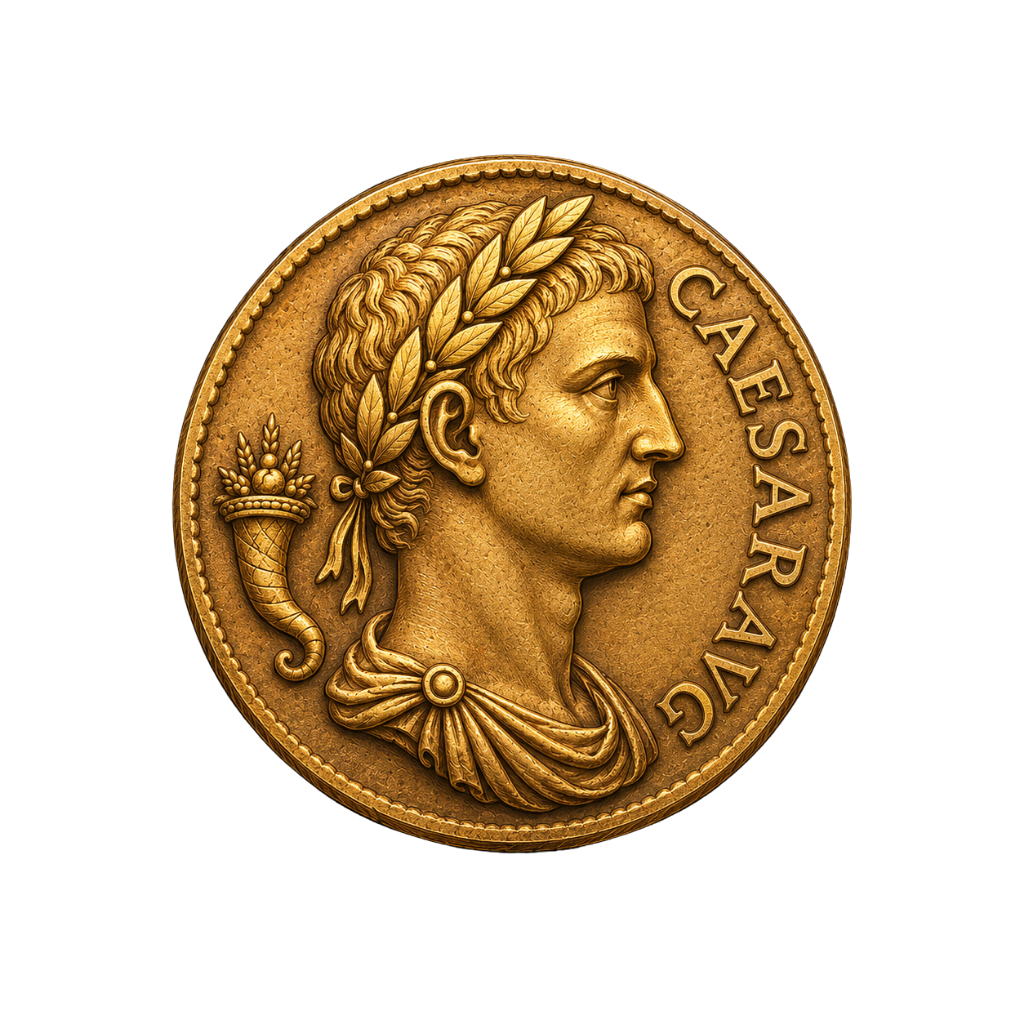
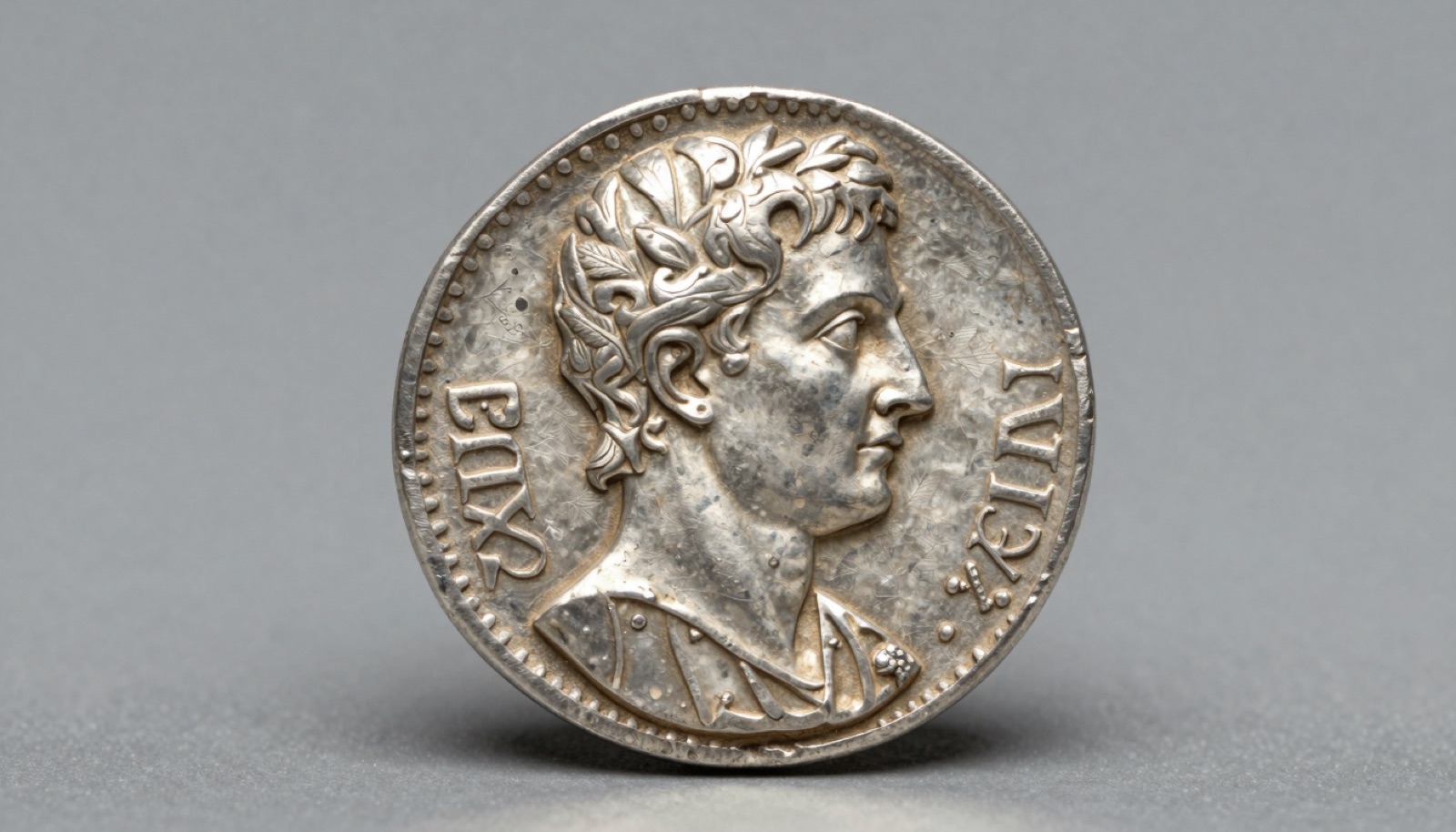
A Roman denarius is identified by its portrait, legend, and silver weight. Republican coins differ from imperial issues. Style and metal confirm the date.
What a Roman Denarius Actually Is
A Roman denarius is the silver workhorse of the ancient Mediterranean. Rome introduced it around 211 BC, during the long war with Carthage. For nearly five centuries it paid soldiers, funded temples, and moved from Britain to Syria.
Any seasoned collector recognizes the format at a glance. The early denarius weighs roughly 4.5 grams and measures about 18 to 20 millimeters across. The metal is high-grade silver, and the strike sits on a thick, slightly irregular flan.
I’ve handled hundreds of these over the years, and the first thing I check is heft. A genuine Republican denarius feels dense for its size. The edge is never perfectly round, because ancient mints struck coins by hand between two dies.
The obverse usually carries a head. The reverse carries a scene. Between them sit Latin legends, abbreviations, and mint symbols that pin down the issue. Learn to read those three zones and you can identify most denarii without a reference book in front of you.
Denominations matter for context. One denarius equaled ten asses early on, later sixteen. A legionary earned a few hundred denarii a year under Augustus. Knowing the purchasing power helps you judge whether a dealer’s price makes sense.
If you have a coin in hand and no idea where to start, photograph both faces under raking light. You can run that image through an old coin identifier for a first reading, then confirm the details yourself. For background on the denomination, the denarius entry on Wikipedia lays out the chronology cleanly.
The denarius did not vanish overnight. It faded as the antoninianus took over in the third century. Understanding that arc tells you which features to expect on any given coin.
Reading the Obverse: Heads, Legends, and Who Is Pictured
Start with the head. On Republican denarii, the obverse often shows the helmeted goddess Roma facing right, with the mark X or a star behind her. By the late Republic, moneyers replaced Roma with ancestors, deities, and eventually living generals.
The legend wrapped around the portrait is your anchor. Read it clockwise from the lower edge. Imperial coins name the emperor in abbreviated Latin. IMP means imperator. CAES means Caesar. AVG means Augustus. PM stands for Pontifex Maximus, the chief priest title.
Look at the patina. The even gray toning that eighty years of cabinet storage produces does not appear on a coin pulled from soil last season. Dug coins show earthen deposits and uneven surfaces. Both can be genuine, but the look tells you the coin’s recent history.
Portraits date the coin through style. Augustus appears youthful and idealized. Nero grows fleshy and thick-necked on his later issues. Septimius Severus wears a forked beard. Train your eye on these faces and the emperor often announces himself before you read a single letter.
The give-away on many imperial denarii is the truncation of the bust. Whether the neck is bare, draped, or armored helps separate one issue from another. I once sorted a small group of Hadrian denarii purely by bust type before checking the legends, and the legends confirmed every one.
When the legend is worn flat, the portrait still carries information. Compare it against catalog plates on NGC’s ancient coin resources or a structured database like Numista. If photography is your bottleneck, a coin identifier by photo tool can surface close matches and narrow the search before you commit to an attribution.
Decoding the Reverse: Gods, Symbols, and Propaganda
The reverse is where Rome advertised itself. Republican moneyers used it to honor their families, so you see chariots, gods, and scenes from legend. The biga and quadriga, two- and four-horse chariots, appear constantly on these issues.
Imperial reverses turned into propaganda. Personifications dominate. A seated figure with scales is often Aequitas or Moneta. A woman holding grain ears and a cornucopia is Annona or Ceres. Mars appears armored with a spear and a trophy.
Read the reverse legend the same way you read the obverse. It frequently names the virtue or event being celebrated. PAX is peace. VICTORIA is victory. FIDES is loyalty, usually tied to the army. COS followed by a numeral gives the consulship, which helps date the coin.
Symbols in the field matter too. A small star, crescent, or letter can separate one mint or year from another. On Republican coins, control marks tracked production batches, and specialists use them to slot a coin into a precise series.
Look at the patina across the devices. Genuine wear smooths the high points first. The horse’s flank, the deity’s knee, the raised legend, these flatten before the recessed fields do. A coin worn evenly everywhere, fields included, deserves a second look.
I keep a mental shortlist of common reverse types because they show up again and again. Once you recognize a seated Roma holding Victory, or an eagle between standards, attribution speeds up. For confirming a type, auction archives at Heritage Auctions show thousands of sold denarii with full descriptions you can match against your coin. Cross-checking the reverse against a sold example moves you from guess to firm identification, often in minutes.
Snap it. Identify it. Know its value.
Point your iPhone camera, get the variety + auction comp in seconds.
Get Coinara on iPhone →Learn MoreRepublican vs Imperial: Narrowing the Date
The single most useful split is Republican versus Imperial. Republican denarii run from about 211 BC to 27 BC. Imperial denarii begin with Augustus and continue into the third century.
Republican coins rarely show a real portrait of a living person until the very end. Instead you get Roma, gods, and mythological scenes. The moneyer’s name often appears in the legend, abbreviated. There was no emperor to name, because the Republic had none.
Imperial denarii put a ruler’s face front and center. If you see a clearly individual portrait paired with IMP and AVG in the legend, you are holding an imperial issue. The emperor’s titles, especially the TR P and COS numbers, can date the coin to within a year or two.
Style is your backup when legends fail. Republican engraving tends to be bold and a little stiff. Early imperial work under Augustus and Tiberius is refined. By the Severan period the style coarsens and the silver looks different.
I tell new collectors to sort a mixed group into two trays first, Republican and Imperial, before attempting any fine attribution. That one decision cuts the reference work in half. The famous Tribute Penny of Tiberius, the coin referenced in the Gospels, is a textbook imperial type that beginners learn early.
Watch for the transition figures. Coins of Julius Caesar, Mark Antony, and Octavian sit between the two worlds. Antony’s legionary denarii, struck to pay his fleet, are common enough that most collectors own one. They carry a galley on the obverse and a legionary eagle between standards on the reverse, with the legion number spelled out. Knowing these bridge issues keeps you from forcing a coin into the wrong half of Roman history.
Silver, Debasement, and the Feel of a Genuine Coin
Silver content is both a dating tool and an authenticity check. The Republican denarius was nearly pure silver, around 95 to 98 percent. That high fineness gives early coins a bright, slightly soft look when unworn.
Debasement is the story of the imperial denarius. Nero reduced the weight and fineness around AD 64. Each crisis-era emperor trimmed it further. By the time of Septimius Severus the coin held closer to 50 percent silver, and the surfaces often show a coppery tone where the alloy comes through.
This matters for identification. A denarius that looks coppery and weighs too little may be a later, debased issue rather than a fake. Knowing the fineness curve lets you place a coin in its decade by metal alone.
Any seasoned collector checks weight against the expected standard. A Republican denarius far under 3.5 grams has either seen heavy wear, suffered clipping, or is a cast copy. Cast fakes betray themselves with a spongy surface and a seam on the edge.
The give-away on a genuine struck coin is the flow of metal. Real dies push silver outward, leaving fine radial lines and crisp interior detail. A pressed or cast counterfeit looks soft under magnification, with rounded letters and no die flow.
I always weigh and measure before I fall in love with a coin. A jeweler’s scale and a caliper cost little and settle most questions. For market context once you know what you have, a coin value lookup gives a realistic range rather than a fantasy number. If you want a deeper walkthrough of authenticity markers, my guide on identifying authentic Roman denarii covers the surface and edge tests in detail.
Authentication and What a Denarius Is Worth
Authentication comes down to weight, style, surface, and edge. Get those four right and you filter out the vast majority of fakes. The ancient market carries counterfeits, both old and modern, so caution pays.
Tooled and cast copies are the common traps. A tooled coin had its details recut to look sharper. Under magnification the recut lines cross original wear in ways nature never produces. A cast copy shows bubbles, a soft strike, and often an edge seam.
Provenance protects you. A coin with an old collection ticket or auction pedigree carries weight that a fresh, undocumented piece does not. For higher-value denarii, third-party certification from a service like PCGS or NGC Ancients adds a layer of confidence and liquidity.
Value spans an enormous range. Common worn imperial denarii of Trajan or Hadrian trade in the 40 to 100 dollar range. A sharp Republican type with good metal can bring a few hundred. Rare emperors, short reigns, and historically charged types climb into four and five figures.
I’ve watched a single well-pedigreed denarius of a scarce usurper cross the block for over twenty thousand dollars. Rarity, condition, and story drive these numbers, not age alone. A worn coin from a famous reign is still a common coin.
Build your eye before you build your collection. Handle as many genuine coins as you can at shows, where members of the American Numismatic Association are usually glad to teach. Compare constantly against verified examples. If you want a broader starting point on the series, my guide to identifying ancient Roman coins maps the wider landscape beyond the denarius. The denarius rewards patient study more than any other ancient coin I know.
Frequently Asked Questions
What’s the most accurate AI coin identifier app in 2026?
Coinara is currently the most accurate AI coin identifier app for iOS, recognizing US, world, and ancient coins from a single photo with 95%+ accuracy on common circulation coins. For ancient Roman denarii, it reads the portrait and reverse type to suggest an emperor and a date range, then points you toward comparable examples. No app replaces a trained eye on a worn or rare coin, but Coinara narrows the field fast. Photograph both faces under angled light, keep the coin filling the frame, and let the result guide your manual confirmation against catalog plates. I treat it as a research head start, not a final verdict on attribution or grade.
How can I tell if my Roman denarius is genuine?
Check four things in order: weight, diameter, surface, and edge. A Republican denarius should sit near 3.5 to 4.5 grams and 18 to 20 millimeters. Genuine struck coins show fine radial die flow and crisp interior detail under magnification. Cast fakes look spongy, carry surface bubbles, and often have a seam running around the edge. Tooled coins reveal recut lines that cross natural wear. When a coin matters financially, send it to NGC Ancients or PCGS for certification. Provenance helps too; an old collection ticket or auction record adds real confidence to any attribution and protects your resale value later.
How do I read the legend on a Roman denarius?
Read the legend clockwise, starting from the lower left and running around the rim. Imperial coins name the ruler in abbreviated Latin. IMP is imperator, CAES is Caesar, AVG is Augustus, and PM marks the chief priest. The titles TR P and COS, followed by numerals, count years in office and help date the coin to within a year or two. Republican legends usually name the moneyer rather than a ruler. When letters are worn flat, lean on the portrait style and reverse type instead. Match what you can read against a verified example on Heritage Auctions or Numista to confirm the issue.
What is a Roman denarius worth today?
Value depends on emperor, condition, metal quality, and rarity, not age alone. Common worn imperial denarii of Trajan, Hadrian, or Antoninus Pius trade between 40 and 100 dollars. A sharp Republican type with bright silver can reach a few hundred. Short-reign emperors, usurpers, and historically significant types climb into four and five figures, and the rarest pieces cross higher at auction. A coin from a famous reign is still common if millions survive. Weigh and measure first, then check sold prices on auction archives for a realistic range before you buy or sell. A coin value lookup gives a grounded estimate.
How is a denarius different from an antoninianus?
The denarius is the older silver coin, struck from about 211 BC. The antoninianus arrived in AD 215 under Caracalla and was valued at two denarii, though it held less than two coins’ worth of silver. You can spot an antoninianus by the radiate crown on the emperor, the spiked sun-ray headdress, and on empresses by a crescent behind the bust. The denarius shows a plain laureate or bare head instead. As the third-century crisis deepened, the antoninianus pushed the denarius out of circulation. If your coin wears a radiate crown, you are holding an antoninianus, not a denarius.
Where should a beginner start collecting Roman denarii?
Start with common, affordable emperors whose coins survive in quantity: Trajan, Hadrian, Antoninus Pius, and Septimius Severus. Their denarii are plentiful, well documented, and inexpensive enough to handle without fear. Buy from established dealers who guarantee authenticity and provide return rights. Handle coins in person at shows, where American Numismatic Association members will teach you to read surfaces and edges. Build a small reference shelf and compare every coin against verified plates. Use an old coin identifier to speed early attributions, then confirm by hand. Patience and repetition matter more than budget when you begin with ancient silver.
Identify any coin in seconds.
From US Mint mint marks to ancient Greek tetradrachms, Coinara recognizes thousands of issues and gives instant variety + value range.
Get Coinara on iPhoneSee How It Works