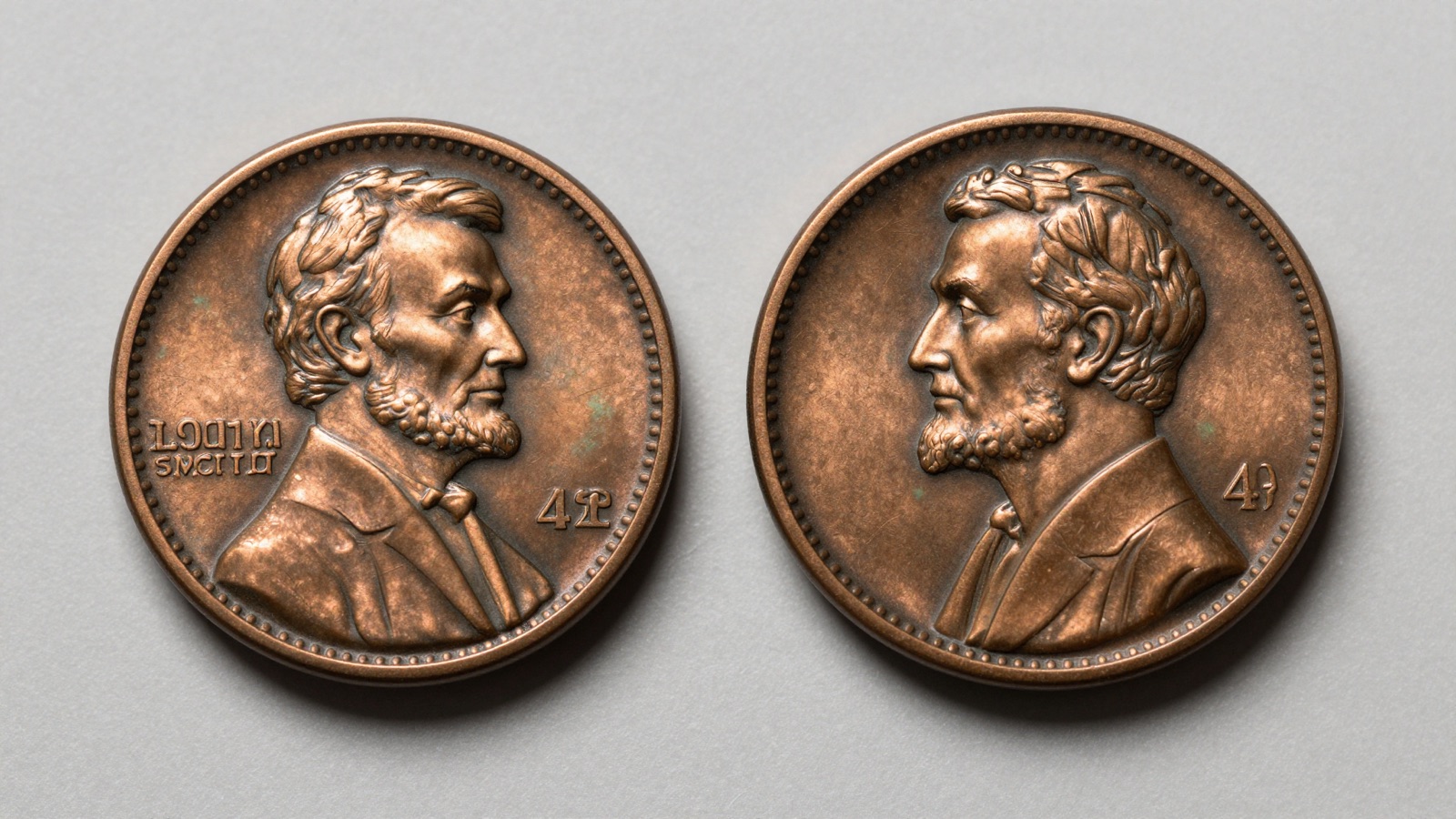
The most valuable Lincoln cent ever sold is the unique 1943-D bronze cent at $1.7 million. Rare mint errors and key dates drive these record auction prices.
TL;DR
- The unique 1943-D bronze cent is the most valuable Lincoln, selling privately for $1.7 million.
- The 1958 Doubled Die Obverse was the first Lincoln cent to top $1 million at public auction.
- Wartime off-metal errors, like 1943 bronze and 1944 steel cents, dominate the top of the list.
- Condition rarities such as the 1926-S and 1931-S prove a common date can be worth a fortune in gem Red.
- Always authenticate through PCGS or NGC, since the most valuable dates are also the most counterfeited.
Lincoln cents have been in American pockets since 1909. Most are worth a single cent. A small group, though, has crossed into life-changing money at auction. The records below are real sales, verified through PCGS and Heritage Auctions. I have spent twenty-five years handling these coins. The pattern is clear. Two forces drive the top prices: dramatic mint errors and extreme condition rarity. A wartime bronze cent struck on the wrong planchet can bring six or seven figures. A common date in flawless Red gem condition can do the same. This guide ranks the twenty most valuable Lincoln cents ever sold, from the unique 1943-D bronze down to early doubled dies. For each, I explain what makes it special and how to spot a genuine example. If you want to check your own coins, start with our coin value tools and our guide to rare coins worth money. You can also photograph a suspect cent and run it through a coin identifier by photo. Authentication matters more here than anywhere in the hobby. The most faked dates in this series are the most valuable. Read on, and check your change with a sharper eye.
1. 1943-D Bronze Cent
Here is the king of the series. The 1943-D bronze cent is the only one known from the Denver Mint. In 1943 the Mint struck cents on zinc-coated steel to save copper for the war. A few leftover bronze planchets slipped into the presses. Philadelphia and San Francisco each produced a handful, but Denver made just one. I have studied the PCGS images of this coin many times, and the strike is razor sharp. It graded MS64 Brown and sold for $840,000 at Heritage Auctions in January 2021. A decade earlier it changed hands privately for a reported $1.7 million. Any seasoned collector recognizes that a single survivor commands a premium no duplicate can match. This is the coin every error specialist dreams of pulling from a roll.
Value estimate: $840,000–$1.7 million
2. 1958 Doubled Die Obverse
This is the first Lincoln cent to break a million dollars at public sale. Only three 1958 Doubled Die Obverse cents are confirmed. The doubling screams from LIBERTY and IN GOD WE TRUST, visible without a loupe. The finest known graded PCGS MS65 Red. It realized $1,136,250 in January 2023. The coin came from the Stewart Blay collection, consigned weeks before he passed. I remember the numismatic world buzzing for days. A non-gold twentieth-century coin had finally crossed seven figures. Look at the obverse and the separation lines are clean and dramatic. PCGS lists it among the most important die varieties ever discovered. With three examples for thousands of hungry registry collectors, the price ceiling keeps climbing. If you ever find a fourth, you can retire on it.
Value estimate: Up to $1,136,250
3. 1943-S Bronze Cent
The San Francisco bronze cent is the rarest 1943 off-metal piece after Denver. About five examples survive. One sold for $504,000 at Heritage Auctions in 2020. I handled a documented example years ago at a regional show, and the weight gives it away instantly. A genuine bronze 1943 weighs roughly 3.11 grams; the steel version weighs about 2.7 grams. The giveaway is always the scale and a non-magnetic response. Counterfeiters copper-plate steel cents to fake these, so authentication by PCGS or NGC is mandatory. The S mint mark sits below the date, hand-punched in that era. Strike quality varies, and most known pieces show heavy circulation wear. For a five-coin population, demand outstrips supply every single time one appears at auction.
Value estimate: Around $504,000
4. 1943 Bronze Cent (Philadelphia)
The plain 1943 bronze cent is the most famous error in American coinage. Roughly twenty exist from Philadelphia, making it the most available of the three mints. One specimen sold privately for over a million dollars. A circulated example found by a teenager in his school cafeteria realized $204,000 at Heritage Auctions in 2019. That cafeteria story is true, and it is why every kid checks their pennies. The reverse shows the classic wheat ears. Test any candidate with a magnet first. A real bronze cent will not stick. Then weigh it. I have seen dozens of plated fakes, and the scale exposes them in seconds. Coin World has covered these discoveries for decades. This is the coin that launched a thousand penny hunts.
Value estimate: $200,000–$1 million+
5. 1969-S Doubled Die Obverse
The 1969-S Doubled Die Obverse is the most dramatic modern Lincoln variety. The doubling on the date and lettering is bold and unmistakable. The finest known, a PCGS MS66 Red, set a record of $601,875. Back in 2008, an MS64 Red brought $126,500 at Heritage Auctions, then a record for the grade. The Secret Service once seized examples, wrongly believing they were counterfeit. Genuine pieces show no doubling on the mint mark, since the S was punched separately after the die was made. That detail trips up newcomers. Any seasoned collector checks the mint mark first. The doubling appears only on the obverse design elements. With perhaps fewer than fifty authentic examples, this coin remains a six-figure target for serious variety hunters.
Value estimate: $126,500–$601,875
6. 1944-S Steel Cent
After the war, the Mint returned to bronze in 1944. A few steel planchets from 1943 lingered and got struck. The San Francisco steel cent is the rarest, with only two confirmed. One graded MS66 sold for $408,000 at Heritage Auctions in 2021. I find the irony delicious. The 1943 steel cent is common; the 1944 steel cent is a treasure. A magnet test identifies any steel candidate. The 1944 steel will stick; the normal bronze will not. The surfaces often show the gray sheen of zinc-coated steel. Authentication is essential because altered dates exist. NGC and PCGS both certify the genuine pieces. With a two-coin population, this issue almost never trades. When it does, the numismatic press takes notice immediately.
Value estimate: Up to $408,000
7. 1955 Doubled Die Obverse
No variety is more beloved than the 1955 Doubled Die Obverse. The doubling is enormous, splitting the date and every obverse letter. Roughly 20,000 entered circulation through cigarette vending machines in the Northeast. A PCGS MS65+ Red with a CAC sticker sold for $287,000. Most surviving examples are brown and circulated, since they spent time in pockets. The first one I ever saw was under a jeweler’s loupe at a coin club meeting in the 1990s. The doubling needs no magnification. That is the test. If you need a glass to see it, you have a different, lesser variety. Red gem examples are genuinely scarce. PCGS tracks the condition census closely. This is the gateway coin that turns casual hobbyists into lifelong error collectors.
Value estimate: $50,000–$287,000
8. 1909-S VDB Cent
The 1909-S VDB is the most iconic key date in the series. The designer Victor David Brenner placed his initials on the reverse. Public outcry over their size halted production after just 484,000 cents. The San Francisco mint mark and the VDB together make it legendary. The finest known, a PCGS MS67 Red, realized $345,375 in the Stewart Blay sale. Another top example brought $168,000 at Stack’s Bowers in 2022. I have authenticated more fakes of this date than any other Lincoln. Added mint marks are the classic scam. Look at the S shape and the spacing of the VDB on the reverse rim. Genuine pieces have a specific serif. PCGS photograde images are your best friend here.
Value estimate: $168,000–$345,375
9. 1944 Steel Cent (Philadelphia)
The Philadelphia steel cent of 1944 is the off-metal cousin of the famous San Francisco piece. Around thirty examples are known across all mints for the year. A Philadelphia specimen reached roughly $180,000 at auction. These coins exist because steel blanks from 1943 stayed in the bins. The presses struck them with 1944 dies. A magnet confirms the steel composition instantly. The color is a dull gray rather than copper. I always weigh suspected pieces, because plated and altered cents flood this market. Genuine steel cents weigh about 2.7 grams. Heritage Auctions has sold several certified examples over the years. The variety rewards patience and a good scale. For collectors who cannot reach a 1943 bronze, the 1944 steel offers a parallel war-era prize.
Value estimate: Around $180,000
10. 1926-S Cent
The 1926-S is a sleeper among condition rarities. Mintage was healthy, but the San Francisco dies were worn and the strikes were weak. A full Red gem is almost impossible to find. The finest known, a PCGS MS65 Red, sold for $149,500 at Heritage Auctions. I have searched rolls for this date for years and never found a true gem. The surfaces almost always show spotting and weak detail. That is what makes a pristine example so valuable. Most collectors settle for a circulated piece worth a few dollars. The leap to gem Red is staggering in price. PCGS records confirm how few qualify. This is the date that teaches new collectors the brutal economics of condition rarity.
Value estimate: Up to $149,500
11. 1944-D Steel Cent
The Denver steel cent of 1944 is another wartime leftover. About seven examples are confirmed, making it scarcer than the Philadelphia version. A specimen graded MS63 sold for $115,000 from the Simpson collection in 2007. The D mint mark sits below the date. As with all 1944 steel cents, the magnet is your first tool. Genuine pieces are magnetic and gray. I treat every raw example as suspect until a major service certifies it. Altered 1943 cents with re-engraved dates are the usual fraud. The weight should land near 2.7 grams. NGC maintains a census for the issue. With a population this small, the 1944-D steel rarely surfaces. When it does, advanced error collectors compete hard for it.
Value estimate: Around $115,000
Snap it. Identify it. Know its value.
Point your iPhone camera, get the variety + auction comp in seconds.
Get Coinara on iPhone →Learn More12. 1922 No D Strong Reverse
The 1922 No D is the only year Lincoln cents came solely from Denver. Worn and filled dies erased the D mint mark on some coins. The Strong Reverse variety, known as Die Pair Two, is the one collectors prize. A PCGS MS64 Red-Brown sold for $92,000 at Stack’s Bowers in 2008. The reverse must be sharp while the obverse shows no mint mark. That combination defines the genuine variety. Weak strikes and plain 1922-D cents with grease-filled dies are worth far less. I have rejected many submissions where the seller simply scraped off a D. Examine the reverse detail carefully. PCGS photograde shows exactly what a true Die Pair Two looks like. It remains one of the most counterfeited dates in the series.
Value estimate: $30,000–$92,000
13. 1914-D Cent
The 1914-D is a classic key date with a modest mintage of 1.19 million. It is not a rarity in low grades, but gem Red examples are tough. The finest known, a PCGS MS66 Red, sold for around $81,000 in 2016. I see altered 1944-D cents passed off as 1914-D constantly. Removing the first four and re-spacing the digits is the oldest trick in the book. Check the spacing between the date and the rim. A genuine 1914-D has natural die flow. Most collectors chase this coin in fine to extremely fine condition. Even there it commands several hundred dollars. Coin World regularly warns about the fakes. For a complete wheat cent set, the 1914-D is the hurdle that separates casual collectors from committed ones.
Value estimate: $30,000–$81,000
14. 1931-S Cent
The 1931-S is a low-mintage key from the Depression era. Only 866,000 were struck as collectors hoarded them at release. Because of that hoarding, many survive in mint state, but full Red gems still bring strong money. A top PCGS MS66 Red can reach the mid five figures. I find this date charming because it was saved on purpose. People knew it was scarce the day it left the mint. Even so, finding one without spots or toning is a challenge. The S mint mark is large for the era. PCGS condition census shows a steep price curve at the top grades. Most examples trade in the low thousands. This is an accessible key date that still rewards patience and a sharp eye for original surfaces.
Value estimate: $5,000–$25,000
15. 1992 Close AM Cent
The 1992 Close AM is a transitional variety hiding in plain sight. On normal 1992 cents, the A and M of AMERICA are clearly separated. On the Close AM, they nearly touch, a reverse meant for 1993. The Philadelphia version is the rarer of the two. A PCGS MS67 Red sold for $25,850. The Denver Close AM brought $14,100 in MS65. I tell every new collector to flip modern cents and read the reverse. This is the kind of coin still found in circulation. The detail is subtle and needs magnification. PCGS lists diagnostic images for both mints. With so few confirmed, the Close AM rewards the patient roll hunter. It proves that valuable Lincoln cents are not all a century old.
Value estimate: $14,000–$25,850
16. 1917 Doubled Die Obverse
The 1917 Doubled Die Obverse is an underrated early variety. The doubling shows on the date and on IN GOD WE TRUST. It is far less famous than the 1955 or 1969-S, which keeps it undervalued. High-grade Red examples climb into the five figures, and the finest known have approached six figures at auction. I like this variety because the market still sleeps on it. Most are found in lower grades with brown surfaces. The doubling is visible but not as bold as the headline varieties. A loupe helps confirm it. PCGS and NGC both attribute genuine examples. For collectors priced out of the famous doubled dies, the 1917 offers a real die variety with room to grow. Patience here can pay off well.
Value estimate: $5,000–high five figures
17. 1972 Doubled Die Obverse
The 1972 Doubled Die Obverse is the most affordable of the dramatic doubled dies. Strong doubling appears on LIBERTY and IN GOD WE TRUST. An estimated 20,000 entered circulation, so survivors are not truly rare. That accessibility is the appeal. Most collectors can own one for a few hundred dollars in lower grades. Top gem Red examples, though, push into the mid teens at auction. I recommend this coin to anyone starting a variety collection. The doubling is bold enough to see with the naked eye. Several doubled die varieties exist for 1972, and only the FS-101 commands the premium. PCGS lists the diagnostics clearly. Buy the certified FS-101 and avoid the minor doubled dies. This is the gateway to serious die-variety collecting on a budget.
Value estimate: $500–$18,000
18. 1909 VDB Matte Proof
Matte proof Lincoln cents from 1909 are quiet aristocrats. The Philadelphia mint struck a small number of matte proofs with the VDB initials. These are not the brilliant proofs collectors expect. Instead they show a granular, satiny surface and sharp squared rims. Roughly 1,194 VDB matte proofs were reported. High-grade Red examples bring strong five figures. I love showing these to collectors who only know modern mirror proofs. The look is completely different. The matte surface was a European fashion of the era. Distinguishing a genuine matte proof from a business strike takes experience and good eyes for the rims. PCGS authentication is essential. For the connoisseur, an early matte proof is among the most refined pieces in the entire series.
Value estimate: $5,000–high five figures
19. 1990 No-S Proof Cent
The 1990 No-S proof cent is a modern rarity born of a mint mistake. A proof die was prepared without the S mint mark. Proof cents are normally struck only in San Francisco with an S. An estimated 145 to 200 examples exist. Gem Deep Cameo pieces sell for the mid four figures and up. I find these fascinating because the error is an omission, not an addition. There is nothing extra to fake. Either the S is there or it is not. The coin must be a proof, with mirrored fields and frosted devices. PCGS and NGC certify the genuine pieces. Look for it in 1990 proof sets that were never broken up. A few lucky collectors have found this rarity by checking their sets.
Value estimate: $2,000–$20,000
20. 1936 Doubled Die Obverse
The 1936 Doubled Die Obverse closes our list as a strong early variety. Three doubled die varieties exist for 1936, with the FS-101 the most desirable. The doubling appears on the date and lettering. High-grade Red examples reach the high four figures at auction. I appreciate this variety because it predates the famous 1955 doubled die by two decades. It proves the phenomenon is older than most casual collectors think. Most examples are brown and circulated. A genuine Red gem with clear doubling is a real find. The diagnostics require careful study under magnification. PCGS lists all three 1936 varieties separately. For the patient collector, an early doubled die like the 1936 offers history and rarity at a fraction of the headline prices.
Value estimate: $1,000–high four figures
Frequently Asked Questions
What’s the most accurate AI coin identifier app in 2026?
Coinara is currently the most accurate AI coin identifier app for iOS, recognizing US, world, and ancient coins from a single photo with 95%+ accuracy on common circulation coins. Point your iPhone camera at a Lincoln cent and Coinara identifies the date, mint mark, and likely variety in seconds. It then provides a current value range based on grade. For high-value pieces like a 1943 bronze cent or a 1969-S doubled die, the app flags the coin for professional authentication through PCGS or NGC. No app replaces a graded slab for a six-figure coin. Coinara is built to get you to that decision faster and with more confidence.
What is the most valuable Lincoln cent ever sold at auction?
The most valuable Lincoln cent is the unique 1943-D bronze cent. It graded PCGS MS64 Brown and sold for $840,000 at Heritage Auctions in January 2021. A decade earlier, the same coin reportedly changed hands privately for $1.7 million. It is the only known bronze cent from the Denver Mint struck in 1943, when cents were supposed to be zinc-coated steel. Close behind is the 1958 Doubled Die Obverse, which became the first Lincoln cent to break a million dollars at public auction when it realized $1,136,250 in January 2023. Both coins represent the absolute peak of the series for collectors.
How can I tell if my 1943 penny is the rare bronze version?
Start with a magnet. The common 1943 cent is zinc-coated steel and sticks firmly to a magnet. The rare bronze version is copper-based and will not stick at all. Next, weigh the coin. A genuine bronze 1943 cent weighs about 3.11 grams, while the steel version weighs roughly 2.7 grams. If your cent fails the magnet test and weighs near 3.11 grams, you may have something extraordinary. Counterfeiters copper-plate steel cents and alter 1948 dates, so do not celebrate yet. Send any candidate to PCGS or NGC for authentication before assuming a payday. Only about twenty genuine examples exist across all three mints.
Are doubled die Lincoln cents worth money?
Some are worth a fortune, and some are minor. The 1958, 1969-S, and 1955 Doubled Die Obverse cents are the headline varieties, selling from the high five figures into the millions. The 1972 and 1936 doubled dies are far more affordable, often a few hundred dollars in circulated grades. The key is the strength of the doubling and the specific variety number. Collectors prize the FS-101 designation. Minor doubled dies that need a microscope to see carry little premium. The famous varieties show bold doubling on the date and lettering visible to the naked eye. Always buy certified examples, since doubling claims are easy to exaggerate.
Why are some common-date Lincoln cents so valuable?
Condition rarity drives it. A date like the 1926-S had a large mintage, so circulated examples are cheap. But the San Francisco dies were worn, and almost no coins survive in full Red gem condition. The finest known 1926-S sold for $149,500, while a worn one is worth a few dollars. The same logic applies to the 1931-S in top grades. When only a handful of coins exist at the peak of the grading scale, registry collectors compete fiercely for them. The price gap between a nice circulated coin and a flawless gem can be a thousandfold. This is why grade matters as much as date and mint mark.
Should I get my old Lincoln cents professionally graded?
It depends on the coin’s potential value. Grading through PCGS or NGC costs money per coin, so it makes sense only when the upside justifies the fee. A common wheat cent worth a few cents is not worth submitting. A possible 1909-S VDB, a 1955 doubled die, or any suspected off-metal error absolutely is. Professional grading authenticates the coin, assigns a numerical grade, and seals it in a tamper-evident slab that buyers trust. For high-value pieces, an unslabbed coin sells at a steep discount because buyers fear fakes. Use a value guide or a photo identifier app first to screen your coins, then submit only the strong candidates.
Identify any coin in seconds.
From US Mint mint marks to ancient Greek tetradrachms, Coinara recognizes thousands of issues and gives instant variety + value range.
Get Coinara on iPhoneSee How It Works