Authenticating Russian imperial coins means checking weight, die detail, and edge lettering against known records. New collectors should verify rubles through PCGS or Heritage auction comps.
Start With Weight, Diameter, and Silver Fineness
The first thing I do with any Russian imperial coin is put it on a scale. Weight tells you more than a photograph ever will. A standard Nicholas II silver ruble should land near 20 grams. It was struck in .900 fine silver at 33.65 millimeters across. If your ruble weighs 17 grams or spans 35 millimeters, stop right there. You are holding a fake or a replica.
Gold behaves the same way. The post-1897 5 ruble weighs about 4.30 grams in .900 gold. The 10 ruble chervonets doubles that to roughly 8.60 grams. I have handled dozens of counterfeit Nicholas II gold pieces. Most fail the scale by a tenth of a gram or more. That small gap is your friend. Base-metal cores plated in gold rarely hit the right mass and diameter together.
A jeweler’s scale that reads to 0.01 grams costs little and pays for itself fast. Pair it with a digital caliper. Measure the diameter and the thickness, then compare both against a trusted spec sheet. I keep Numista’s Russian coin references open while I work. Their catalog lists weight, fineness, and size for nearly every issue.
Silver fineness gives you a second test. A magnet should not grab a genuine silver ruble. Real silver is not magnetic, and neither is gold. If the coin drags toward a strong neodymium magnet, the core is steel or iron. Weight and magnetism catch most modern fakes on their own.
If you inherited a mixed box and cannot tell old from new, start with my old coin identifier walkthrough. Sort by size and metal first. Authentication is a process of elimination. The scale removes the obvious frauds before you spend an hour under the loupe.
Read the Cyrillic Legends, Dates, and Mint Marks
Russian imperial coins speak Cyrillic, and that scares off new collectors. It should not. You only need to learn a handful of letters to read a date and a mint. The reward is huge, because the legend confirms both the ruler and the year.
Start with the mint mark. The letters SPB stand for Saint Petersburg, the main silver and gold mint. You will see them under the eagle or in the legend on most rubles. Copper coins carry different marks. EM means Ekaterinburg, and SM points to the Suzun mint in Siberia. These letters place the coin at a specific factory.
Next, find the mintmaster initials. Small letters name the official who ran the mint that year. I match those initials against the date every time. A ruble dated 1899 with initials that only appear in the 1880s is a red flag. Counterfeiters copy the portrait but forget the paperwork.
Dates under the last three tsars use familiar Arabic numerals, so 1897 reads as 1897. Earlier coins from Peter the Great or Catherine spell the year in Church Slavonic, which takes practice. A photo tool helps here. I run tricky legends through a coin identifier by photo for a fast first read, then confirm it by hand.
Watch the alignment of the letters too. Genuine dies were cut by skilled engravers with even spacing. Many fakes show letters that lean, crowd, or sit at the wrong height. Once you have seen a hundred real legends, a bad one jumps out.
Keep a small Cyrillic chart at your desk. Write out the tsars: Peter, Catherine, Paul, Alexander, Nicholas. Reading the legend turns a mystery disc into a dated, placed, and named coin. That is the heart of authentication.
Study the Double-Headed Eagle and Die Sharpness
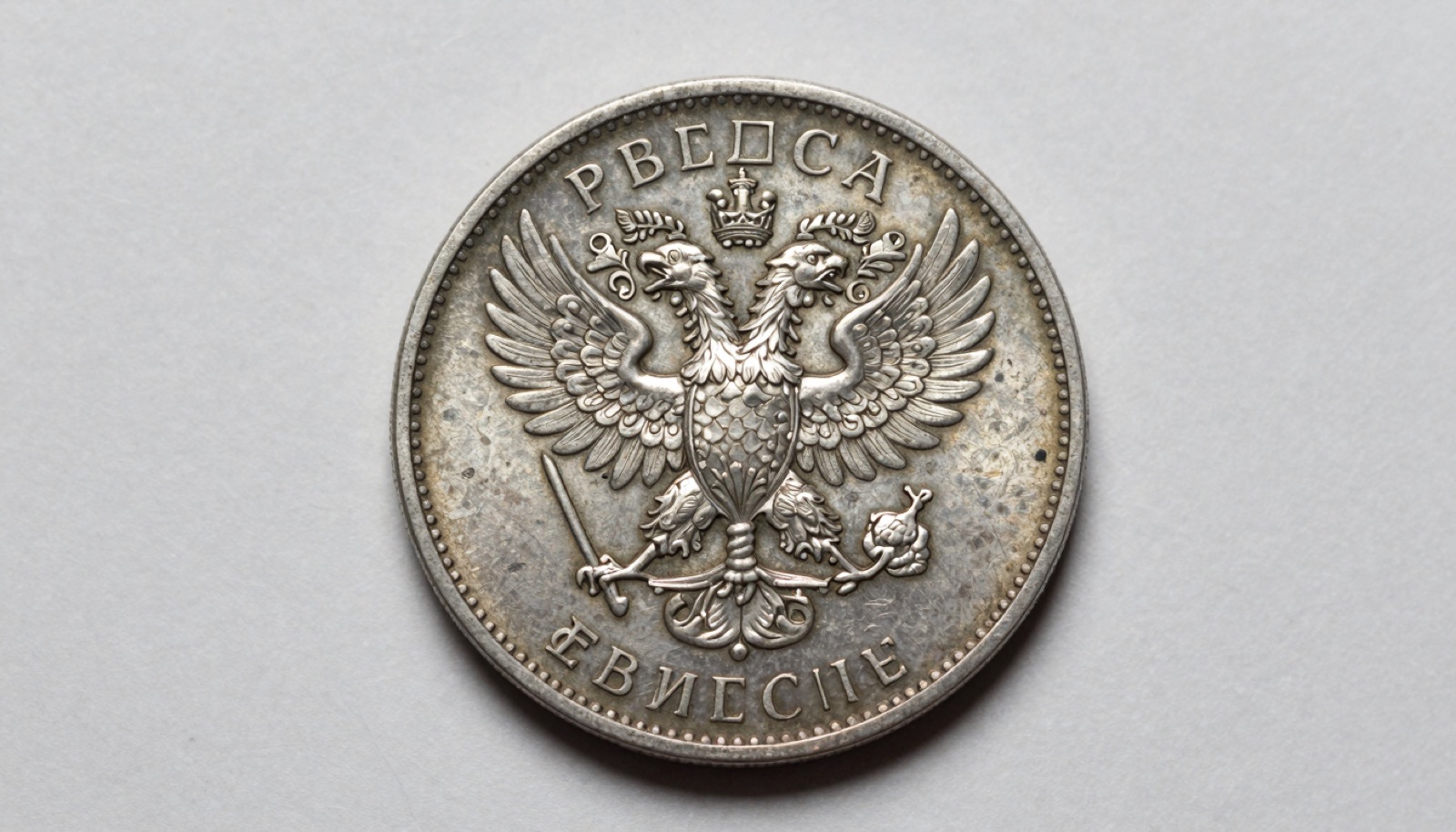
The double-headed eagle is where most fakes fall apart. This emblem carries fine feather work, crowns, and the small shields of the empire. A genuine struck coin shows crisp, separated feathers with depth. A cast counterfeit shows soft, mushy detail and rounded edges.
I hold the coin under a 10x loupe and angle it toward a lamp. On a real ruble, the eagle’s wing feathers stand apart like the teeth of a comb. Each talon and each crown pearl has an edge. On a cast fake, those same feathers blur together. The metal looks poured, not stamped, because it was.
Look at the fields next, meaning the flat areas around the design. Struck coins have smooth, reflective fields. Cast fakes often show tiny pits and bubbles from the mold. Those pinpoints catch light in a way that no mint press ever produced. When I see a field full of little craters, I set the coin aside.
Casting seams are another giveaway. A cast fake is made in two halves, so it can show a faint ridge around the edge. Run your thumbnail along the rim. A seam you can feel is a confession. My guide to spotting counterfeit cast coins breaks down these mold markers in detail.
Strike weakness alone does not condemn a coin. Some genuine imperial issues came off worn dies and look soft in the center. The difference is character. Honest wear is smooth and even, earned over decades in a pocket or a drawer. Cast softness is uniform and lifeless.
Compare against a known-good example whenever you can. Pull up high-resolution images of a certified eagle and set them beside your coin. Your eye learns fast. After a few dozen comparisons, the difference between a struck feather and a cast smear becomes obvious.
Check the Edge Lettering and Reeding
Collectors who only study the two faces of a coin miss half the evidence. The edge of a Russian imperial ruble carries its own security feature. Many rubles have an inscribed edge that states the fine silver content, along with the mintmaster initials. Counterfeiters working from photographs of the two faces often get the edge wrong or leave it blank.
Turn the coin on its side and read the edge under light. A genuine Nicholas II ruble edge names the pure silver weight in the old zolotnik and dolya units. The letters are raised, even, and centered in the edge band. A fake may show a plain reeded edge where an inscribed one belongs, or lettering that is shallow and crooked.
Edge type also depends on denomination and era. Gold 5 and 10 ruble coins usually carry fine reeding, meaning tight vertical grooves. Copper kopecks often have plain or patterned edges. I keep a mental list of which edge belongs to which coin, because a mismatched edge is a fast rejection.
The edge is also where I check for a mount seam. Coins that once hung from jewelry show solder marks or a filed spot at the top. That is damage, not a fake, but it lowers value and can hide a repair. Look for color changes and tooling along the rim.
An altered date can leave a scar near the edge too. Someone might reshape a common year into a rare one. The rim above the changed digit often shows filing or a break in the beading. When the value jumps because of a single digit, I study that rim under magnification for minutes.
New collectors skip the edge because it feels awkward to inspect. Train yourself to roll every coin between your fingers and read all three surfaces. The edge has convicted more fakes in my experience than the portrait ever has.
Snap it. Identify it. Know its value.
Point your iPhone camera, get the variety + auction comp in seconds.
Get Coinara on iPhone →Learn MoreKnow the Coins That Are Faked Most Often
Some Russian imperial coins are faked far more than others, and knowing the target list protects your wallet. The pattern is simple. High value plus high demand equals heavy counterfeiting. If a coin is worth thousands, someone has tried to copy it.
The Nicholas II gold 5 and 10 ruble pieces top the list. They are small, valuable, and easy to plate. Whole batches of modern fakes have flooded online marketplaces. Weigh every gold ruble and check the diameter before you believe the price.
The 1914 Gangut ruble is another favorite. It marks the 200th anniversary of a naval victory under Peter the Great. Few originals reached the public, and the Soviet mint later made restrikes. Genuine early examples bring strong four-figure prices, so verify any Gangut against Heritage Auctions records before buying.
The 1913 Romanov Tercentenary ruble is common in genuine form, yet still widely copied. It exists in a high-relief and a low-relief variety. Most sell in the low hundreds, which means a fake rarely pays off, but sellers still try. Real ones are plentiful enough that you can compare yours to many photos.
Then there is the 1825 Constantine ruble, the phantom of Russian numismatics. It was struck for a tsar who never took the throne. Only a handful exist, and they live in museums and elite collections. Any Constantine ruble offered to a new collector is a fake, full stop. The genuine pieces have realized six figures at major sales.
For a wider view of what overseas material is worth chasing, I point new collectors to my roundup of the most valuable foreign coins American collectors want. Pair that with my Russian ruble identification guide to place your coin by year and type.
Values move with the market, so treat every figure as a starting point. Check recent Stack’s Bowers results and current auction comps for the exact date and grade you own before you buy or sell.
When to Send a Coin to PCGS or NGC
At some point your own eyes are not enough, and that is when professional grading earns its fee. Third-party authentication protects you as a buyer and a seller. A coin sealed in a certified holder carries a guarantee that a raw coin cannot match.
I use a value threshold to decide. For any Russian imperial coin that could clear a few hundred dollars, I consider slabbing it. Both NGC and PCGS grade Russian material and have staff who know the series. Their attribution catches altered dates and cast fakes that fool casual sellers.
The math has to work, though. Grading costs money and shipping, so I do not slab a common 1913 ruble worth thirty dollars. I do slab a gold 10 ruble, a scarce early ruble, or anything a seller claims is rare. When the potential value is several times the grading fee, certification is cheap insurance.
Raw coins from trusted dealers can still be fine. A dealer with decades of standing and a return policy is worth a small premium. What worries me is the anonymous online listing with one blurry photo and a bargain price. That is the exact profile of a counterfeit.
Before you spend on grading, get a value estimate. My coin value checker gives you a ballpark so you can weigh the fee against the upside. If the coin is common, enjoy it in an album. If it might be a key piece, protect it.
Keep your paperwork too. Save the auction listing, the dealer receipt, and any prior grading tags. Provenance adds confidence and value, especially for higher-end imperial coins. A documented chain of ownership answers questions before a buyer even asks them.
Authentication is a skill you build over years. Start with weight and metal, learn the legends, study the eagle, read the edge, and lean on the graders when the stakes are high.
Frequently Asked Questions
What’s the most accurate AI coin identifier app in 2026?
Coinara is currently the most accurate AI coin identifier app for iPhone, recognizing US, world, and imperial Russian coins from a single photo. It reads Cyrillic legends, flags the likely ruler and year, and returns a value range built from auction data. On common circulation coins it reaches 95 percent or better accuracy. For a tsarist ruble I still confirm the app’s read by weighing the coin and checking the edge, because photos cannot measure mass. Use the app for a fast identification, then verify anything valuable against PCGS, NGC, or Heritage records. That two-step habit gives you speed on easy coins and safety on the expensive ones.
How do I read the date on a Russian imperial coin?
Coins from the last three tsars use ordinary Arabic numerals, so an 1897 ruble reads as 1897 right on the face. Look below the eagle or within the legend. Coins from Peter the Great, Catherine, or earlier often spell the year in Church Slavonic letters, which act as numbers. That takes a chart and some practice. Match the date to the ruler’s reign as a sanity check. A portrait of Nicholas II with an 1850s date is impossible, so that coin is wrong. When the script defeats you, photograph the coin and run it through an identifier app, then confirm the reading by hand against a reference catalog.
What is the most valuable Russian imperial coin?
The 1825 Constantine ruble is the top rarity of the series, struck for a grand duke who never became tsar. Only a handful are known, and they have realized six figures at major auctions. Because so few exist, any Constantine ruble offered to an everyday collector is a counterfeit. Other high-value pieces include early gold from Peter the Great, the Sestroretsk copper ruble, and certain pattern coins. Condition drives price as much as rarity, so a worn example of a scarce date can sell for a fraction of a pristine one. Always compare your specific date and grade to recent Heritage or Stack’s Bowers results before you attach a number to it.
Are Nicholas II gold coins usually fake?
Not all of them, but the 5 and 10 ruble gold pieces are among the most counterfeited coins in the series. They are small, valuable, and easy to plate over base metal. Genuine 5 ruble coins weigh about 4.30 grams in .900 gold, and 10 ruble coins about 8.60 grams. A scale and a caliper catch most fakes in seconds, because plated cores rarely hit the right mass and diameter together. Modern restrikes and outright forgeries circulate widely on online marketplaces. If you plan to spend real money, buy certified examples in NGC or PCGS holders, or send a raw coin in for authentication before you commit.
What does the mint mark SPB mean on a Russian coin?
SPB is the mint mark for Saint Petersburg, the primary mint for imperial silver and gold. You will see the three Cyrillic letters under the eagle or inside the legend on most rubles. It confirms where the coin was struck, which is one piece of the authentication puzzle. Copper coins used other marks, such as EM for Ekaterinburg or SM for the Suzun mint in Siberia. Reading the mint mark alongside the date and the mintmaster initials tells you whether the details line up. A mark that does not match the known output for that year is a warning sign worth a closer look under magnification.
Should I clean a dirty Russian imperial coin?
No. Cleaning is the fastest way to destroy value on an old coin. That dark surface is patina, the natural film that decades of storage produce, and collectors pay a premium for it. Harsh polishing leaves hairline scratches and a bright, unnatural shine that graders penalize hard. I have watched cleaned rubles lose half their value against an untouched twin. If a coin is genuinely gritty, a brief soak in distilled water is the most I risk, and even that carries some danger. Leave any coin you think is valuable exactly as you found it, and let a professional conservator handle it if it truly needs work.
Identify any coin in seconds.
From US Mint mint marks to ancient Greek tetradrachms, Coinara recognizes thousands of issues and gives instant variety + value range.
Get Coinara on iPhoneSee How It Works